Entertainment
Flik's Founders Want Everyone To Build Their Own Creative Empire
The AI studio's co-founders say the next era of storytelling won't be controlled by a handful of gatekeepers. It'll be built by anyone with an idea.
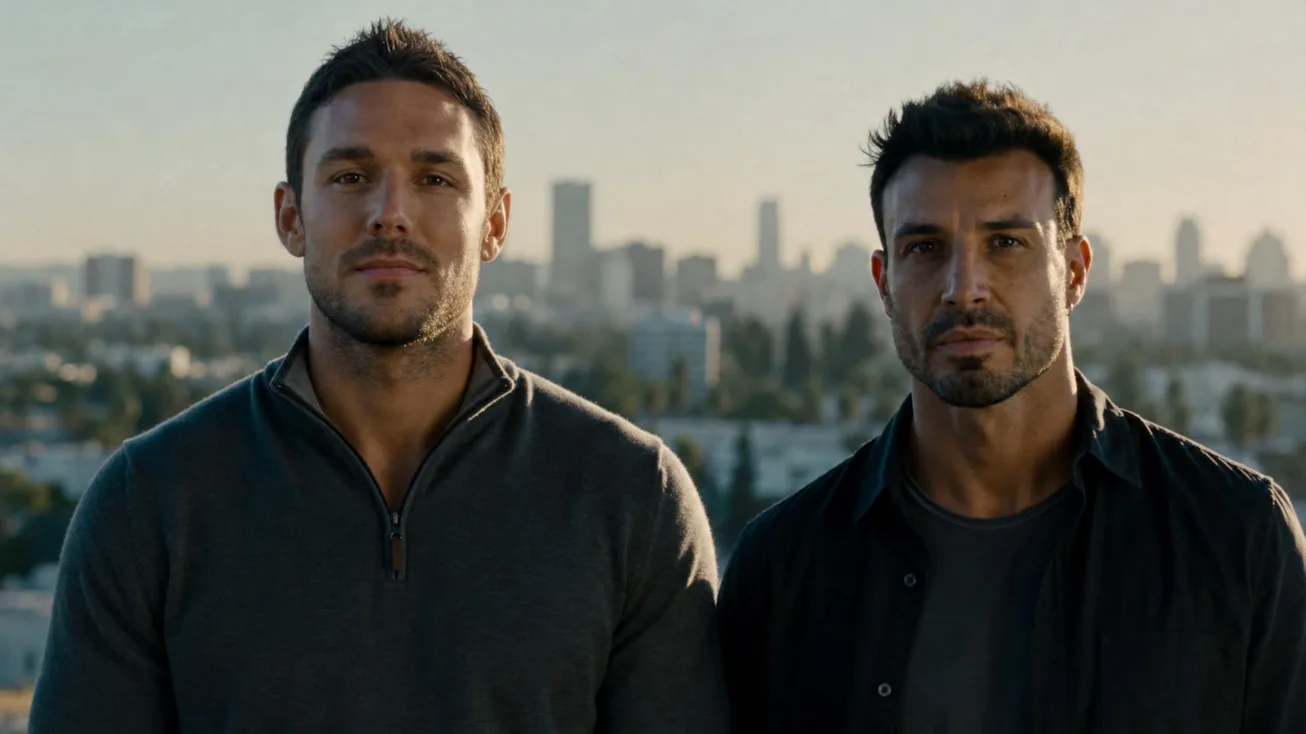
Two Founders, One Vision
In a tech landscape flooded with tools promising faster, cheaper, more automated creativity, Flik is reaching for something more ambitious: authorship at scale. Co-founders Brennan Erbz and Stafford Schlitt describe their platform as a full creative operating system, a workspace where films, music, games, and entire worlds can be developed end-to-end inside a single AI-powered environment. Flik reports a growing waitlist and early agencies allocating real budgets to the platform, with the founders positioning it less as a tool and more as a turning point.
The two met years ago at a dinner in Los Angeles, introduced by a mutual friend. Schlitt remembers it as the kind of night where the conversation runs long and you walk to your car still arguing about it. They stayed in each other's orbit, worked on small projects together, and at some point, as Schlitt puts it, Flik "stopped being something we were talking about and started being something we were doing."
A Nightmare About A World Without Stories
The origin of Flik, according to Erbz, traces back to a dream. He describes waking from a nightmare set in a world where stories didn't exist. No books, no films, no music, no games. No streaming services, no social platforms. Dinners with friends where nobody had anything to tell, because there was nothing to tell.
"It sounds like a small thing, but it wasn't," Erbz says. "It was this dark, flat, hollow place. And I woke up thinking, that's not humanity. Humanity without stories is just machines, or wild animals. Stories are the thing. Everything we love, everything we pass down, everything that makes a life feel like a life, it all runs on stories."
That conviction, Erbz argues, is what the legacy creative industries were never quite built to honor at scale. The studios, labels, publishers, and game houses had a remarkable century, he says, but the system ran on scarcity: scarce cameras, scarce crews, scarce permission. Most of the stories that should have been told, in his telling, never were.
Inside Flik’s Workspace
Flik's pitch is that it functions less like a single-purpose generator and more like a working studio compressed onto a laptop. A user arrives with an idea (a character, a world, a track, a campaign) and the platform develops it alongside them. Characters stay visually consistent across scenes. Worlds get built and remembered. Scripts, storyboards, edits, and scores live in a connected filesystem rather than resetting between prompts. There's a timeline-based video editor for frame-by-frame adjustments, and publishing tools that push finished work directly out into the world.
Erbz frames the user's role as directorial rather than operational. The creator brings vision and taste; the platform's agents handle execution. The same underlying engine, the founders say, runs across formats: music videos, brand campaigns, games, podcasts, design, and social content.
According to Erbz, early traction has come from agencies. He cites one branding agency that produced several commercials on the platform in a single quarter.
Why Trust Is The Product
A growing number of AI platforms have leaned into the gray areas around likeness and copyrighted material. Schlitt says Flik has deliberately gone the other way, and that the decision is one he thinks about more than almost anything else at the company.
"Trust is the foundation of everything else we're trying to do," Schlitt says, citing both individual creators and the studios, labels, and enterprises bringing sensitive work into the platform. The internal phrase, he says, is that "the maker's IP is sacred." Work brought into Flik isn't used for training. Files are encrypted and watermarked back to their origin.
The longer-term ambition, Schlitt says, is to make likeness, voice, and identity rights enforceable at the point of generation rather than through after-the-fact takedown notices. He points to Tennessee's ELVIS Act, recent Danish legislation around personal likeness, and ongoing EU regulatory work as signs that the legal landscape is shifting in that direction. Flik, he says, wants to be ahead of where the rules are heading, not catching up.
Craft, Opinions, And The AI Look
Asked whether built-in guardrails limit creative freedom, Schlitt draws a distinction between craft and vision.
"We have strong opinions about craft. We have zero opinions about anyone's vision," he says. "That's the only line that matters."
The platform, in his framing, knows how to light a shot, mix a track, lay out a page, and score a moment. The story, characters, and point of view belong entirely to the user. A tool with no opinions about craft, Schlitt argues, doesn't free anyone. "It just floods the world with average."
The Question of Replacement
On the recurring industry anxiety about AI displacing actors and creative labor, Erbz pushes back on the framing itself.
"I don't think replacement is the right way to think about any of this," he says. "Nothing's being torn down. Something new is being built next to it."
In his view, the next era of storytelling will simply involve more of it, made by more people, in more places. Talent, he argues, doesn't disappear in that scenario. The part of the old system that does change, he says, is the gatekeeping layer that decided whose stories got made.
Picking A Side Early
Schlitt predicts the current ambiguity around AI-generated content (what's safe to use commercially, who owns what, whether a brand might face liability) will resolve faster than most expect. He believes two distinct markets will emerge: one licensed and accountable, built for studios, brands, agencies, and labels; the other loose, unregulated, and largely walled off from commercial work. Buyers, he notes, will regulate before governments do, because buyers have lawyers.
Flik, he says, picked its side early. The goal is for both a bedroom creator and a working studio to be able to release work from the platform without worrying it will create legal problems down the line.
A Studio For Everyone
When asked how he wants people to think about AI after using Flik, Erbz returns to the dream that started the company, and to a vision of distributed creative empires.
"I want everyone to walk away with their own movie studio," he says. "And I mean that pretty literally."
A creative empire, in his telling, isn't a single output but a system: inventing a world, populating it with characters, telling stories inside it, scoring them, extending them across formats year after year. For a century, he says, only a handful of companies on earth could afford to operate that way. Flik's bet is that the same system can fit on a laptop.
If the bet pays off, Erbz says, the flat, story-less world from his nightmare moves further away every year, "because more people get to make the things in their head, and humanity ends up with more stories, in more forms, not fewer."
"That's the whole game."
BDG Media newsroom and editorial staff were not involved in the creation of this content.
