Entertainment
Gaby Manzanares Is Shooting Three Distinct Genres In One Year
She makes the camera feel things, moving between comedy, romance, and psychological tension with a visual style that shifts across every project.
A teen comedy that runs on color and chaos. A romantic drama dipped in golden hour. A thriller where the cinematographer blacked out an entire soundstage to build something that looked like the inside of someone’s mind. All three are coming out this year. All three were shot by the same person.
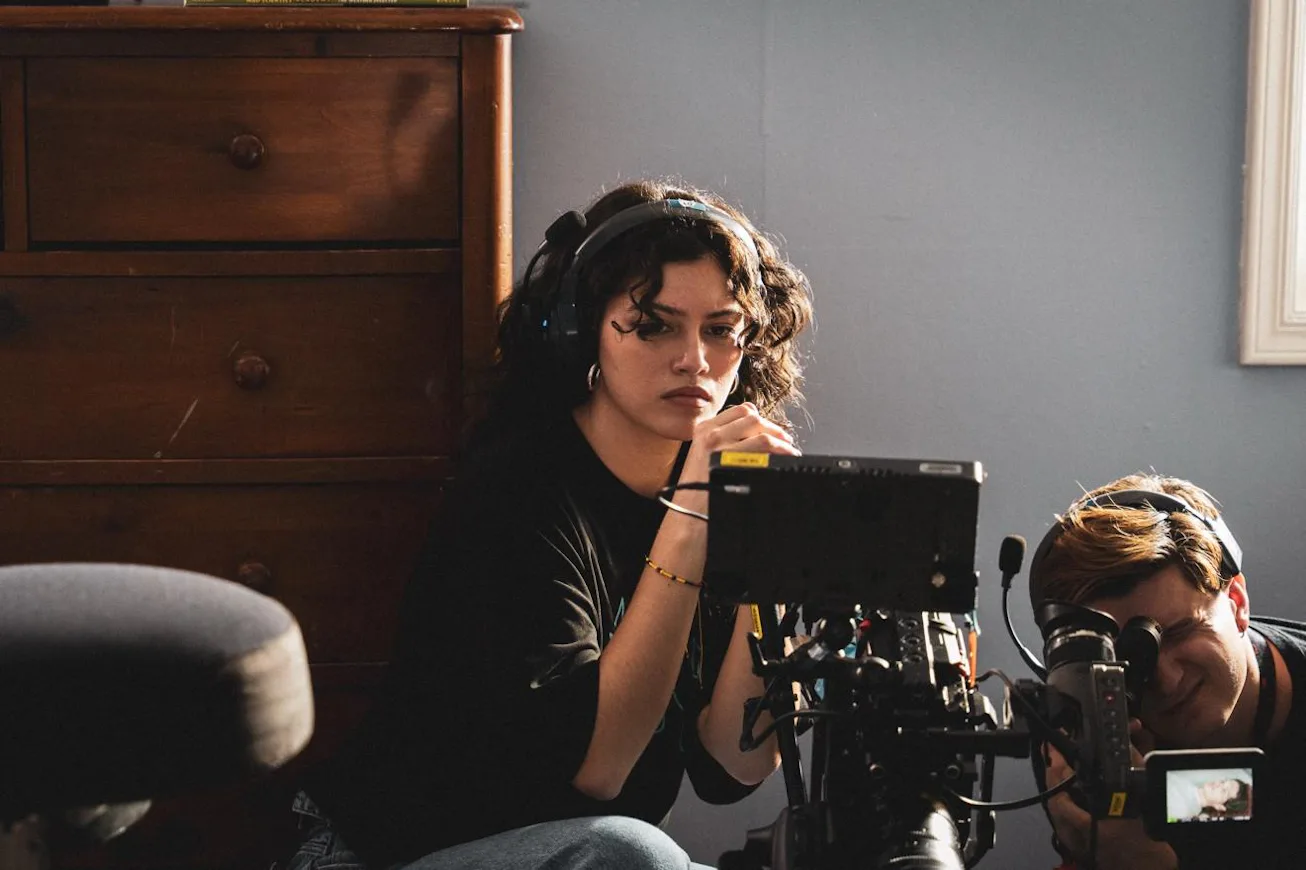
Gaby Manzanares is twenty-two, Colombian-born, Los Angeles-based, and working at a pace that makes her 2026 calendar read like a dare. She is a cinematographer, which means she is the person who decides what a film feels like before anyone speaks a word. High-contrast light. Deliberate color. Compositions that lean in close, like a friend telling you a secret. Her images have texture you can almost touch.
Finding Cinematography
Consider the range. Enough is a short romantic drama about two women having the hardest conversation of their relationship on their wedding day. The entire film lives in one exterior location, captured during that fragile window of blue hour when natural light does all the emotional work for you. It took home fourteen international awards. Then there is To Shine Again, a psychological thriller where she constructed overhead lighting rigs on a blacked-out soundstage to create an infinite void — a visual prison for a man trapped inside his own subconscious. That film premiered at a major Los Angeles theater and has since traveled to festivals across the U.S. Same DP. Completely different universe.
She never planned to be behind the camera. She grew up drawing and painting in Bogotá, moved to LA at eighteen to study acting, and discovered cinematography almost by accident in a workshop class during her first semester. The switch was instant. Everything she had ever been interested in — shape, color, story, emotion — suddenly had a single container. She considers filmmakers visual artists by definition. The tools change. The impulse does not.

A Process Shaped by Post
What separates her process is that she has worked as a colorist and an editor, which means she already knows what will happen to an image after she captures it. She shoots thinking about how a cut will feel, whether the color range is wide enough for post, how movement inside the frame will land inside a sequence. It is a way of seeing that collapses the distance between set and screen.
The project she says is pushing her the most right now is Edge of the Lot, a comedy pilot that won a major prize last December, which included funding and additional production support. Manzanares has been testing cinema cameras and lenses, searching for the exact visual temperature of a show about two high school friends whose college-essay hustle spirals into a school-wide scandal. Bright, loud, ridiculous — the tonal opposite of a psychological void on a dark stage. What fascinates her about comedy is that the camera can be part of the joke. Timing lives in movement, in focus, in the length of a held shot. Get it right and the audience laughs partly because of how something is framed, not just what is happening inside the frame.
Choosing Collaborators
She is specific about who she works with. The directors she chooses share a quality that is hard to name but easy to feel: genuine excitement. She looks for collaborators who make her feel safe enough to take creative risks, to push a shot further than either of them planned. A director-DP relationship is months of long days side by side. Trust matters more than the script.

A Year in Motion
After Edge of the Lot shoots in April — in Mariposa, California, the real town behind the show’s fictional setting — she will continue post-production of In Place, a romantic comedy-drama she shot previously. She also shot Betrayal, a dramatic thriller scheduled for release later in the year. Three films, three tonal worlds, twelve months. For someone who found cinematography only by exhausting every other art form first, the restlessness feels less like a phase and more like a permanent setting.
There is a version of this story that centers on ambition — the young immigrant who bet on herself and won. But that framing misses the thing that really drives her work. Manzanares does not shoot to prove anything. She shoots because images are the closest she has ever come to saying what she means. Every art form she tried before was a step toward the visual language she actually thinks in. Now that she has found it, she is not interested in slowing down or in repeating herself. The camera moves. The light shifts. The next world is already taking shape.
BDG Media newsroom and editorial staff were not involved in the creation of this content.
