New Pioneers
How This Electronic Artist Uses Engineering To Create Her Otherworldly Sounds
Abby Echiverri on game-changing Buchlas, festival gate-keeping, and how the best education can often come from breaking things down.
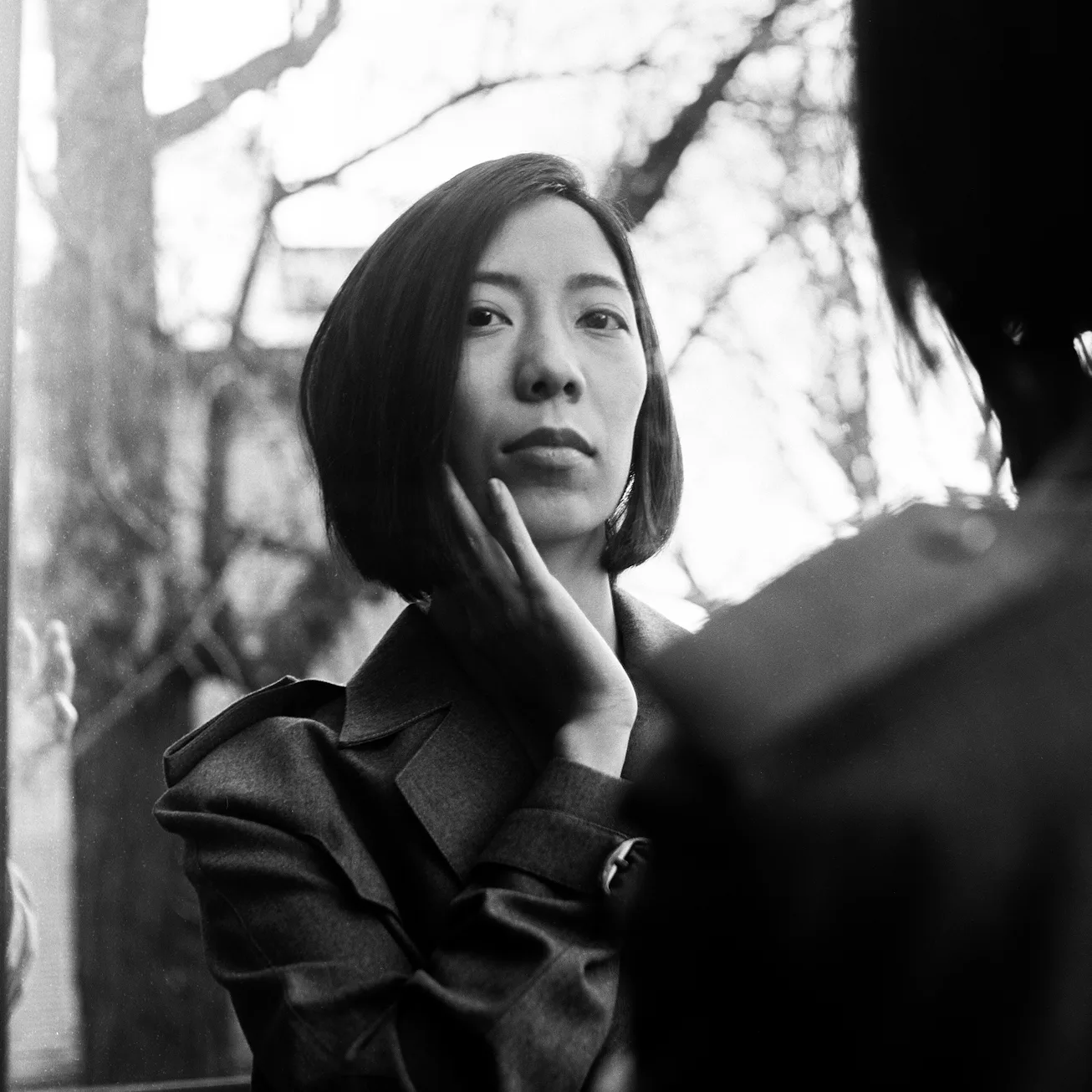
For those about to rock, few instruments look as intimidating as modular synthesizers. At first glance, it can seem impossible that a tangled mess of cables, knobs, inputs, and modules can create beautiful pieces of music, but for composer, producer, DJ, and electronic engineer Abby Echiverri, it is like a clay that can she can sculpt into any sound imaginable. She lives and breathes electronics, whether commanding the dance floor at Unsound Festival or soldering transistors onto circuit boards as she fixes prized vintage synths.
“I’ve always been in music,” says Echiverri. “Whether it’s classical, punk, or techno, it’s just always been a part of my life.” She grew up playing classical violin, flute, and piano, but her fascination with electronic music was piqued when she took an introductory music synthesis course at New York University. “I didn’t know what a synthesizer was,” she said, “but the Buchla 100 in the university’s studio was totally game-changing for me. Being able to pick apart the sound at the modular level with a synthesizer let me understand music in a whole different way.”
Synthesizers, of course, require a more technical understanding of music theory than traditional instruments. With synths, musicians can control the three main elements of sound: amplitude (also known as volume), frequency (also known as pitch), and timbre (also known as a sound’s tone or “color”). Each part of a modular synthesizer controls one of these elements — and with the turn of a knob, a synthesizer can produce atonal bell chimes, mimic a dusty Wurlizter piano, or create noisy, crunchy clangs that stretch our definition of music. For these reasons, Echiverri specifically appreciates modular synthesizers because “thinking through a modular patch” — the discrete sound created by pushing all those buttons and plugging in those cables — “is the best way to learn synthesis.”

Echiverri was also interested in electronic engineering. After graduating from NYU, she landed audio assistant gigs at several recording studios, where she realized that she could make all of the instruments and gear that she tinkered with at work. Outside of traditional education, Echiverri taught herself everything she knows about crafting electronic instruments, crediting mentors and access to gear in her training. She started with electronic repairs. Fixing, for instance, an out-of-tune key on a Yamaha DX-7 or replacing burned-out connection pins on a MIDI keyboard, gave her practical EE instruction. She credits “looking at how other engineers designed things” as the best education and encourages budding students to “start with basic repairs work on classic analog audio.”
Today, Echiverri is a full-time electronic engineer at Eisen Audio, designing, building, and repairing all types of electronic musical equipment. “I’m grateful that I can work from home through 2020,” she says, but it also gives her freedom to produce her own music. In June 2020, she released her debut EP, the Ab Initio EP, on The Bunker and regularly performs on streams. “I’m so grateful that I have this live audience that I can connect to,” she says, but like all of us, deeply misses the catharsis of live music that we’ve been denied this year.
As electronic instruments and recording gear have shrunk in size, musicians can compose entire albums at their desk, giving women and nonbinary people greater access to the music-making process. Still, the field is largely male-dominated. “I believe in creating safe spaces for women to be engineers,” she says. As such, she mentors women in electronic engineering and this month, will be partnering with DIY Recording Equipment to host an online soldering class for women and nonbinary folks.
Echiverri also urges festival bookers and promoters to “make a conscious decision” to include women in lineups. “One headlining woman musician doesn’t take the place of all-male down-ticket sets,” she says. “They need to be aware, they need to level the playing field.” And although Echiverri is just one of the many incredibly talented womxn in electronic music, her singular voice cuts through the noise. The music world is that much richer with Echiverri in it.
