The Music Issue
We Were There
15 years ago, LCD Soundsystem played its “last” show at Madison Square Garden. With the band still active — and its influence all over pop today — what chapter really closed that night?
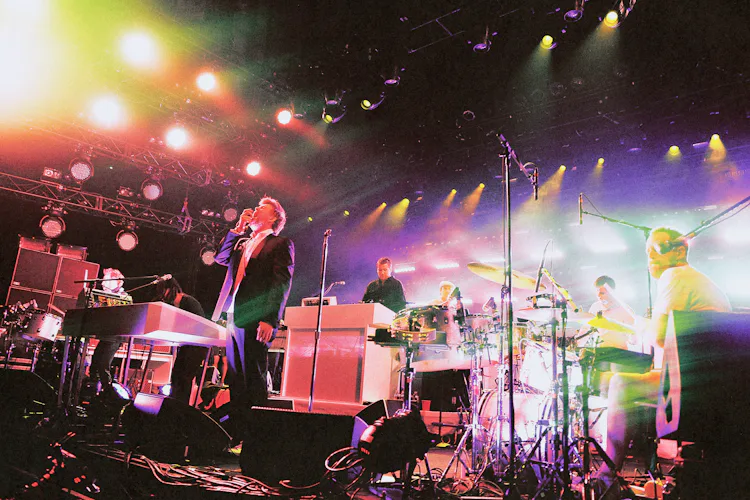
That’s how it starts: On April 2, 2011, we all went to Madison Square Garden to see LCD Soundsystem one last time. Some of us had been at their early shows — around Christmas in 2002, for example, wowed at Bowery Ballroom by their uptight take on downtown post-punk — and some of us had never seen them live at all. We assembled, befuddled we’d outwitted the bots to score a ticket to this night, the main event, and not one of the bonus warm-up shows the band had added at the universally loathed Terminal 5. And we waited, running to the bars or the merch stands and back to the steep rows before it was too late. Some of us were in good seats with a crowd of people who didn’t like one another as much as we’d used to. Who had, together, moved to the city many moons ago to find ourselves, and now found ourselves different people. Others were making ourselves at home in the endless waves of new arrivals, telling ourselves that even though we were at a farewell concert by the city’s biggest band, maybe even because we were, we weren’t too late to the party. We told ourselves that everyone is always telling each other that New York City was better 10 years ago, 20, 50. LCD Soundsystem were a band built around the tension between knowing this is true and refusing to accept it. It was a band that crystallized a sensibility, a hipster’s take on gossip doyenne Cindy Adams’s maxim Only in New York, kids, only in New York. They sold the world on it, while questioning in song after song whether selling out was even a thing anymore. And now they’d sold out Madison Square Garden to celebrate closing up shop.
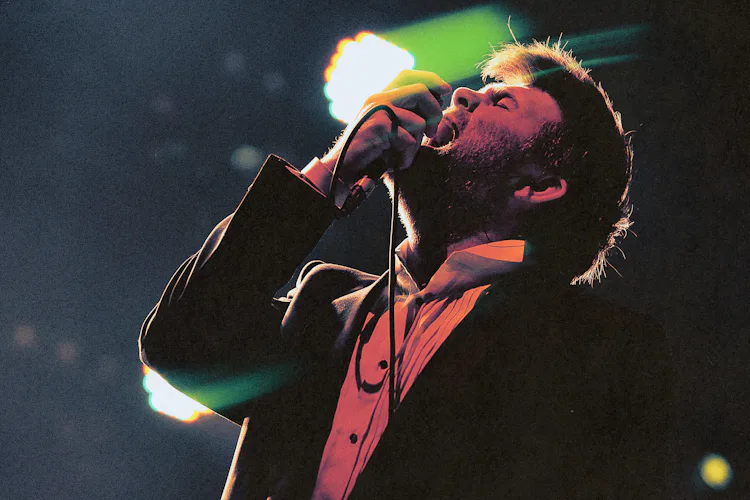
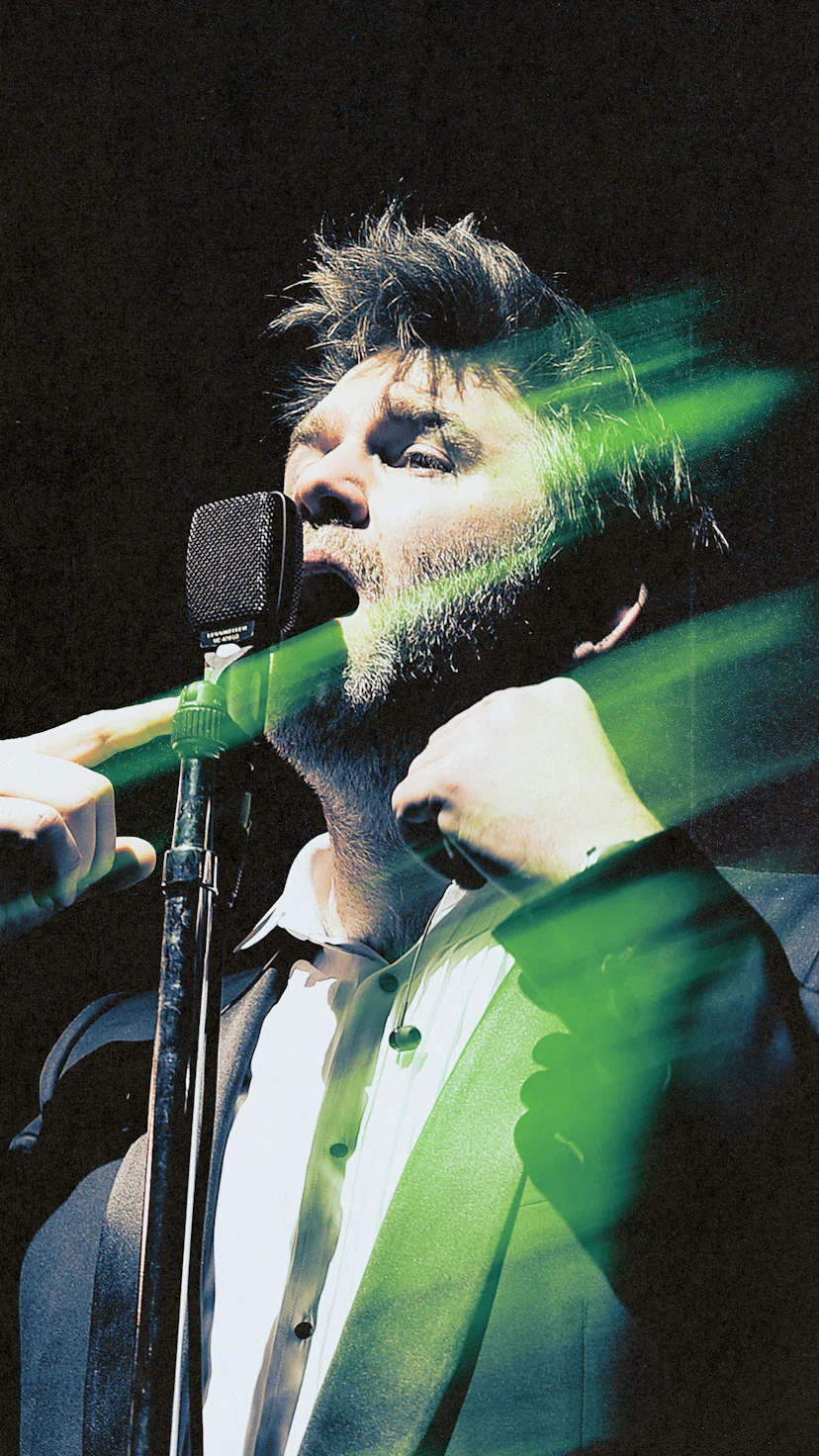
A lot of us were already drunk by the time LCD finally arrived to the shuffling percussion and twinkling melody of “Dance Yrself Clean,” the opening track on (what we thought would be) their final album, the previous year’s This Is Happening. That album has fingerprints all over pop today: We might hear the shadow of Murphy’s louche swagger in Harry Styles’s latest, or his mumble in Wet Leg and Dry Cleaning. Or maybe the band’s sweaty effort to sound effortless has left traces in Geese, or singer-keyboardist Nancy Whang’s disco-baller wry elegance in Dua Lipa and Tove Styrke and Muna. But then, we didn’t think anything would last. The band’s core members slowly swelled, one last time, around head honcho James Murphy, thick and sharp in his tux and scruff, his eyebrow sometimes arching into an earnest kind of shrug. We all sang along to the song’s early ahh-ahhhhhhh, marveling at how loud we could get. We can be heard doing this on The Long Goodbye, the live album of the show that came out three years later. “It’s your show,” Murphy sang, over and over again, his voice hectoring and hollering in that blend of Mark E. Smith and Prince and Corin Tucker that he had made his own. “It’s the end of an era, it’s true,” he sang. The crowd roared, knowingly; the band engaged, explosively.
Timelines collapse like they do in disco songs: Tonight is forever, and you’re already missing it.
LCD Soundsystem arrived in 2002, in a city full of people who had learned the previous September that our government would not protect us, but would, after so many years of hating us for chaos and queerness and color, exploit our grief to start more stupid, endless wars. We learned, again, to fend for ourselves. We started scenes in electroclash parties like Larry Tee’s Berliniamsburg at Luxx, where freaky queers could live out the fantasy that queer culture hadn’t gone corporate in the ’90s but had stayed underground forever; and the Motherfucker parties where the lady friends of those queers could try to do it for themselves; and the scene that came to be known as Indie Sleaze, in which those ladies could party with their boyfriends; and the warehouse revolutions of GHE20G0TH1K, which offered all of the above and so much more for the people of color who, let’s face it, were still mostly unwelcome at all those other scenes.
Meanwhile, LCD stormed through, buoyed by a lot of hot air about parties in a very well-appointed Manhattan live/work space that served as the headquarters for the band’s label, DFA. We were cool enough to have heard about the parties but not cool enough to score an invite. Our friends who worked the racks of Other Music and Kim’s and Etherea and Academy — and those of us who spent, like, all week hanging around there, spending all our money instead of making any — muttered a little about the rep of these parties that, by most accounts, consisted of a bunch of straight white rock dudes suddenly discovering Chic and E, can you believe it. LCD were smart, though. They arrived calling themselves out on their shit. “Losing My Edge” condensed that hot air into a breezy status update on mortal themes. In that song, Murphy essentially is New York itself, cool but never as cool as it used to be, manspreading over a big package of intoxicating psych-disco. And it worked.
For a while. By the time LCD played it at MSG, those kids looming behind Murphy had aged into middle management, with packs of even younger kids who had better taste (and who were actually pretty nice!) lining up behind us. Those kids were shouting I was there! along with us and LCD, and if the there we meant was a world before Giuliani shut down our nightlife safe spaces in the name of public safety, what the kids meant was they were here. Timelines collapse like they do in disco songs: Tonight is forever, and you’re already missing it. On the recording, our voices obituarize ourselves.
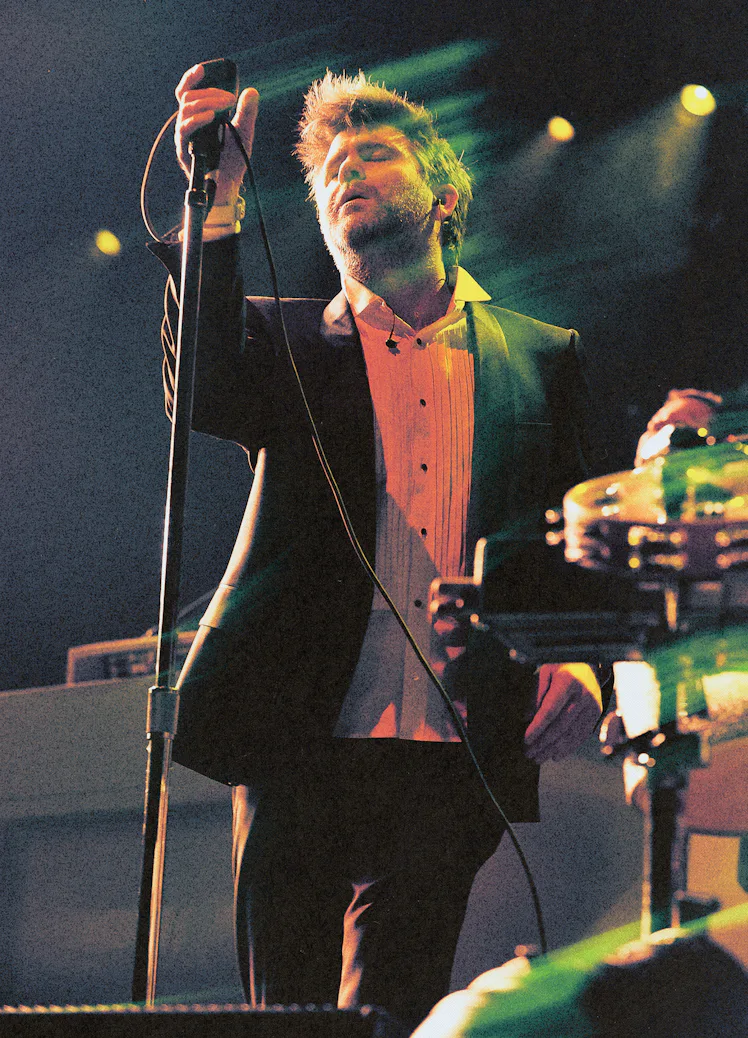
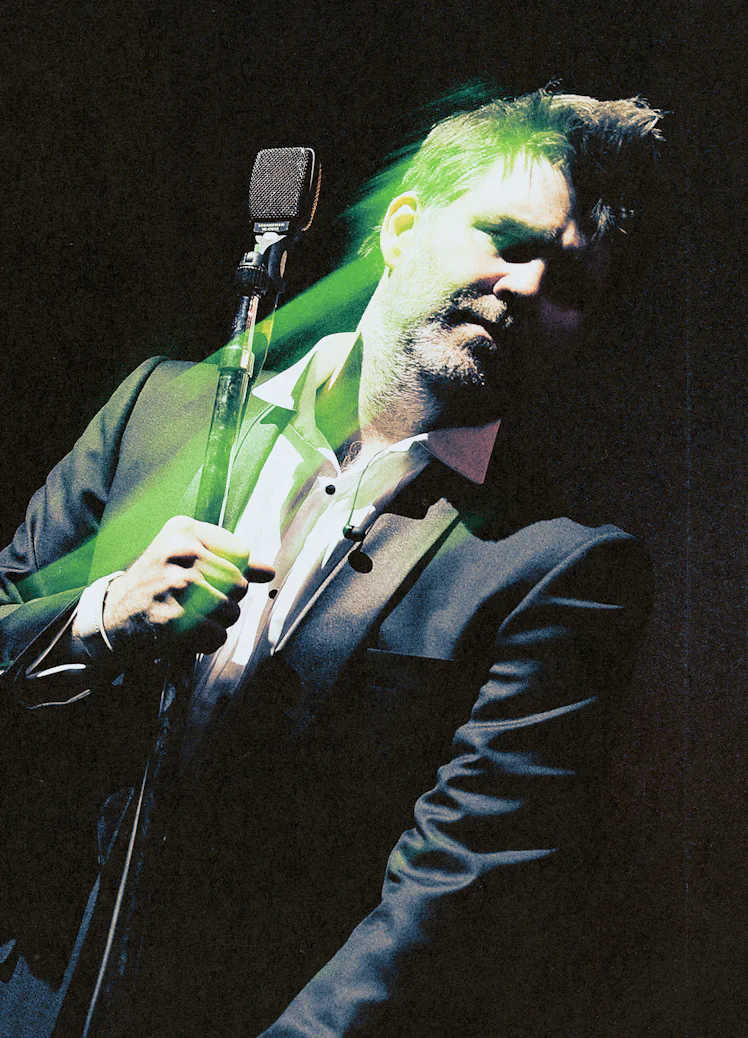
James Murphy told a lot of jokes, but the biggest one was that he could stop. When the band broke up, he embraced the gentrification trappings New York excels at, like coffee, natural wine bars, expensive audio equipment — and then, in 2016, he rebooted the band. LCD booked long residencies at New York’s Knockdown Center as if they were the Rat Pack in the Copa Room. They apologized to fans if they felt betrayed that the goodbye wasn’t forever, then released an album that sounded a little apologetic for its own existence. Today, they’re still singing these songs of farewell over and over. Some of us go to all the shows; some of us despair that a band so good at synthesizing the past’s ideas of the future into a present worth placing faith in can’t seem to think of a better future for itself than playing those old songs one more time. And more and more of us can’t believe the antithetical crowd Murphy now cosigns, as LCD play the crypto bro-fest Bored Ape Yacht Club or, worse, soundtrack Elon Musk’s Starlink in a Super Bowl ad. Talk about a fascist groove thang.
But maybe presaging irrelevance is a dead end. LCD made themselves a shorthand for that kind of ambition that makes us tell the world we wish it was a little more like the rooms we used to drink and dance and drug and dream in. It’s a world that never becomes as fun as we want it to be but also is more fun than we think it is. And it’s an ambition that not only takes us out of those rooms but inevitably kind of ruins them. We didn’t know that on the April night in 2011, of course. In the studio version of his instant classic “All My Friends,” Murphy croons, “And to tell the truth/Oh, this could be the last time.” At the Garden, he declared “This will be the last time,” and we all went nuts. We all screamed with him Where are my friends tonight? as if we all weren’t there, as if we weren’t already thinking of the train home and the job tomorrow, as if we all weren’t already wondering and worrying where our friends would all go.