The Fashion Issue
Issey Miyake Is So Much More Than Its Pleats
Designer Satoshi Kondo dreams not of making clothes, but of “designing a lifestyle.”
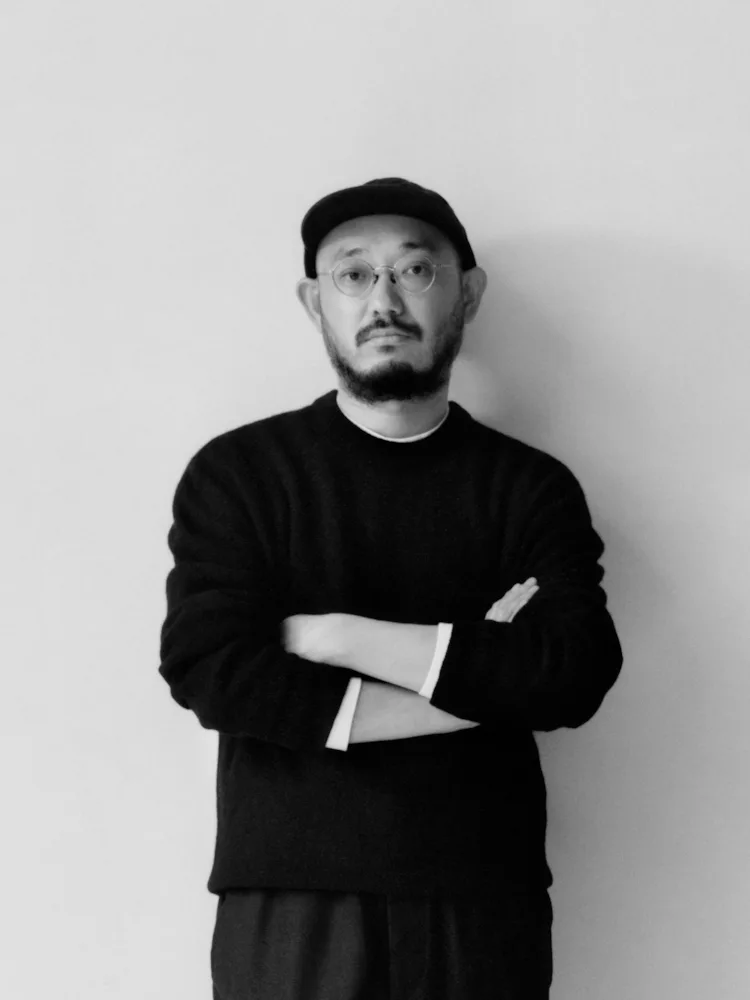
Issey Miyake didn’t set out to be a revolutionary. His original pleating technique became a benchmark of his namesake brand and set a new standard for fabric innovation, but it was never just about fashion — and the current artistic director behind Issey Miyake, Satoshi Kondo, is a student of Miyake’s school of thinking, as he tells NYLON: “Miyake’s philosophy and approach to clothing design are deeply integrated into the brand identity, carried on by every designer who followed him, myself included. My role as the current designer is to continue that lineage, practicing Miyake’s teachings to explore new possibilities, rather than looking back.” Kondo has not only picked up the torch but set off in new directions that are technologically advanced and meeting the cultural moment with ease.
A Japanese fashion designer whose work spanned decades and disciplines, Miyake collaborated extensively with photographer Irving Penn, made singer and model Grace Jones his muse, designed the black turtleneck for Steve Jobs, created ballet costumes, and founded a design research center in Tokyo. Kondo, the 42-year-old Kyoto-born designer who has been with the brand for more than a decade, explains where the brand, and the man’s legacy, sits today: “I see Issey Miyake standing apart from the conventional center of the fashion scene, at its intersection with other creative disciplines: art, design, architecture, photography, and performing arts.”
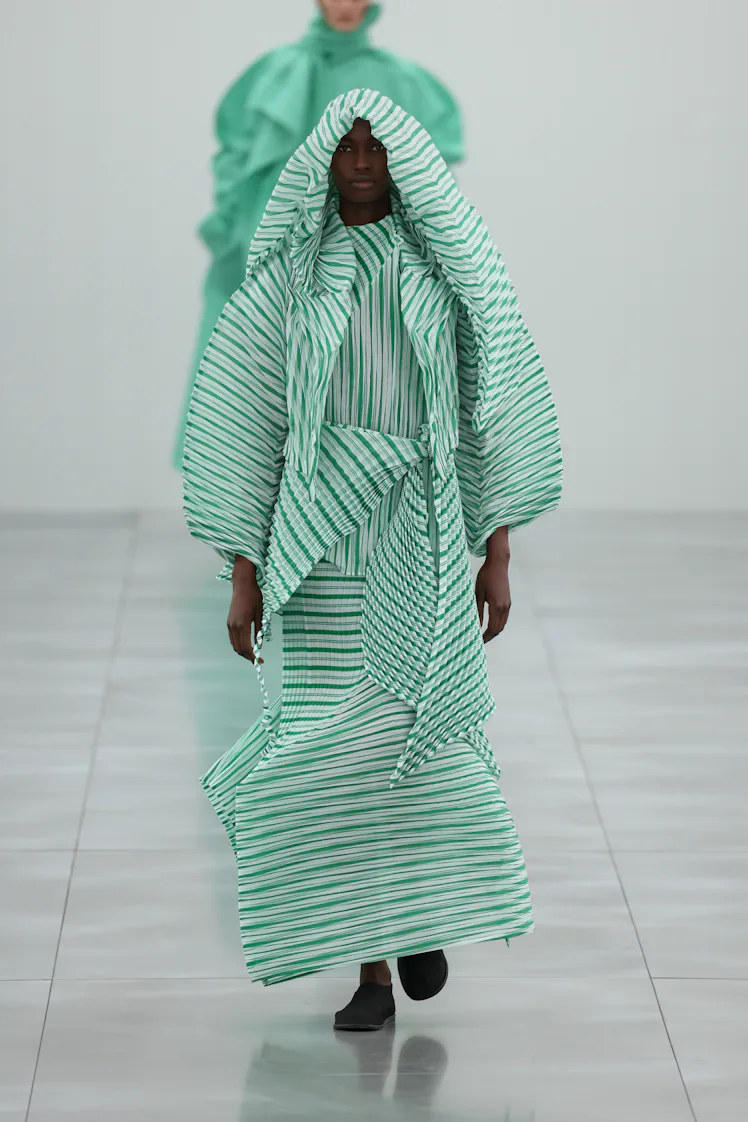
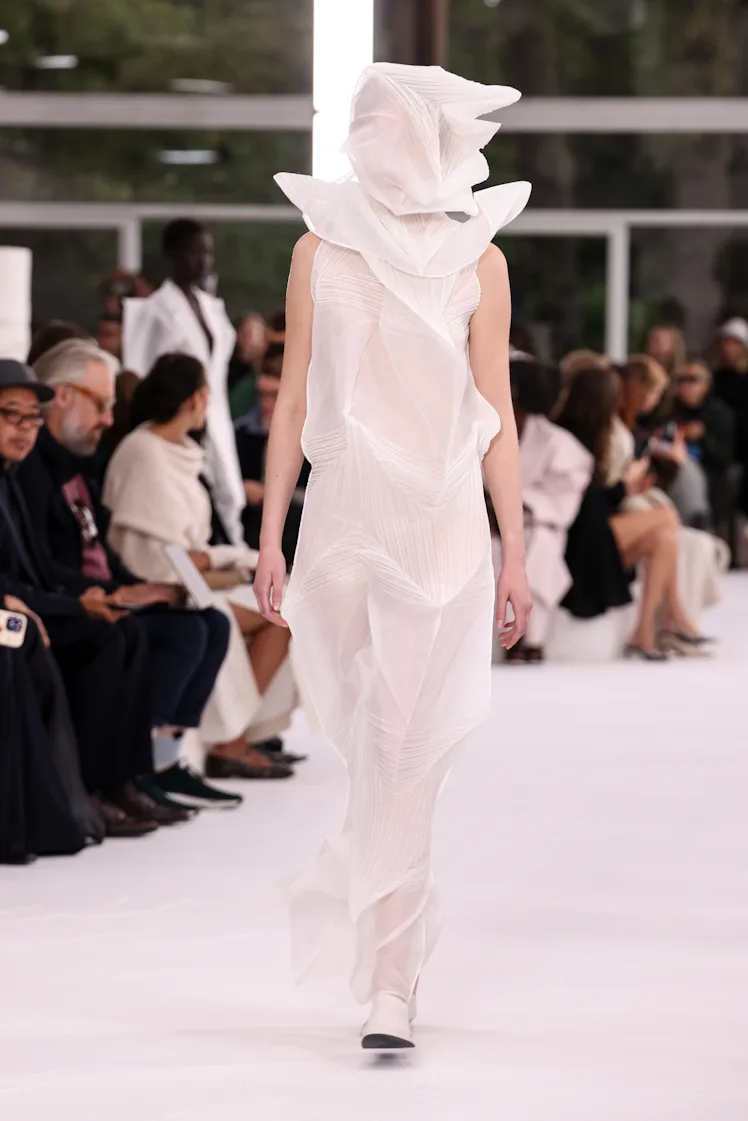
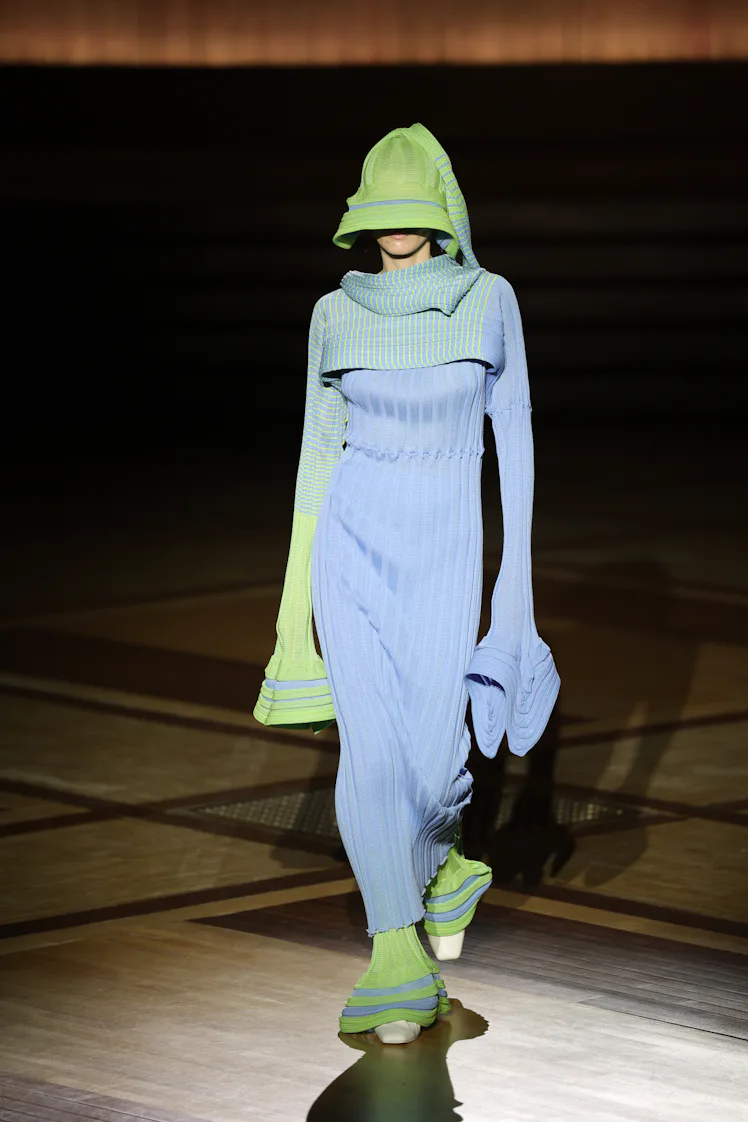
His most enduring legacy from a product perspective is pleats, which have experienced a resurgence with Gen Z shoppers, but for Kondo, the pleats are not just a material or process: They’re about conveying “playfulness and freedom of movement,” which is expressed not only in the photos Irving Penn took of the pleats, but the way they have become synonymous with an on-the-go customer. “It is practical: lightweight, easy to pack, and requires minimum care. I see pleating as a tool — a solution — that I can always rely on to quickly translate an idea into form.”
Indeed, a look through Kondo’s runway shows for the brand sees him ideating on and implementing pleating in genuinely new ways. “In my practice of design and making, I try to keep an open mind, an eye that does not discriminate, and not favor one idea over another based on perception or convention,” Kondo says.
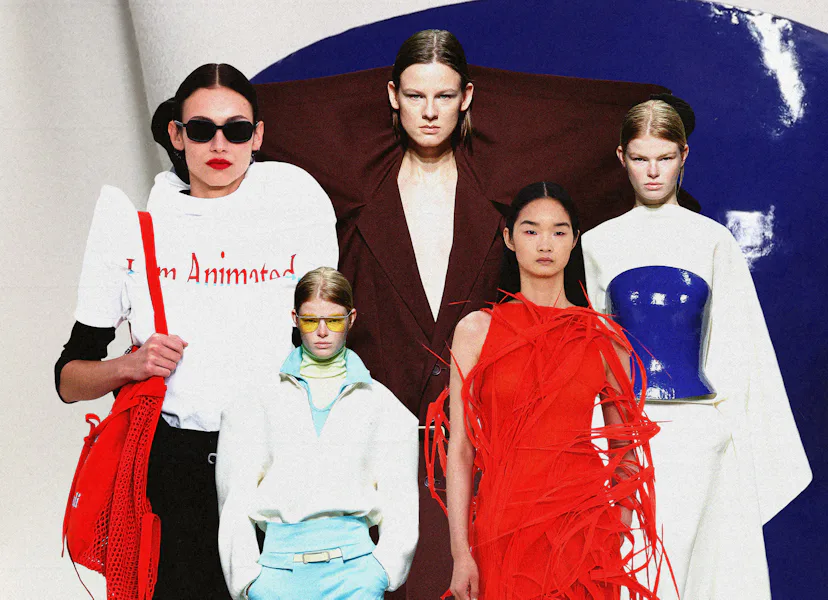
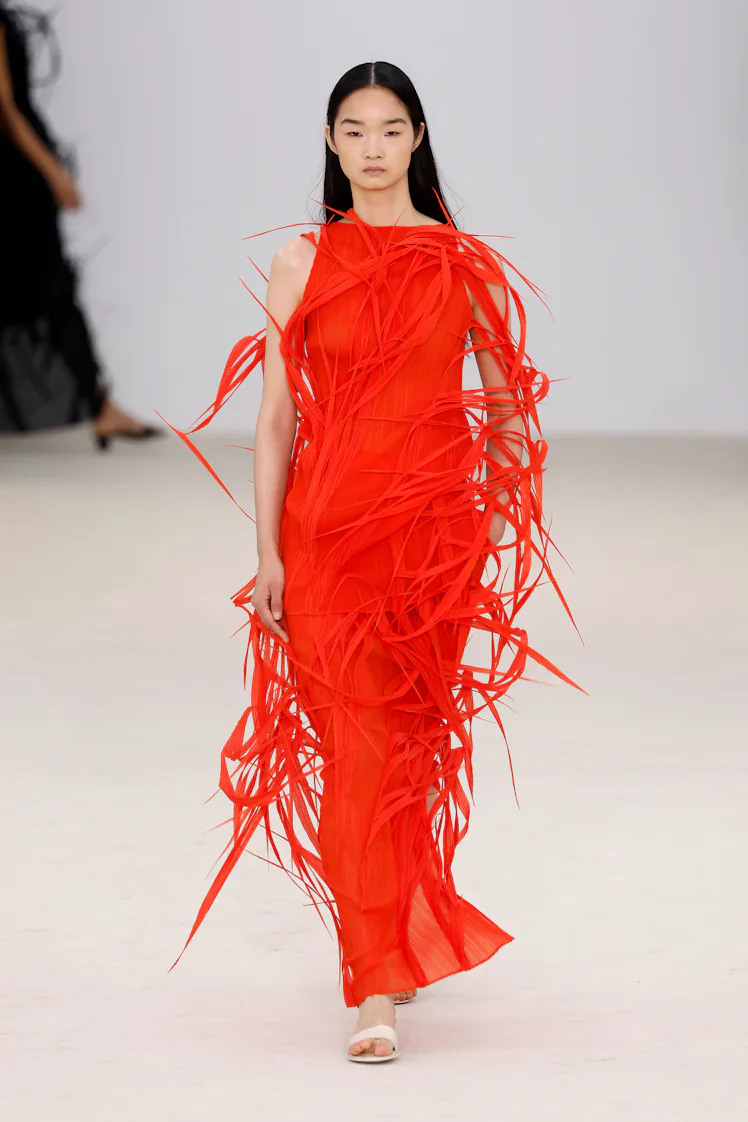
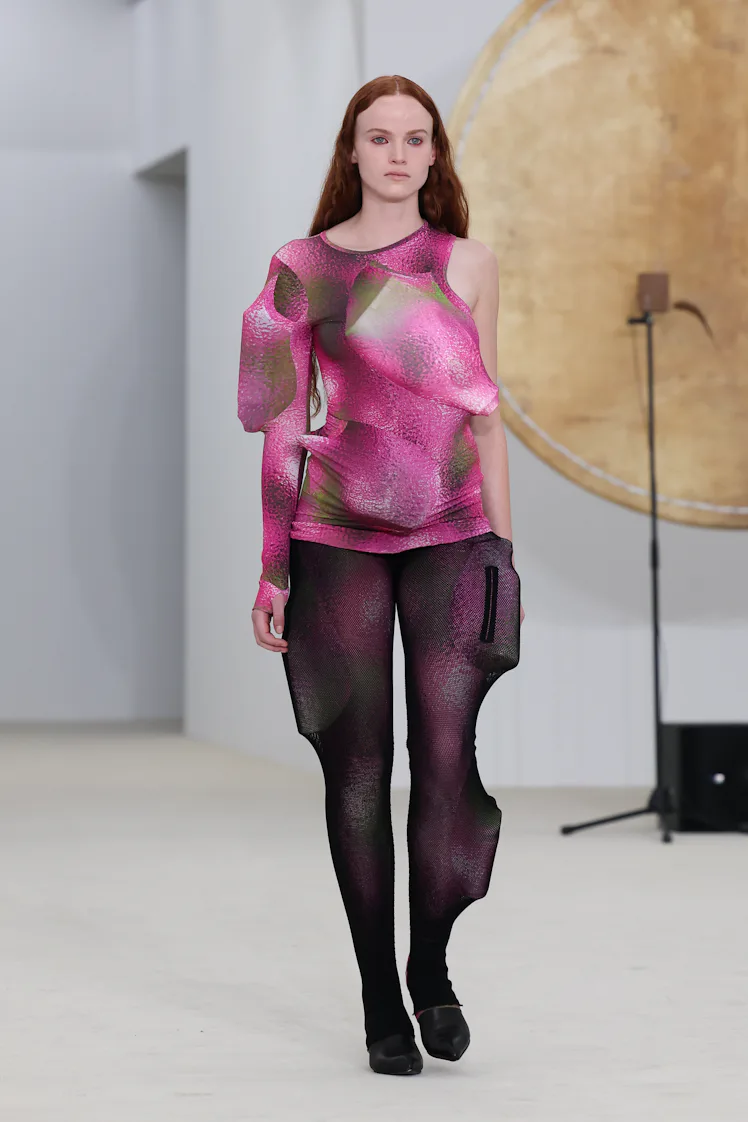
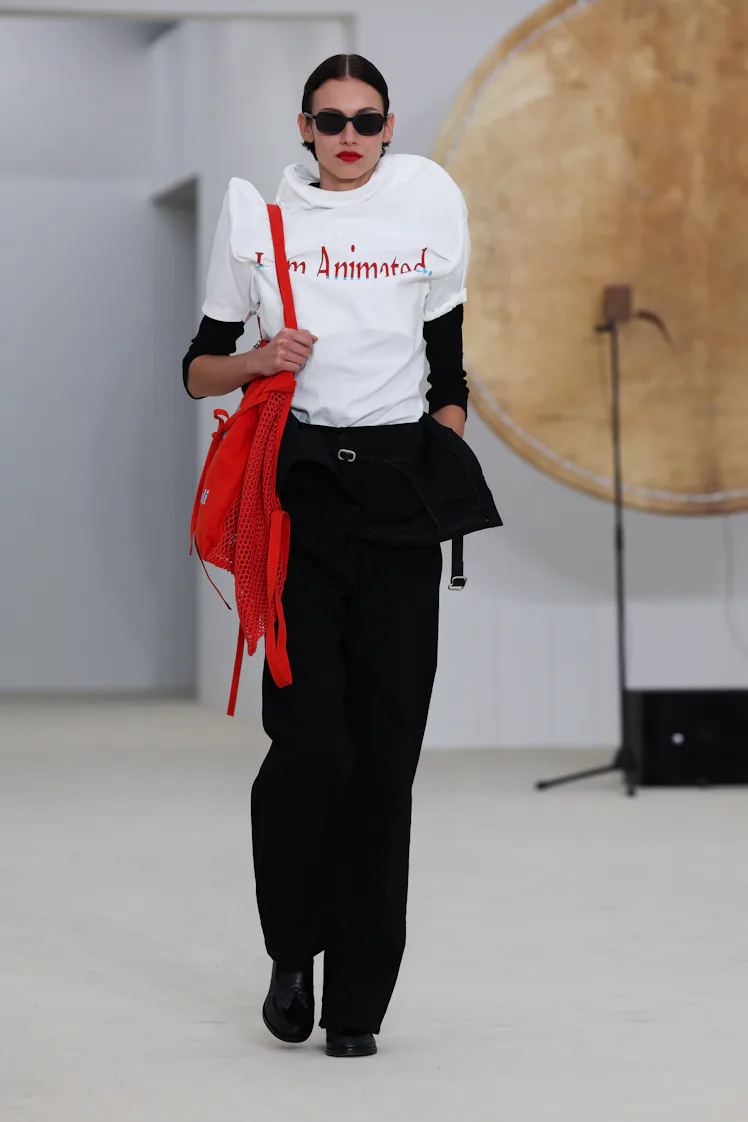
This open, democratic approach doesn’t sacrifice fun or whimsy: For Spring/Summer 2026, Kondo presented a series of twisted polo shirts with hunchback-like shoulder pads and the phrases “I am autonomous” and “I am animated” printed across the front. Elsewhere, everyday objects were trapped between the body and dress, projecting a lumpy look; dresses looked molded to the front of the wearer and stapled on the side, giving a stretched-canvas effect; and feathers mold on the body like ferns. He boldly denies a single “look” for each of his shows, giving a spontaneity and urgency that many Parisian runways lack. You truly never know what is going to turn the corner on his catwalks.
If Spring/Summer 2026 was go-go-go, Fall/Winter 2026 was a slow down in both process and color for Kondo, who deftly combines the form (nature) with the modernity of his busts (technology). “As a designer, I make things and develop ideas with my own hands, seeing both success and failure in the creative process as clues leading to the next exploration. Nature is a source for discovering unscripted beauty through serendipity. Technology is a medium of translating an idea into form.”
The sinuous forms of his molded bustiers, the Urushi Body series, appeared at the beginning and end of the show and fuse the practice of “framing and complementing” the body — a foundational tenet of Miyake. With such a focus on handicraft and taking time, Kondo says technology comes in when “it preserves, if not highlights, the trace of the maker’s hand, creates something beyond our imagination, and aids production efficiency.” Kondo also explains the Urushi Bodyforms are inspired by washi, a traditional Japanese paper, and how that could cling to the body. Ancient forms, modern techniques — the result is one that feels both known and unknown, human and fantastical. It’s also lethally beautiful, feminine, and bold.
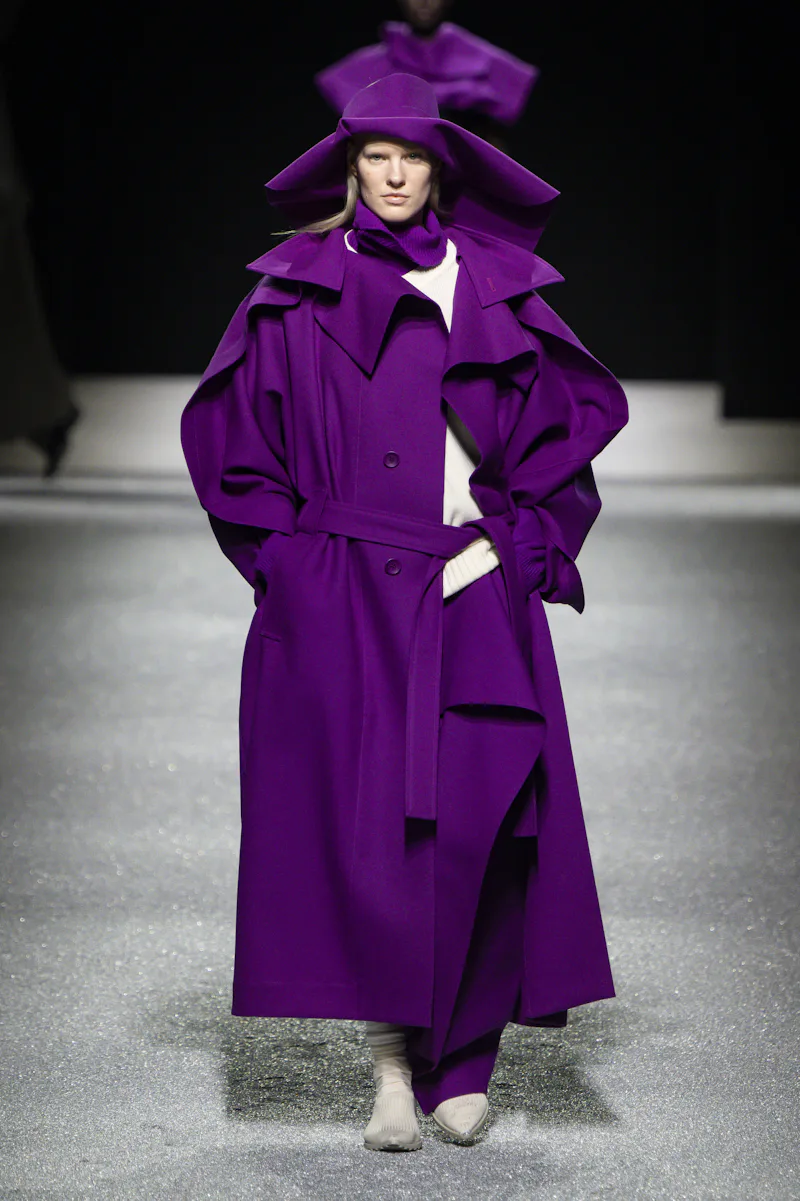
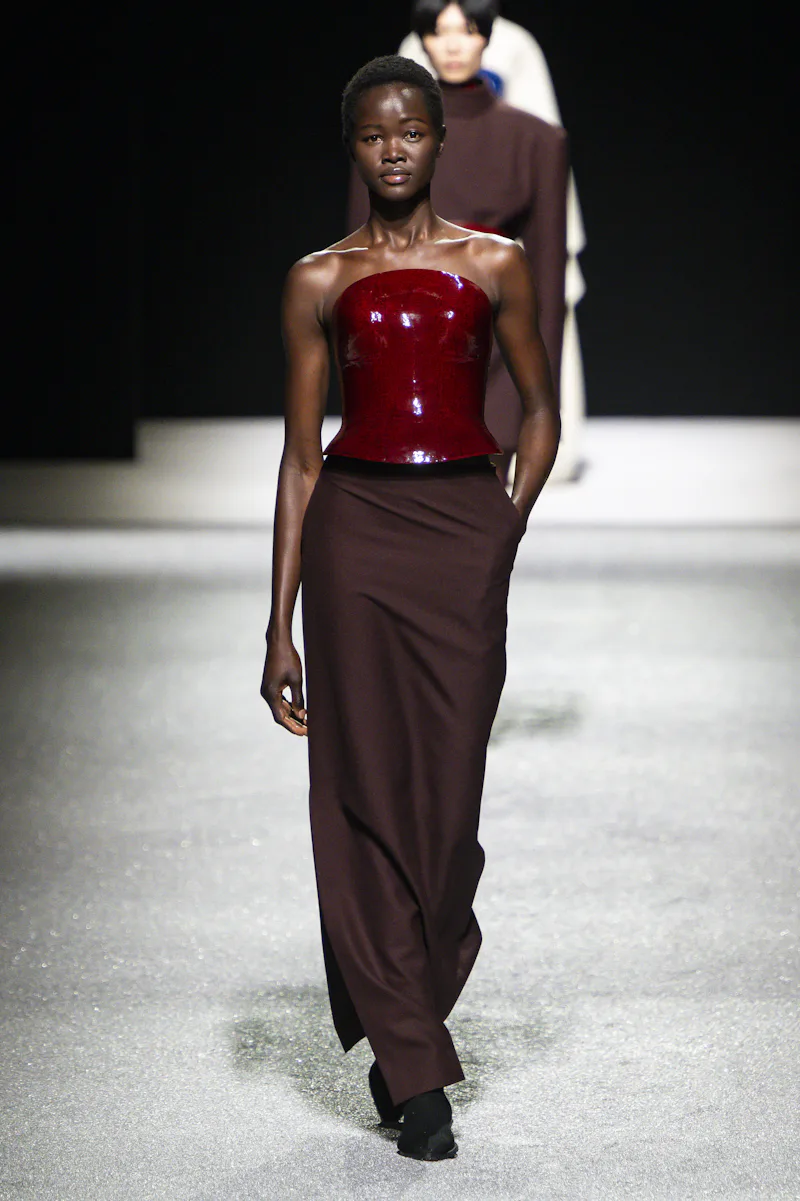
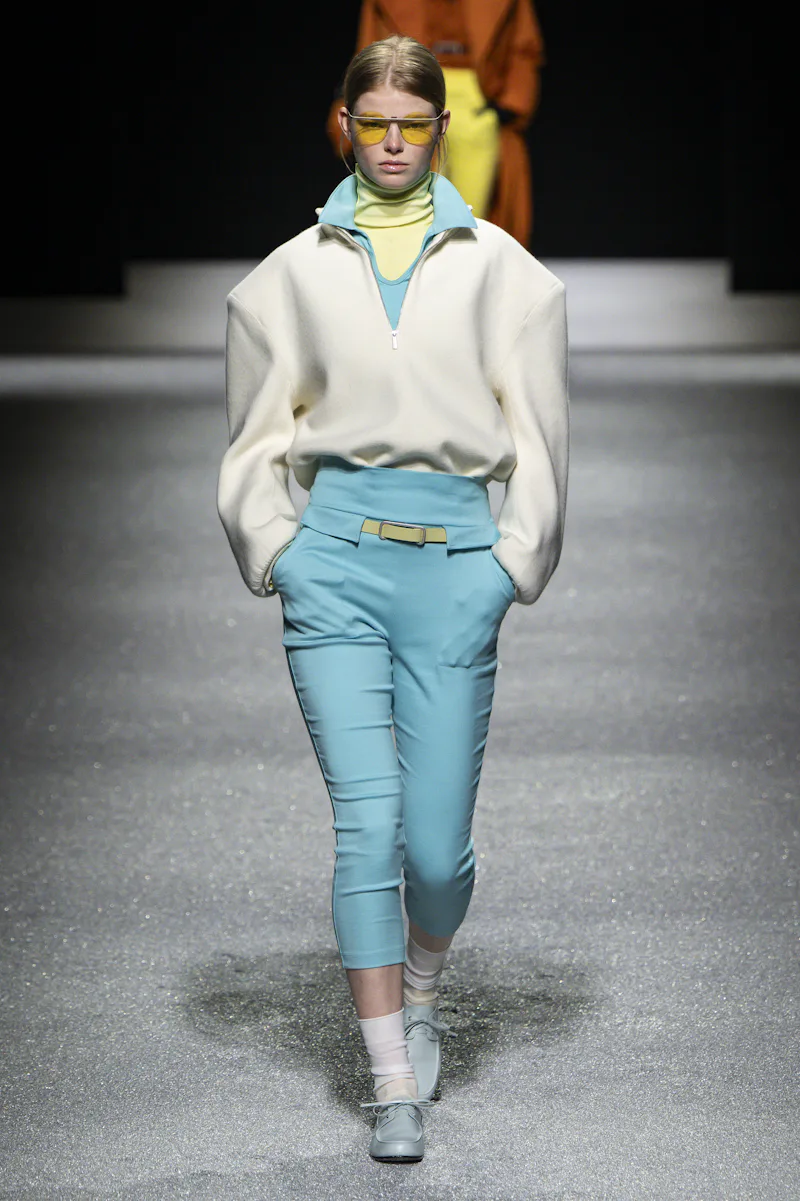
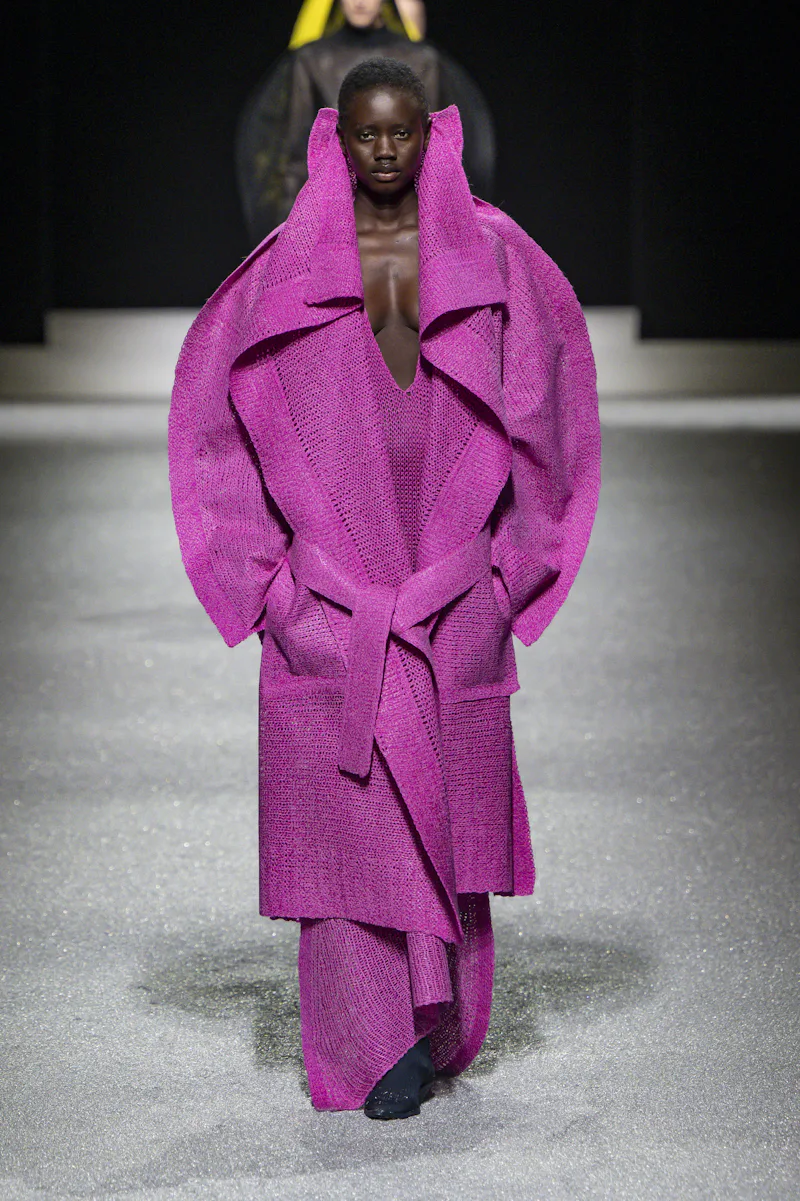
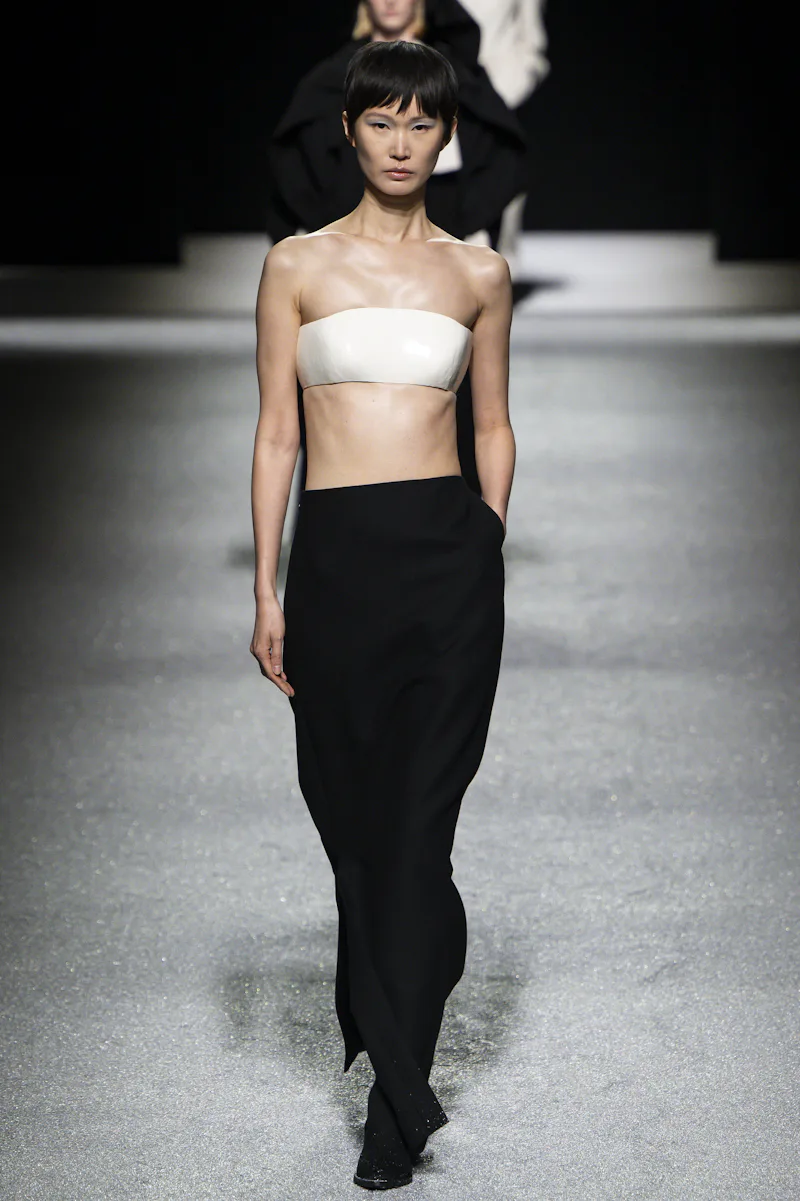
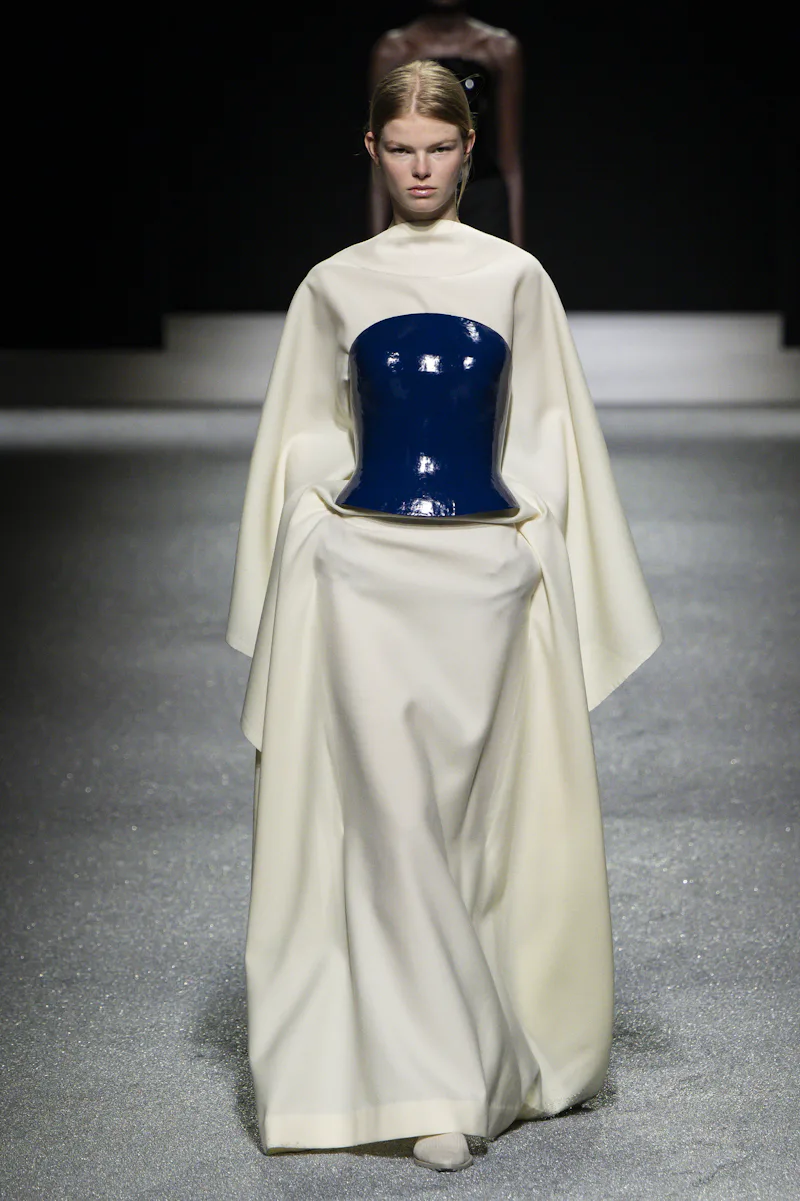
In a sea of AI design and on-screen fashion experiences, the tactility of the brand is paramount. “My approach to design and making can be something that grows beyond boundaries between disciplines and revolves around the idea of ‘designing a lifestyle’ — how we dress, eat, and live,” Kondo says.
This is on full display at the Issey Miyake flagship stores, including the stunning new multilevel boutique across from Madison Square Park in New York, where customers can now buy Urushi Body bustiers and experience other essentials from the brand’s Fall/Winter 2026 runway, including a paper-light trench coat in eggplant (color is back, after all), molded handkerchief tops made with reflecting fabrics so the color changes based on light, and zigzag-style pleated sets in chartreuses and electric blues. They are oddities for the customer who doesn’t want to look like everyone else and who cherishes not only a design-first approach but intimate production levels and a dialed-back approach in a more-is-more fashion landscape.
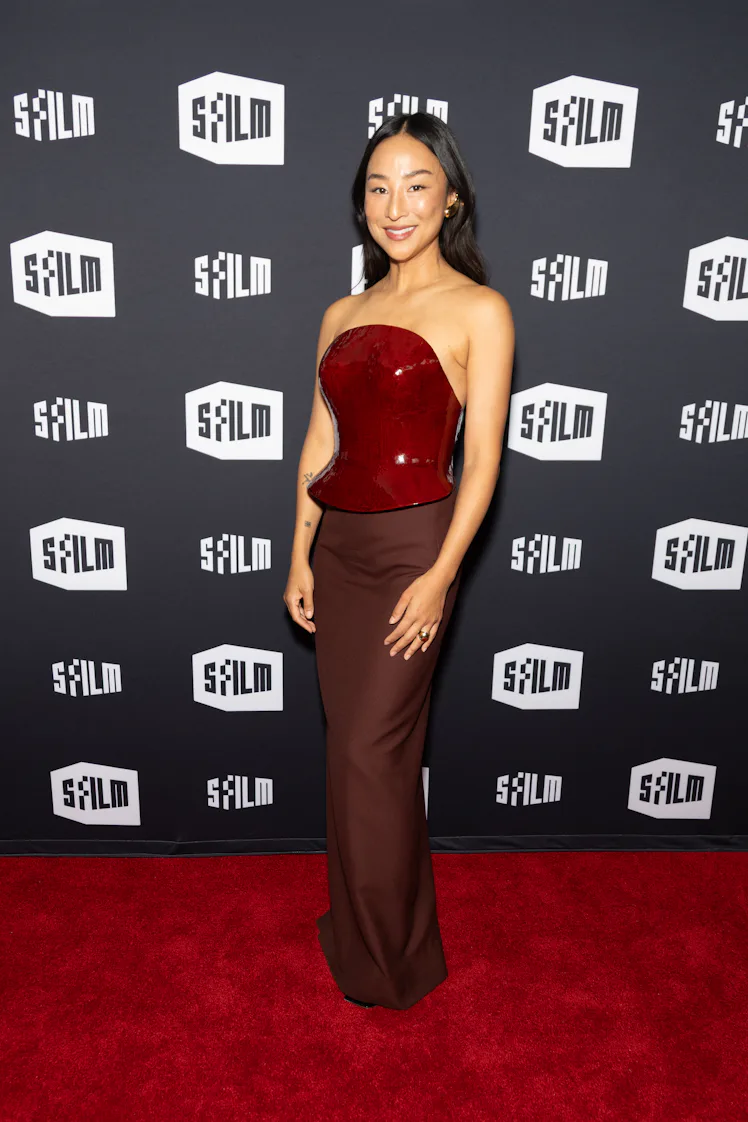
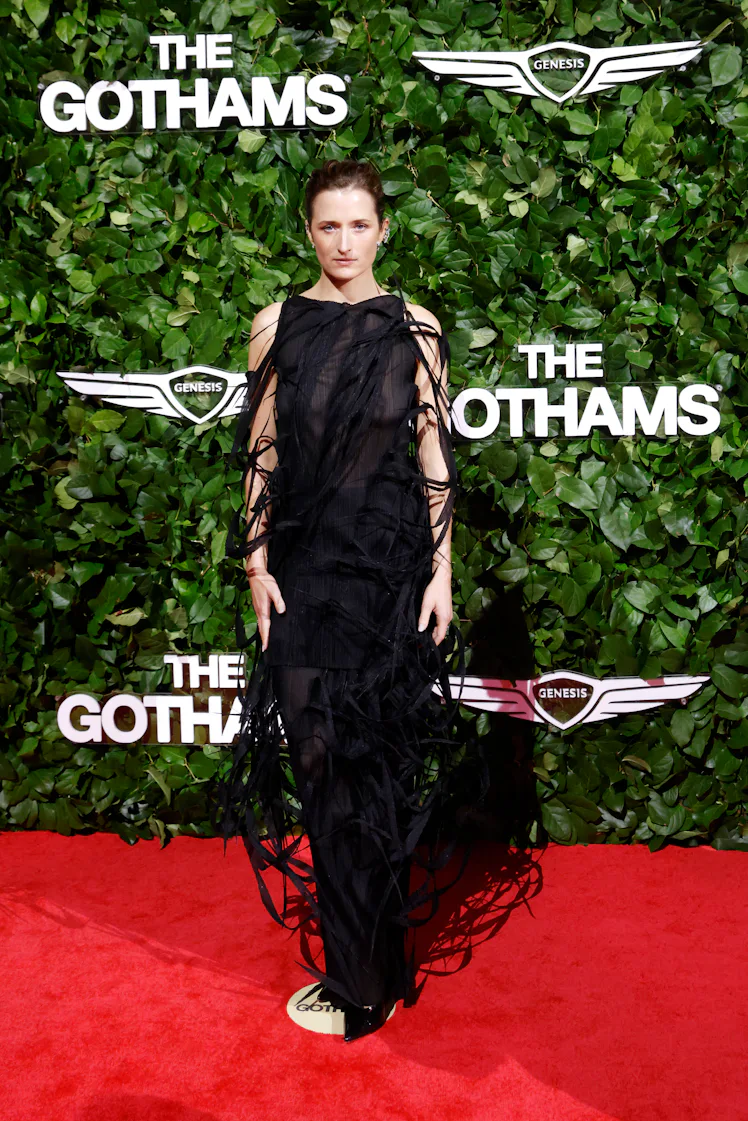

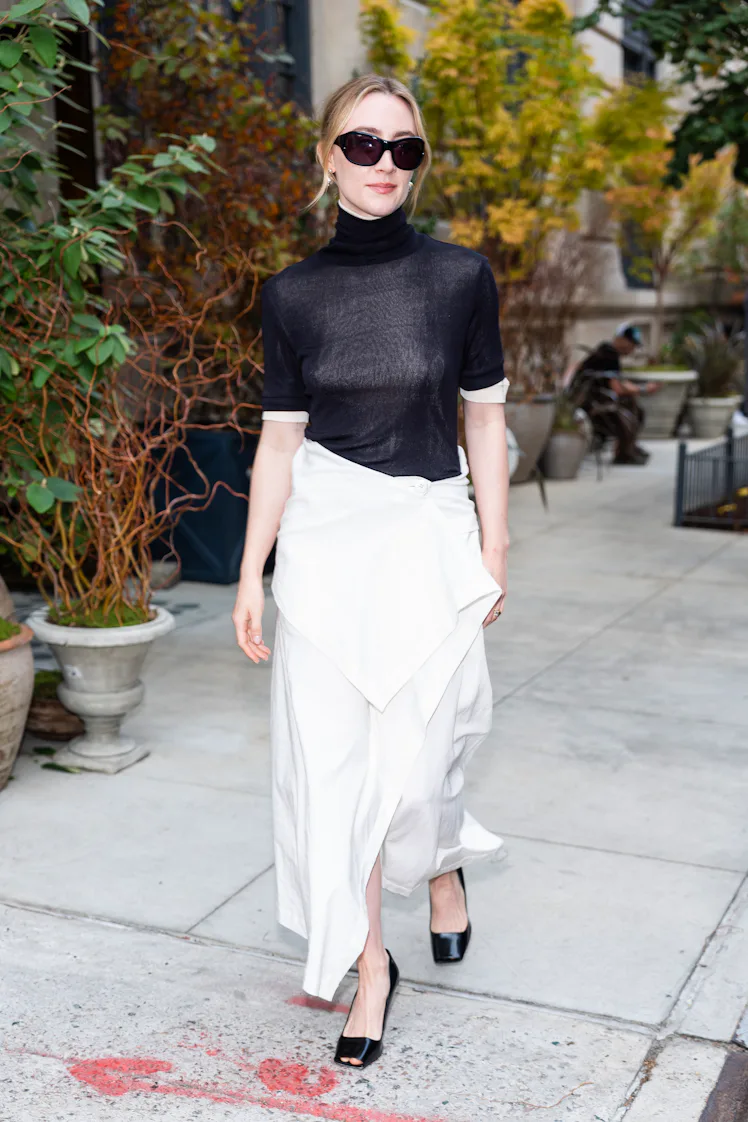
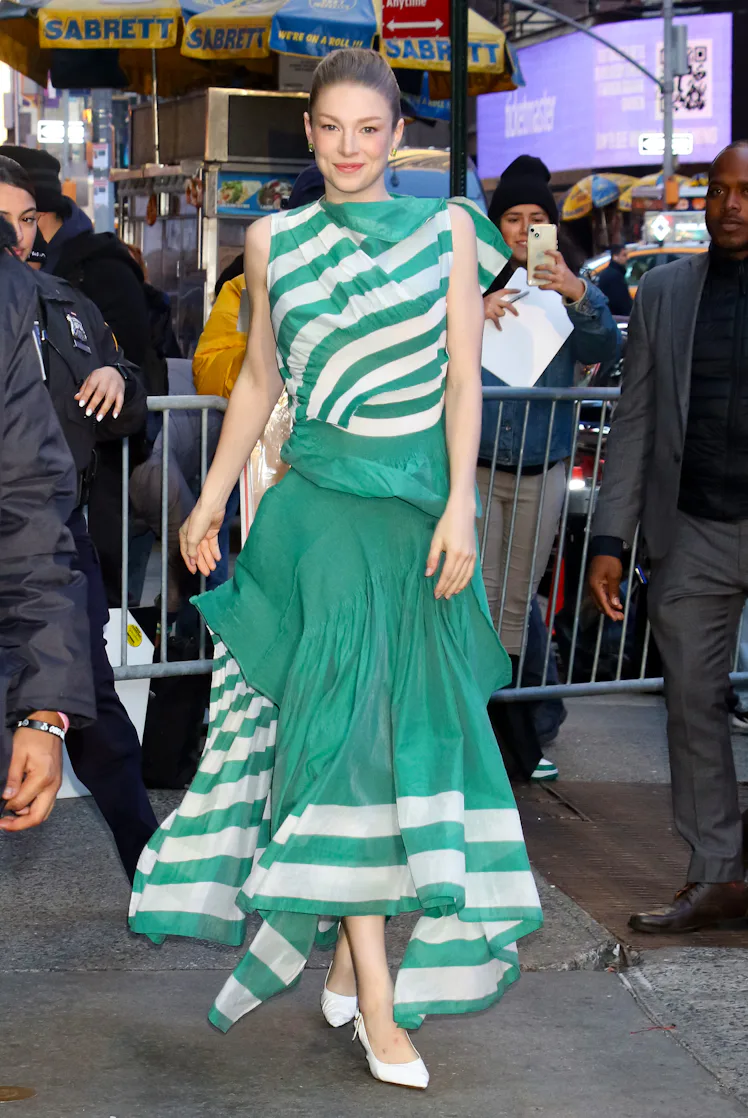

Kondo is passionate about the experience of playing with clothes, from design to the in-store experience. “Clothing is real,” he says. “I believe that there is a sense of joy that comes from putting on a garment, an experience that is physical and tactile.”
This sense of tactility and handicraft is what makes his runway collections stand apart in an age of mass-produced luxury. Behind all the expertise and technology used, there is clearly a set of hands — or in the case of Issey Miyake, the craftspeople it has worked with for decades — thinking up the clothes, and not immediately shipping off sketches to a factory but figuring out the most efficient path of intervention to realize the idea.
“What I learned from Miyake is that a stone found in a park can be just as beautiful as a sculpture in a museum,” Kondo says. “How you look at and treat a material, a craft, or a technology is what gives it value beyond its intended use.” Just the act of looking can seem so simple, but for Kondo, it is a revolutionary act that, in turn, has us looking forward to what he dreams up next.
