Entertainment
Lena Góra on Erupcja, Charli xcx, And Being An Artist First
The rising actress on filming during Brat Summer, her HBO breakout, and building a career on her terms.
Lena Góra is impressively keeping pace. The Polish actress touched down in New York in early April for a whirlwind week of premieres, press, and after-party nights that blur into early mornings that blur into early call times. Yet, when we meet amidst a packed schedule, she feels entirely unhurried, moving through the moment with an easy calm.
The reason for this weeklong trip is Erupcja, the evocative 71-minute exploration of unresolved passion from director Pete Ohs, in which Góra stars opposite Charli xcx and Jeremy O. Harris. “It’s not a film for everyone,” Góra says. “It’s not a film for people that think it’s going to be The Moment.”
Shot in Warsaw during the final haze of summer 2024 (or “Brat Summer,” for the culturally fluent), the highly anticipated film will premiere April 17 in the States following its debut at the 2025 Toronto International Film Festival, which was met with critical acclaim.
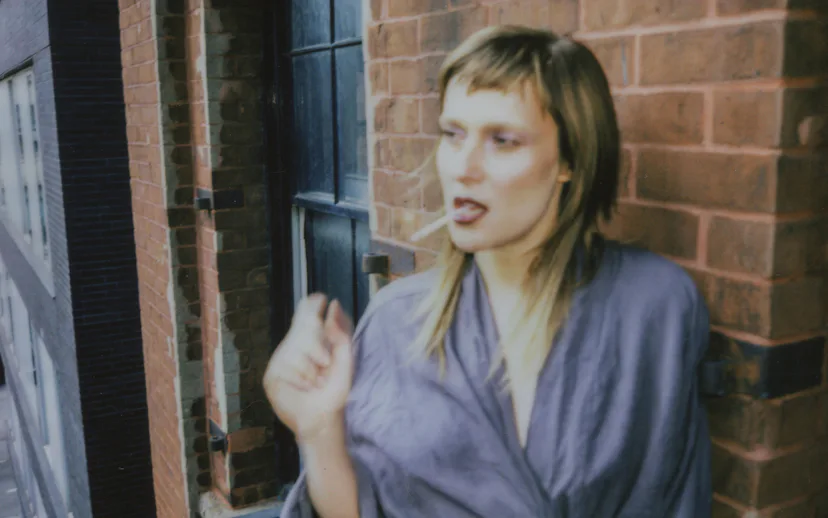
We meet at SoHo’s Café Select, a Swiss-French bistro of her choosing that feels built for people-watching and A-list adjacency. The 36-year-old actress arrives in a study of contrasts: a buttoned black-and-white maxi dress layered with a pink rabbit bolero under a khaki trench, the kind of offhand styling that feels less assembled, more intuitive. But beyond the vintage fur and cigarettes casually tucked into her knee-high socks, her fragrance lands first: musky, herbaceous, faintly sweet, like something pulled from the earth rather than poured from a bottle. I ask her what she’s wearing. “I made it in Cairo,” she says. “In the markets. You can blend oils there. I was just wandering, getting lost on purpose.”
For the past five months, Góra has been based in Egypt, filming an upcoming, untitled HBO Max project alongside Joel Kinnaman. She describes long days split between dialogue-heavy scenes and physically demanding sequences of handling weapons, running drills, and stepping fully into the psyche of a CIA operative. But it’s clear the high-octane experience extended far beyond set life.
Over two rounds of ice-cold beers, she talks about slipping away from drivers and bodyguards, wandering through markets, and losing herself in the city’s rhythm. She muses about afternoons spent at the newly opened Grand Egyptian Museum, its scale almost disorienting against the backdrop of the pyramids. “I’ve had spiritual experiences there. Everyone needs to go to Cairo right f*cking now,” she says emphatically. “It’s the second place in the world where I’m like, ‘I’m from here,’” she says. The first, of course, being her native Warsaw.
Born into a family of artists in Poland (her father a painter, her mother a post-punk singer and activist), she grew up inside what she calls a “bohemia” where canvases leaned against every wall and dinner conversations stretched late into the night. By 16, she was out on her own, trading that world for London, where she fell into the 2000s Shoreditch art scene at exactly the right moment, frequenting the legendary nightlife bastion BoomBox and partying with the likes of Alexa Chung and Agyness Deyn while modeling just enough to fund it all.
From there, the path zigged. A stint in New York as a model and downtown scene fixture ensued, including nights at defunct hot spot Bungalow 8 and a shared apartment with then friend and now creative director Gösta Andreas Lönn Grill. She eventually landed in Los Angeles, where independent films and self-funded projects became her real education. It’s how she built her early filmography, how she found her collaborators, how she learned to move between roles — actress, writer, producer — without really asking permission. “I feel like I’m creating my own journey,” she says. “I was always an artist first. Now, with everything that’s happening, it feels aligned.”
That ethos carries directly into Erupcja, the film that now finds her back in New York. What started as a meeting of minds between Góra and “kindred spirit” director Pete Ohs quickly expanded into something far more collective. Sharing a taste for scrappy, instinctual storytelling and a mutual disinterest in playing by the rules, Ohs saw her breakout indie drama Roving Woman and recognized her affinity for building films collaboratively from the inside out. The two met in Poland soon after, immediately locking into what she describes as a shared belief to “f*ck with the system and make good sh*t.”
Like its title suggests, the film came together less like a traditional production and more like an organic convergence of kismet timing and a shared creative restlessness. “We all were going through some kind of personal or career eruption in our lives at that moment,” she says about the film’s production period. “We all came together at a really powerful time.”
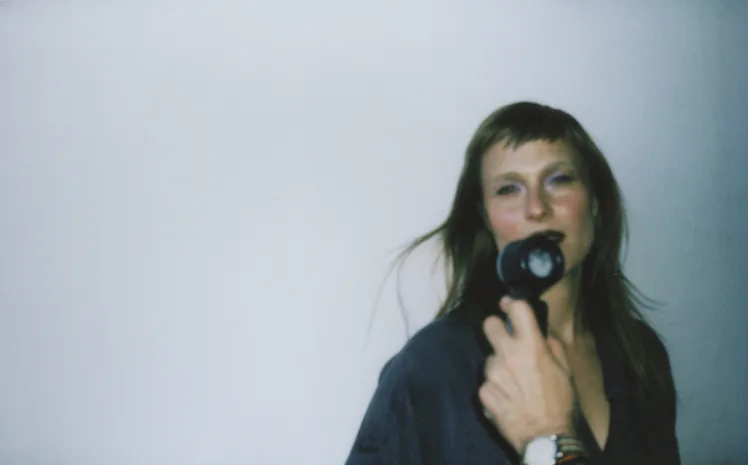
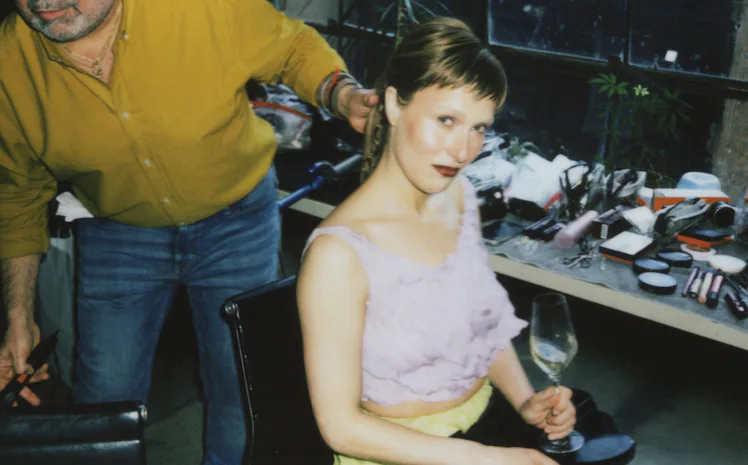
At the time, Góra was already straddling two worlds: larger-scale productions positioning her as something closer to a traditional leading actress, and a self-built indie practice rooted in collaboration and control. Erupcja leaned firmly into the latter. “My team didn’t want me to just make another indie movie. I was supposed to be this ‘superhero’ now,” she says with a laugh. “But we were like, ‘No, let’s make this good. Let’s do this our way.’”
So they did. Ohs brought in Charli and Jeremy O. Harris after Harris, who knew the pop star, introduced her to Ohs during a chance encounter and mentioned his spontaneous filmmaking process. During the conversation, Charli expressed interest in joining, and Ohs invited her to Warsaw on the spot. She followed up the next day and ultimately carved out 10 days during her “Brat Summer” to shoot in Poland. “Meeting Charli was an eruptive force that took us all on this beautiful, really high-energy train,” she says.
Góra also brought in her own orbit, including local friends, collaborators, and a tight-knit Polish creative community that dissolved any hierarchy between cast and crew. Everyone met at a dinner; they started shooting the next day — often in the very apartment Góra was living in at the time, which doubled as both set and sanctuary, one half reworked for filming, the other reserved for long communal dinners that bled into late-night rewrites. The script remained fluid, with scenes evolving in real time, written and reshaped between takes. “We were just hanging and creating,” says Góra. “We kept playing. We were efficient. It was actually one of the easiest jobs I’ve gotten to do.”
That free-flowing energy translates on screen. Shot over three and a half weeks, the film unfolds as an emotionally charged portrait of two young women reuniting after 16 years as Bethany (Charli xcx) fights to relive a fleeting teenage intimacy that never quite resolved, while Nel (Góra) resists returning to that same charged, unsettled connection. Harris plays Claude, an American artist who inadvertently finds himself caught between the duo. It’s a sapphic fever dream for the chronically nostalgic.
“It’s where she really gets to shine as an actress,” Góra says of Charli. “At first I was like, ‘Oh, is she going to be like a pop star?’ We were trying to make something really tender. But she came in with none of that — no manager, just a team player. She would ask me questions and be like, ‘You’re an actor, what would you say?’”
That openness, it turns out, went both ways. “I learned a lot from her,” Góra continues. “I learned a lot about the packaging and business side of things, like creative direction, which is something she does so well. It was cool to learn.”
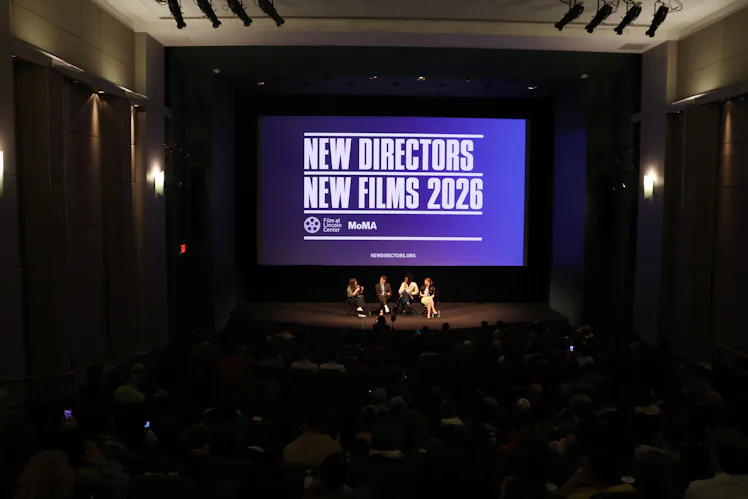
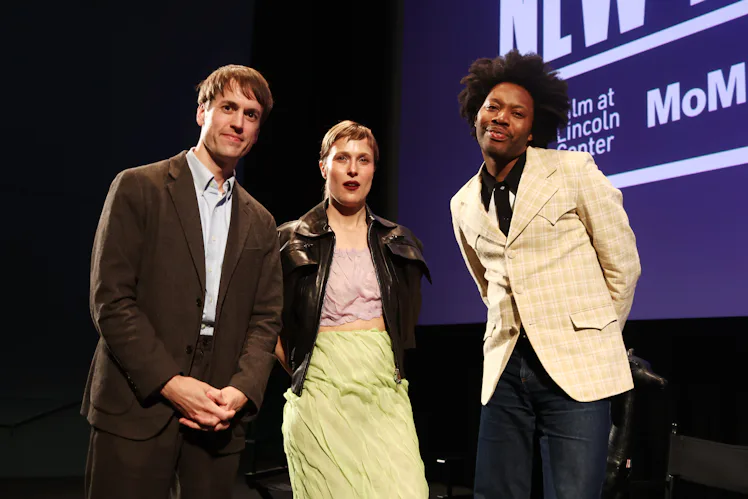
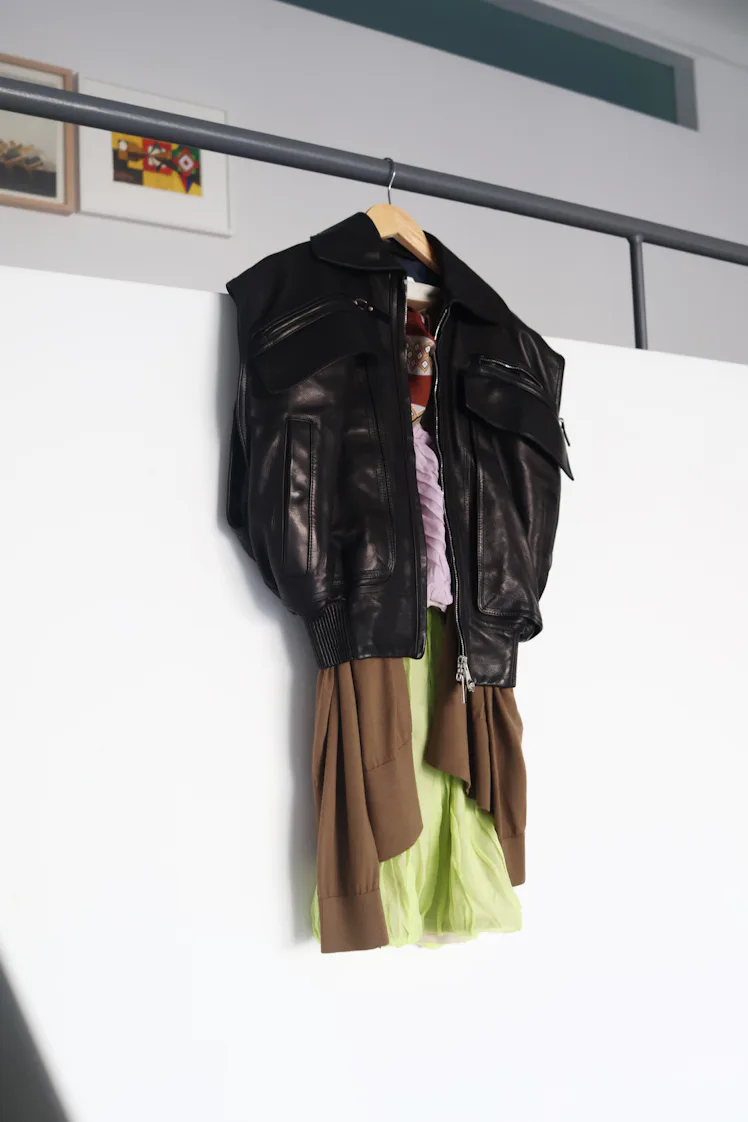
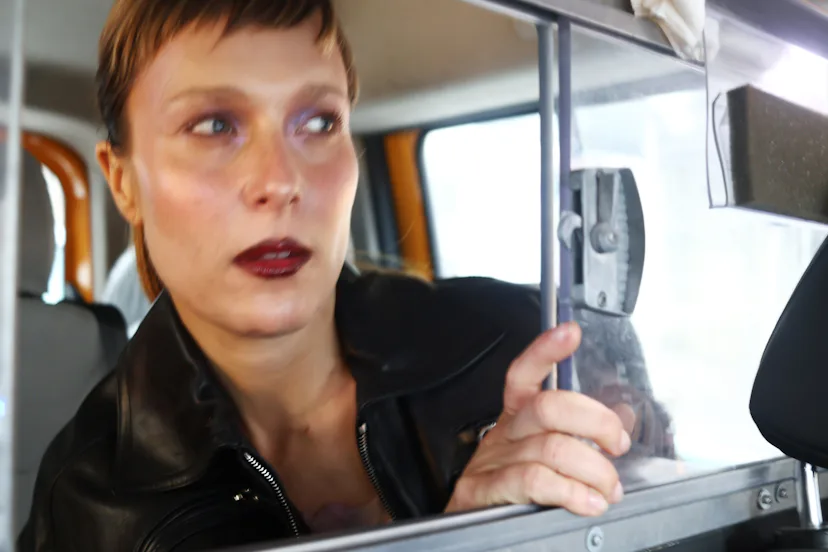
Forty-eight hours later at Lincoln Center, that same energy carries onto a much larger stage. Her approach to the night remains characteristically unfussy: getting ready at home in a head-to-toe Versace Spring/Summer 2026 look, grabbing a cold beer from the fridge for the road, and hailing a yellow cab uptown. The New York premiere plays out on the big screen, before Góra takes to the stage alongside Ohs and Harris for a post-screening Q&A in front of a sold-out theater.
Similar to Charli, who recently took some time away post-Brat, she’s thinking about pause as much as momentum. “Since I wrote Roving Woman seven years ago, I haven’t had a break,” she says. “After this, I’m going to do a minimum of three weeks [off]. That’s the minimum your nervous system needs to actually wind down.” She pictures it simply: somewhere in Europe, a house, a coffee, a book read from beginning to end for no reason other than pleasure. “You need to find places where you stop creating to go inwards,” she says.
Because for all the forward motion into red-carpet premieres, new roles, and the industry finally catching up, Góra isn’t interested in disappearing into it. “I’m trying to fight that FOMO … that you have to continuously participate or you’ll just disappear,” she says. “I don’t want to live that life.”
