Encounter
Wasia Project Is Running On Jet Lag & Genius
Who needs sleep when inspiration strikes after midnight?
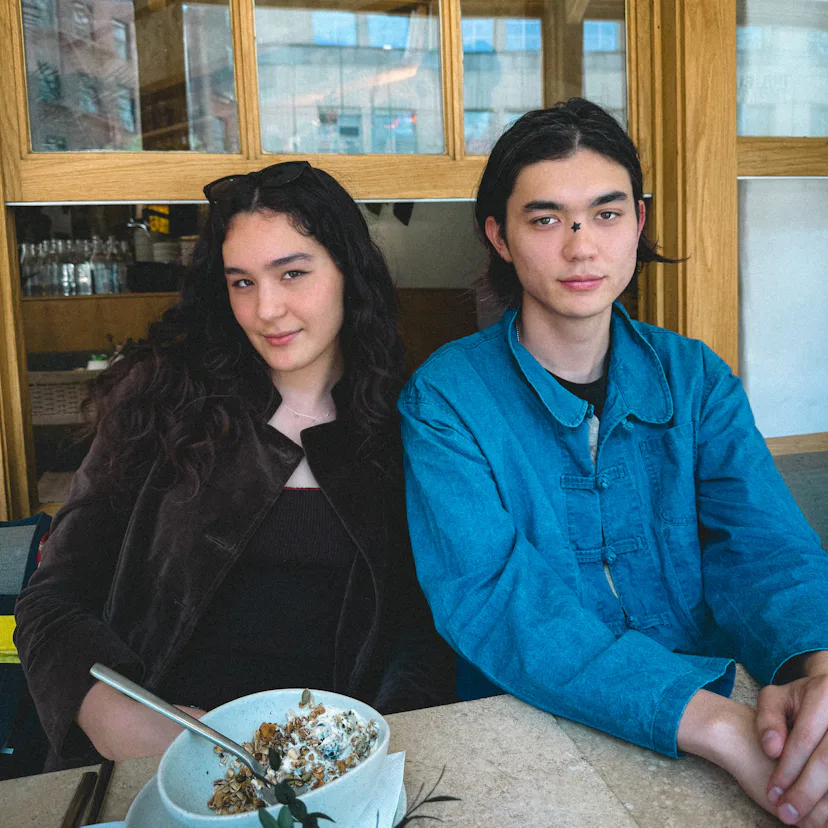
Wasia Project is running on equal parts jet lag and adrenaline. “I woke up at 6 a.m. and scrolled,” admits William Gao, one half of the alt-pop duo. Though don’t ask him to find what he was looking at again. “I don’t like anything because I don’t want to feed the algorithm.”
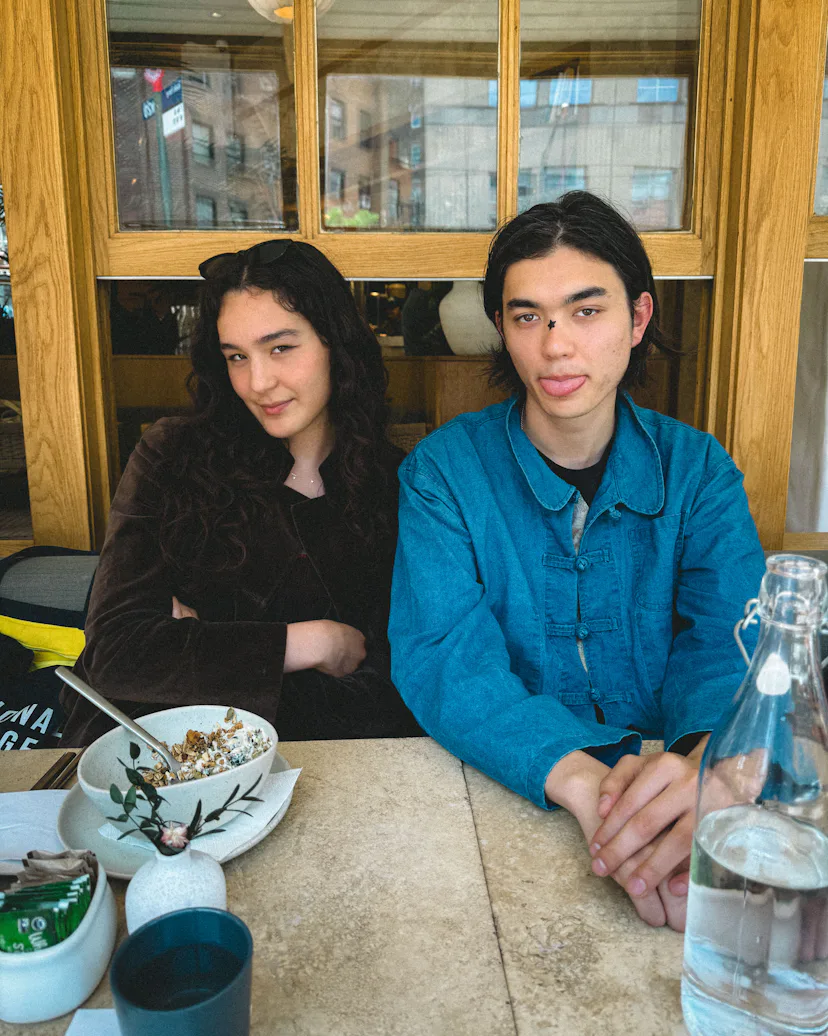
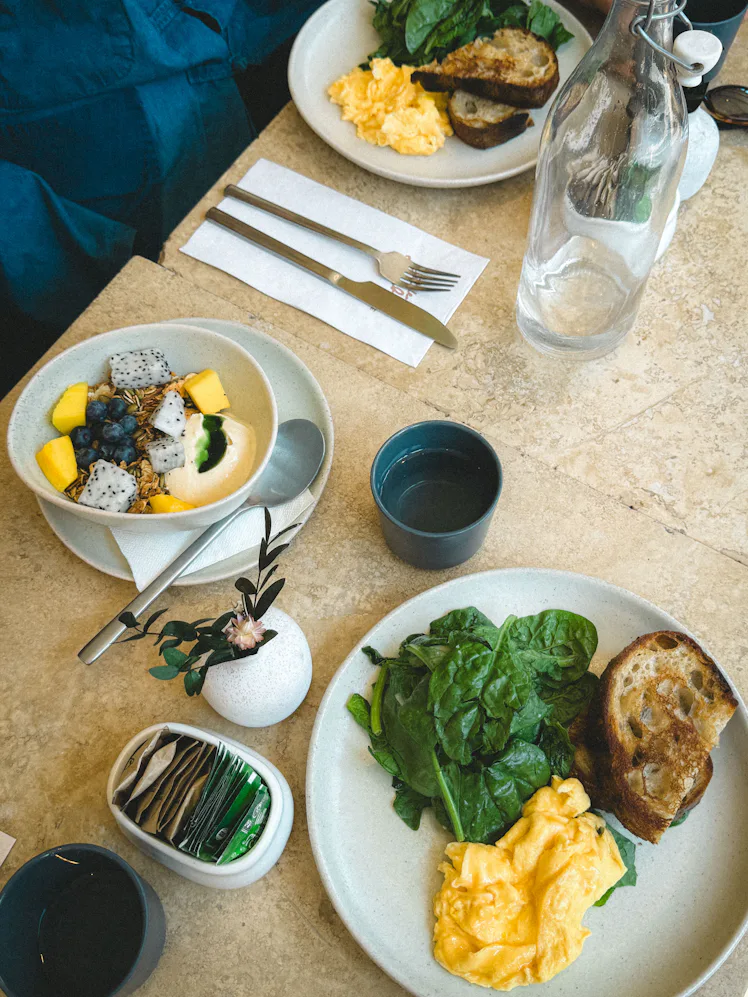
For Gao, 23, and Olivia Hardy, 21, jet-lagged mornings are becoming increasingly familiar. When I meet the siblings at Little Ruby’s in the West Village, they’re in the middle of a whirlwind New York visit packed with press stops, studio sessions, an album listening party, and a visit to the New York University Steinhardt School, where Hardy is set to perform later that day. Spread across our table are eggs, toast, and a yogurt granola bowl — breakfast squeezed into the margins of an increasingly packed schedule.
New York is just the beginning. Since forming Wasia Project in 2019, Gao and Hardy have built a genre-blurring sound of classical composition, indie pop, and electronic experimentation, taking their music from festival stages to tours alongside Laufey. In the months ahead, the duo will take their music from Berlin to Manila, Hong Kong to Sydney, in the lead up to their 12-track debut studio album, Nocturne, out Sept. 18.
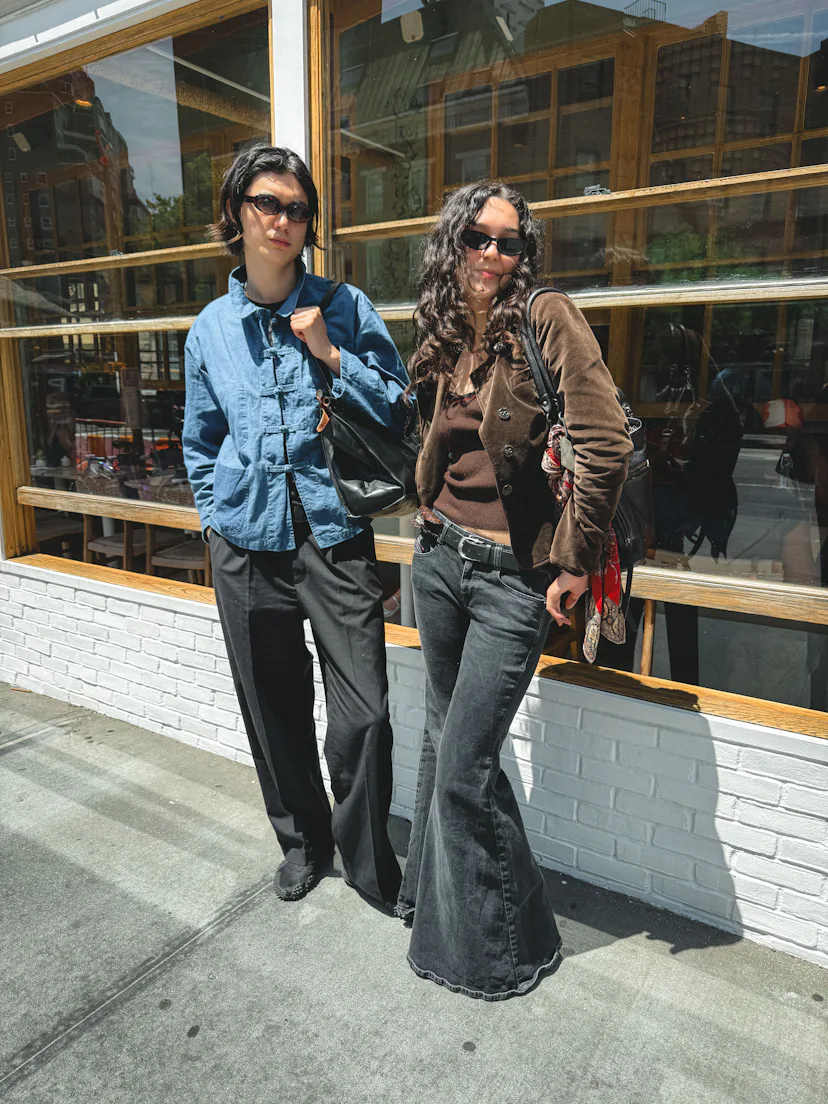
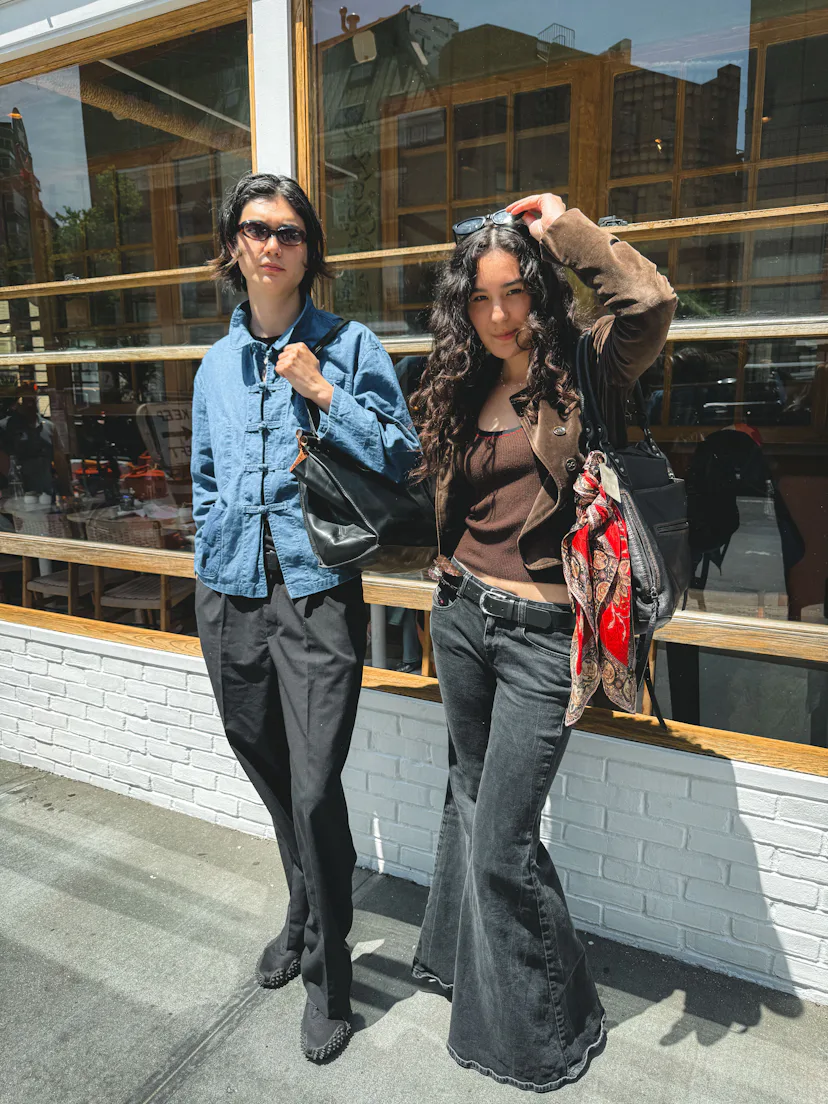
For now, Hardy curls into the cafe’s banquette in a brown velvet blazer and low-rise bell-bottom jeans, a pair of oval sunglasses perched neatly atop her head. Beside her, Gao sits in crisp black trousers and a denim Tang shirt, a nod to half of their heritage. Hardy weighs the merits of New York’s bustling creative scene versus London’s tranquility in comparison: “I feel like I am more of a calmer vibe. I’m still not old enough for New York. I’ll get there — give me two years.” The conversation moves rapidly; they compare notes on the best way to consume coffee, riff on philosopher memes, and run through the rest of the day’s itinerary.
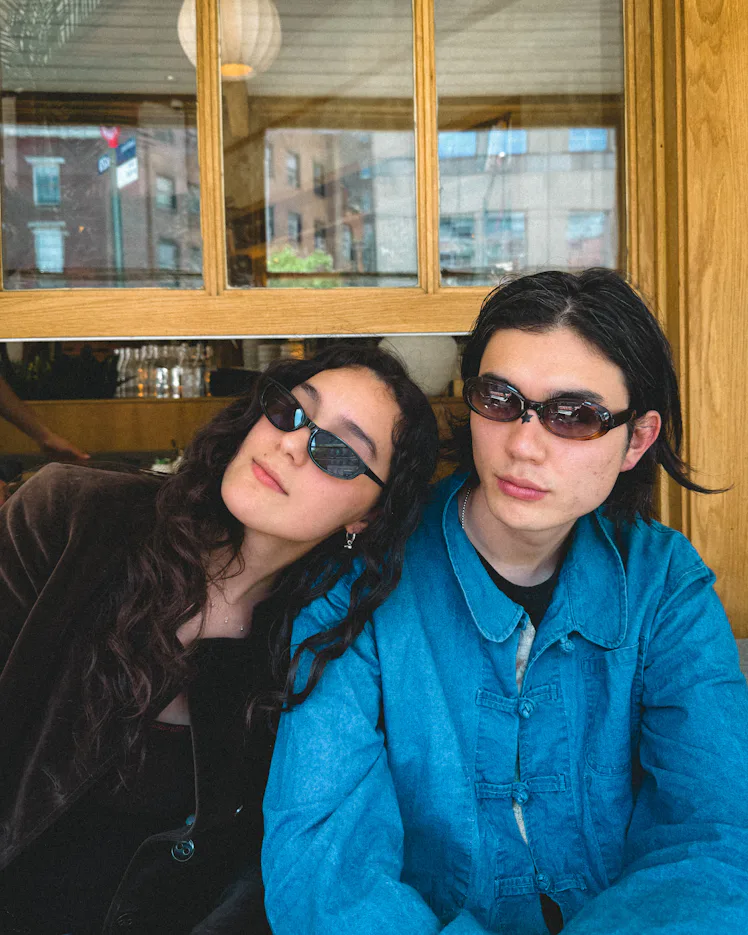
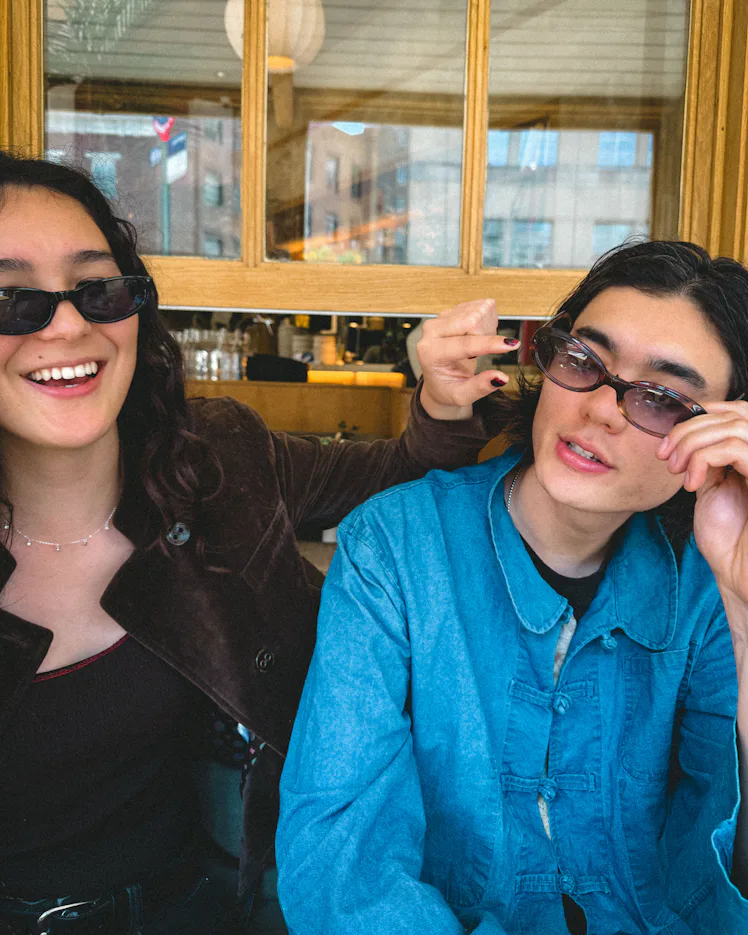
It’s a natural rapport that comes from years of knowing exactly how the other person thinks. The siblings grew up in a home where the front door was seemingly always open, with academics for parents and a revolving cast of visitors passing through, so conversation and creative inspiration were never in short supply. Their musical education was just as expansive, classically trained and equally fluent in interpreting centuries-old plainsong and the layered sonic landscapes of Deftones and Aphex Twin. For Gao, that freedom eventually led in more than one creative direction. While many first came to know him as Tao Xu on Netflix's Heartstopper, music has steadily become his gravitational pull, spending the last several years building Wasia Project into one to watch in the indie pop-sphere.
“Our home was always quite a creatively free place,” Gao says. “Our parents were always very [open] in the sense of following instincts and growing creatively.” Looking back, Gao says he’s only recently realized how unusual that environment was. “I think maybe our collaboration and our work is a result of that environment,” he says. “Space to create is an incredibly important thing.”
That same freedom became especially valuable while making Nocturne, largely because the first version of the album wasn’t working. “We didn’t create work that was ringing on the emotional level we felt we could have expressed,” Gao recounts of their first go at the album. Rather than forcing it, they hit pause and split up.
Gao boarded a plane to Berlin, throwing himself into the city’s famously immersive club culture, while Hardy stayed closer to home in London, punctuating the slower pace with a brief trip to Paris. “I went completely on my own,” Gao says. “I went to a lot of music [events] and a lot of communal experiences.” More than the nightlife, though, Gao was drawn to Berlin’s DIY music culture. “It’s much less about necessarily having a career out of it or this rat-race thing,” he says of Berlin’s music scene. “It’s much more about ‘We share this. We share this together. We play together.’”
The trip turned into something more spiritual than simply album research. “I found a darkness that made me appreciate the lightness. I felt them both there at the same time,” says Gao.
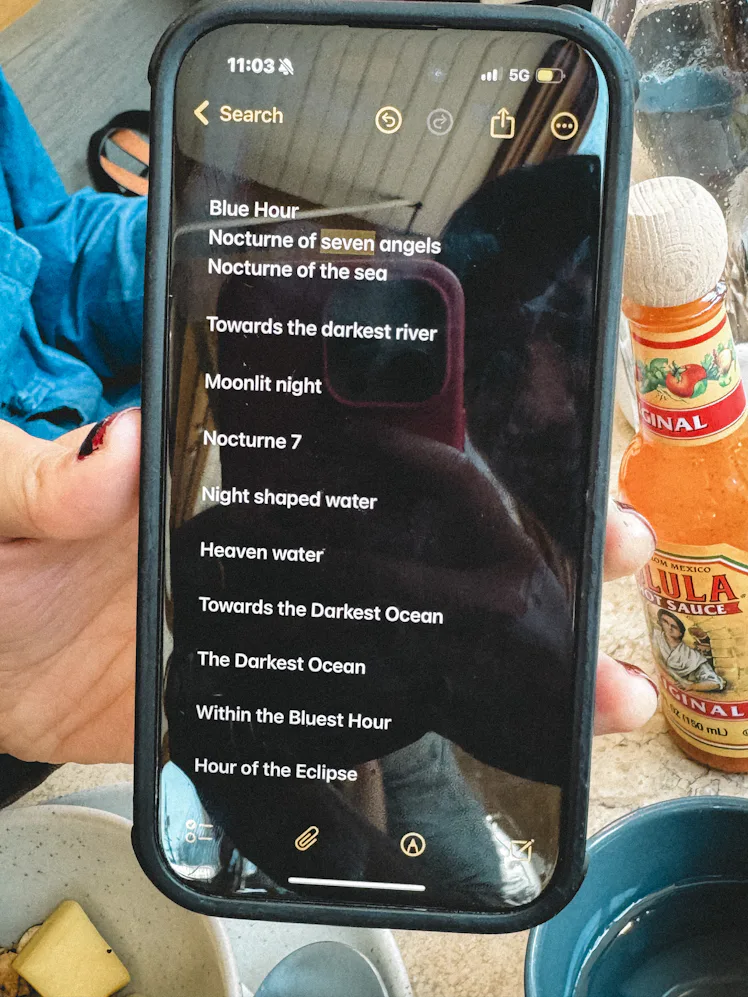
When the siblings reconvened, they returned with entirely different perspectives but a shared clarity on the moody electronic soundscape of Nocturne. The title, fittingly, found them late in the process. There were other contenders — “Hour of the Eclipse,” “Blue Hour,” “Towards the Darkest River” — but none captured the world they’d built quite like Nocturne.
“We’re both very inspired by the night, as I feel creatively it’s a very free time for us,” Hardy explains. “I’m awake at 2 or 3 in the morning, and it just feels so surreal and free. Nobody can bother you.”
Today, that nocturnal world expands with the release of “Whale Call,” a guitar-led track accented by Hardy’s evocative vocals and the latest glimpse into the record ahead. For Gao, the song arrives at a moment when he’s wholeheartedly embracing instinct over expectation. “You can’t have that fear in music, I feel,” he says of newfound “take it or leave it” energy. “If you do, the music won’t be as honest or as true to yourself.”
By the time our empty plates are cleared, the interview has dissolved back into sibling banter. Gao confidently misquotes an Addison Rae lyric as “Costco chain.” Hardy doesn’t let him get away with it for a second. Time to take this show on the road.
