Nylon Nights
From Tame Impala To HBO, Everyone’s Finding Their Way To Café Tondo
Somewhere between the morning coffee run and the late-night DJ set, Café Tondo became one of LA’s most interesting cultural crossroads.
On an otherwise ordinary Sunday night in LA’s Chinatown, the red lights lining a tiny café and bar cast an otherworldly glow over Alameda Street. The Metro’s A Line rumbles overhead, while a crowd of leather-jacketed scenesters spills into the parking lot, digital cameras pointed up at the billboard overhead: “Deadbeat in Los Angeles.” The crowd continues to rapidly multiply; just an hour prior, Tame Impala’s Kevin Parker had announced a surprise DJ set at Café Tondo. At 9 p.m., Parker slips behind the decks, soundtracking the night with cuts from his fifth studio album, Deadbeat. For one hour, an impromptu rave pulses through the night. But by morning, the location would be back to serving lattes.
In just over a year, Café Tondo (or “Tondo,” as the regulars call it) has accumulated the kind of lore most venues spend years trying to manufacture. By morning, it’s a WFH-friendly hot spot where locals linger over lattes, but by nightfall, the DJ booth and dance floor take over. With more than 46,000 Instagram followers, Tondo has become a destination for hush-hush celebrity drop-ins and a glittering roster of artists who’ve taken to its decks. PinkPantheress, Remi Wolf, and Becky G have all passed through, and a recent filming sighting has sparked speculation amongst locals that the bar could cameo in the second season of I Love LA, putting it among the ranks of Season 1 locales like Tenants of the Trees and Canyon Coffee.
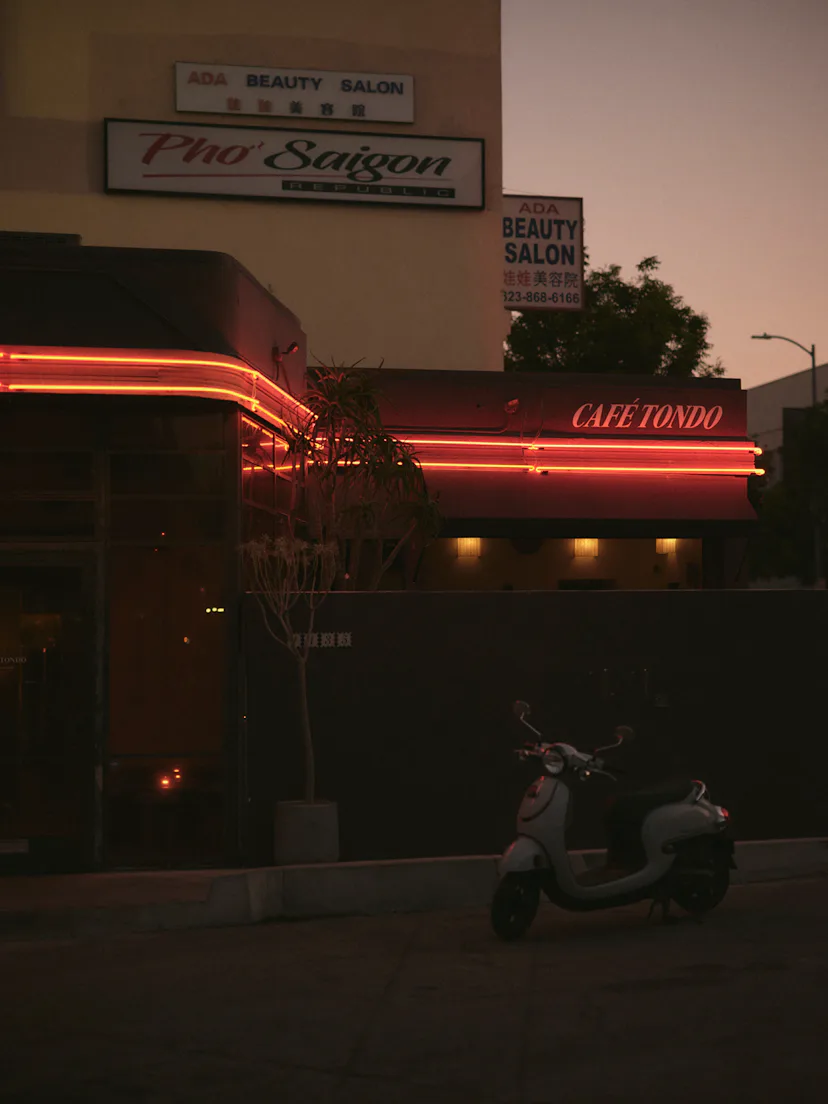
It’s a pretty good trick for a place that wasn’t necessarily trying to become a nightlife destination in the first place. Originally envisioned as a daytime-focused café, Tondo quickly took on a life of its own after dark. On opening night in July 2025, Mexico City-based DJ Escuby took over the decks to celebrate, as a line snaked around the block; cofounder Abe Campillo had to send his team on multiple unexpected beer runs to keep up with the crowd. “I was like, ‘Oh shit, we’re onto something.’”
That instinct to bring people together is rooted in Campillo’s upbringing. The creative director and cofounder of MOUTHWASH Studio grew up in Texas with family roots in Monterrey, Mexico, frequently moving across country lines. Coffee was always in the house, as were mugs of Abuelita hot chocolate, fresh pastries from nearby panaderías, and, most important, people. Campillo drew on the tradition of all-day hosting that would eventually become part of the blueprint for Tondo.
“There’s a lot of places that do good food. There’s a lot of places that look beautiful. There’s a lot of places that do good music. I think there’s very few that do all of them.”
But its musical identity was taking shape long before Parker showed up. Before launch, Escuby consulted Tondo about the café’s sound, helping shape an environment where DJs could experiment without being confined to one genre. Since then, DJs including Victoria Moura, Hektor Mass, and Love Baila have taken their turns behind the decks, making Tondo’s weekend nights as much about who’s playing next as who might unexpectedly walk through the door.
“When we first started, it was predominantly Latin DJs,” Campillo says. Since then, the programming has expanded to include other DJs within the team’s circle, along with the occasional vinyl set.
For Spanish DJ Hektor Mass, the appeal was immediate. “It was amazing because the place is unique — where it’s located, the crowd, the vibe,” says Mass, reflecting on his first time playing Café Tondo. Earlier this month, he returned for his third set, playing house, melodic, and Afro house tracks. By 10 p.m., the ambient red light hadn’t changed, but the crowd had doubled in size. For Mass, that intimacy is exactly what makes the room work. “You can see the reaction of the crowd,” he says.
Campillo is careful not to describe Tondo as a re-creation of Mexico dropped into Los Angeles. “There’s things that I’d say are derived from Mexico,” he says. “But to me, the interesting thing is putting that in Chinatown in LA, it becomes something totally different.” Escuby agrees. “It feels like a really cool side of what makes LA so special. It’s so rich and it’s because of its Latin culture, not even Mexican per se,” he says. “To understand the Latin culture of Los Angeles is really a wider view that it became its own thing.”
Chinatown wasn’t necessarily where Campillo set out to open. He had been searching everywhere from Silver Lake to Echo Park and Northeast LA before coming across the former Oriel space, a French bistro and wine bar that he describes as his dream location. The “coolest neighborhood in the world” already had its own established nightlife scene with spots like Café Triste and Lasita, and Los Angeles State Historic Park — a longtime destination for music festivals and DJ sets — sitting just across the street. With an existing beer-and-wine license, Tondo went from idea to opening in roughly 75 days.
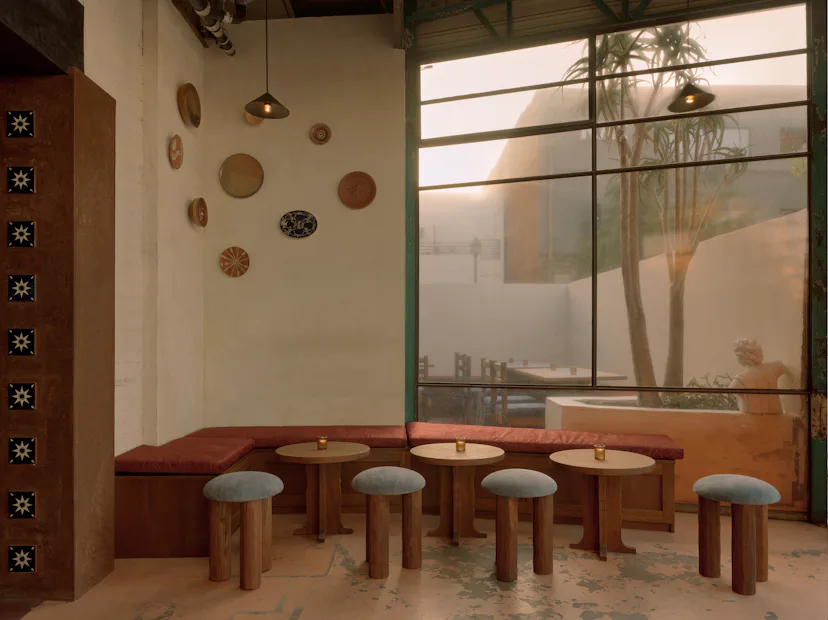
Even the name has an artistic reference: A tondo is a circular work of art, a shape that appears throughout the café’s visual identity. The concept itself was similarly fluid from the beginning: part café, part bar, part restaurant, and, eventually, something much harder to categorize, just like the clientele it attracts. Think girls dressed to the nines, tattooed guys in trucker hats and baggy jeans, and Dodgers fans fresh from the stadium, still wearing their sunglasses after dark. It’s a room where a full beat and a baseball cap feel equally appropriate.
That middle ground (somewhere between a casual glass of cava and committing to a night out on the dance floor with your friends) seems to be part of Tondo’s appeal. “You have a glass of wine, you’re dancing to the music. It’s always a unique scene,” adds regular Tanya Garcia, who started coming to Tondo for its World Cup watch parties but has stuck around since.
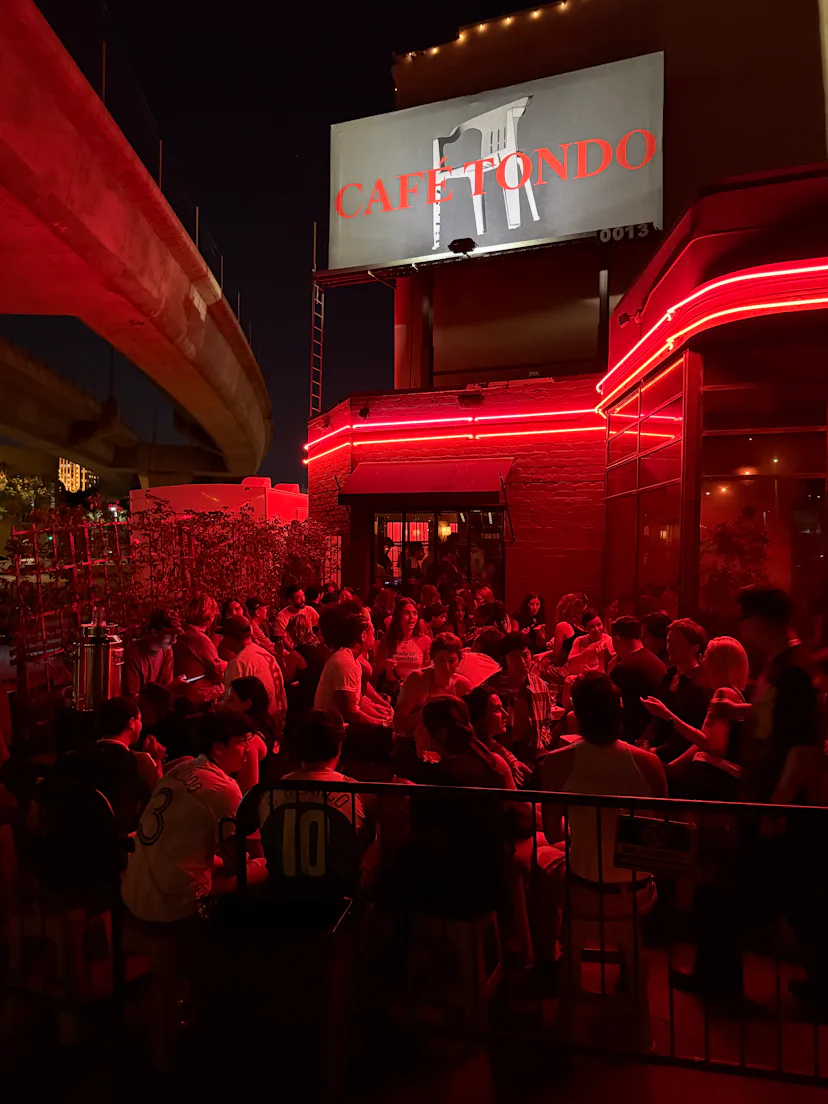
New and returning DJs rotate through the decks, the menu changes seasonally, and no two nights seem to attract exactly the same crowd. “I think it’s the overall experience,” Campillo says. “There’s a lot of places that do good food. There’s a lot of places that look beautiful. There’s a lot of places that do good music. I think there’s very few that do all of them.”
And apparently, some people are leaving Tondo with more than a good night out. According to Campillo, the café has even become something of a matchmaking destination. “I’ve seen a lot of people find love at Tondo,” he says.
Part of Tondo’s charm is how seamlessly the party spills between the café and the outdoor space, making it feel like you’re a part of the action whether you’re inside or out. Step inside the roughly 1,200-square-foot café and bar, and the atmosphere shifts depending on the time of day. Campillo originally envisioned something more focused on mornings, but the crowd had other ideas. “We originally were more into the café, but [customers] were craving live music and the ability to hang out with friends at scale.”
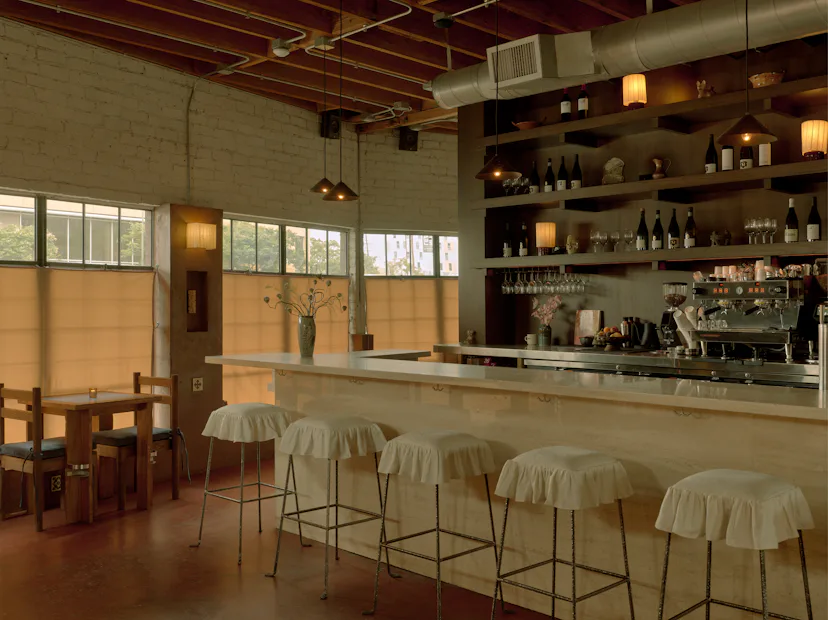
Designed by Aunt Studio, the space retains traces of its past lives as a French bar, acupuncture clinic, and mechanic shop. Original scuffed floors, painted brick, and exposed ceilings remain, while earthen red plaster connects the different rooms. Blue tabletops inspired by Mexican cantinas, furniture made in Mexico, and artwork Campillo has collected during his travels bring some of his personal history into the space.
And no night out is complete without a plate or two. Guadalajara-born chef Luis Luna’s menu includes rib eye tacos piled with cilantro and onions, Caesar salad generously dusted with parmesan and bread crumbs, seasonal desserts, and the famous tuna tostadas, a staple that has stayed on the menu since September 2025. “I think people would be mad if I took that off,” Campillo says.
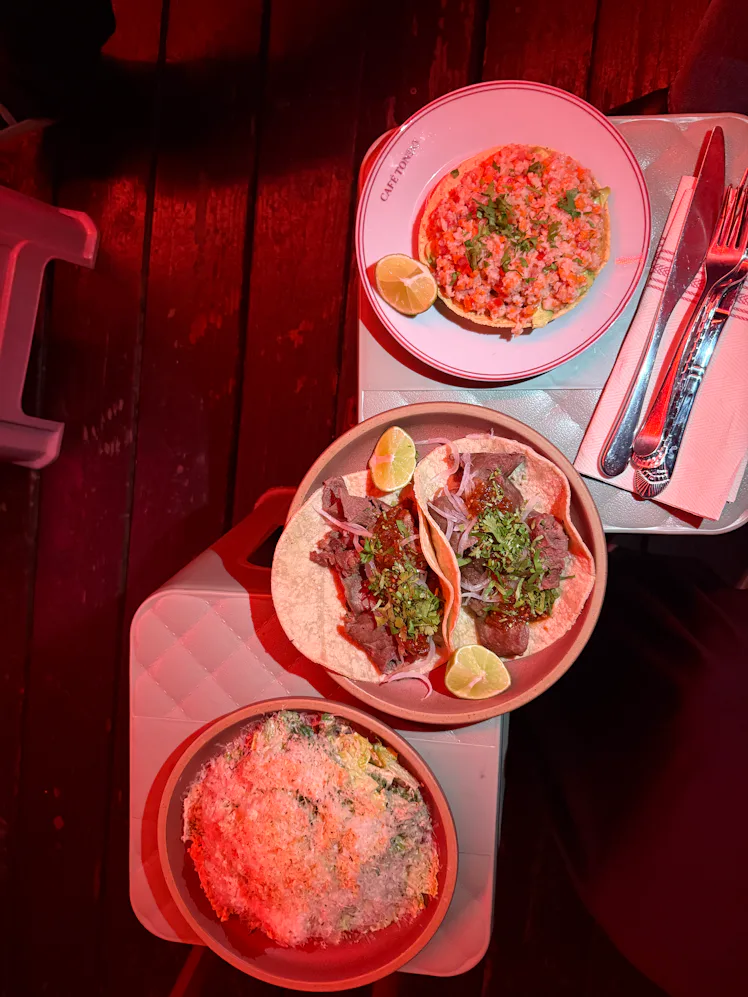
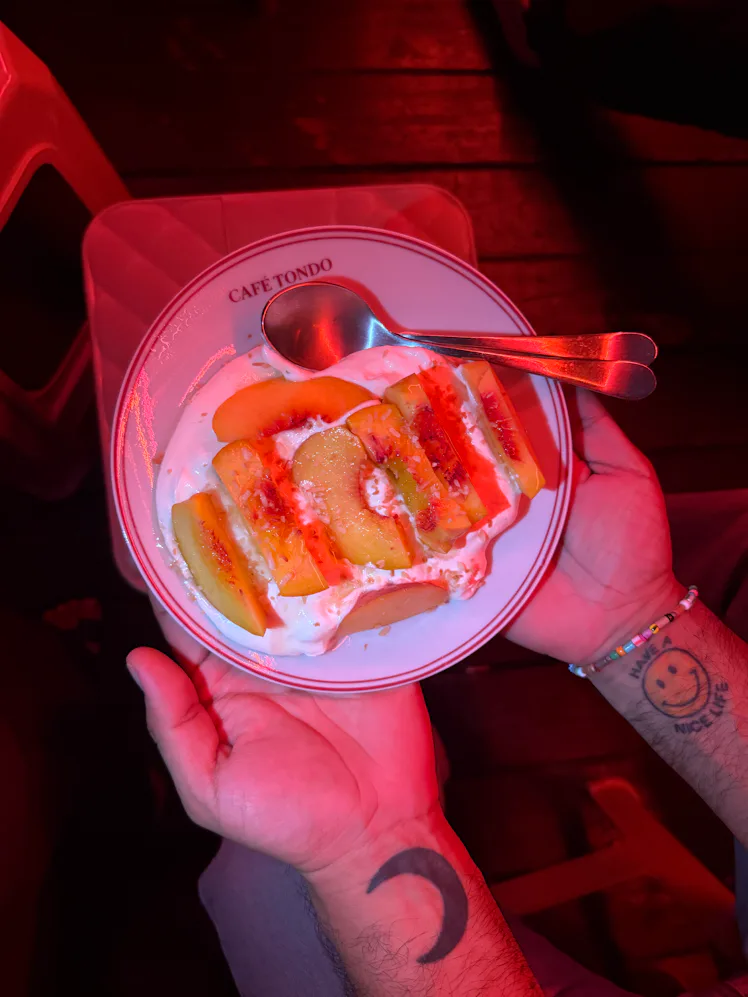
But feeding a roomful of people who are just as interested in dancing and flirting as they are in eating comes with its own considerations. “Tondo’s a place people want to look good in,” Campillo says, explaining that he’s thinking about making the next menu easier to eat. The fried chicken, for instance, has proved a little tricky to navigate, thanks to its generous accompaniment of aioli. It’s a distinctly LA hospitality dilemma: How do you serve a proper meal without asking someone to sacrifice their outfit?
As Tondo strengthens its footing in LA’s nightlife orbit, the question is how to keep the momentum going. “You already proved your point and your concept works, but now you have to maintain it,” says Escuby. “I hope Tondo is one of those places that lasts the testament of time.”
For Campillo, though, there are moments when he can simply enjoy what they’ve already built. On a recent packed Saturday night, he watched as the crowd spilled from the café into the parking lot and deck. “It’s like exhaling a cigarette,” he says. “Because a lot of time and energy went into doing it.”
He takes another drag, watching the room fill back up as the next DJ gets ready to take over. The pause, however, is brief. “And then, yeah, back at it the following day,” he says.
