The Fashion Issue
Effortlessly Suki
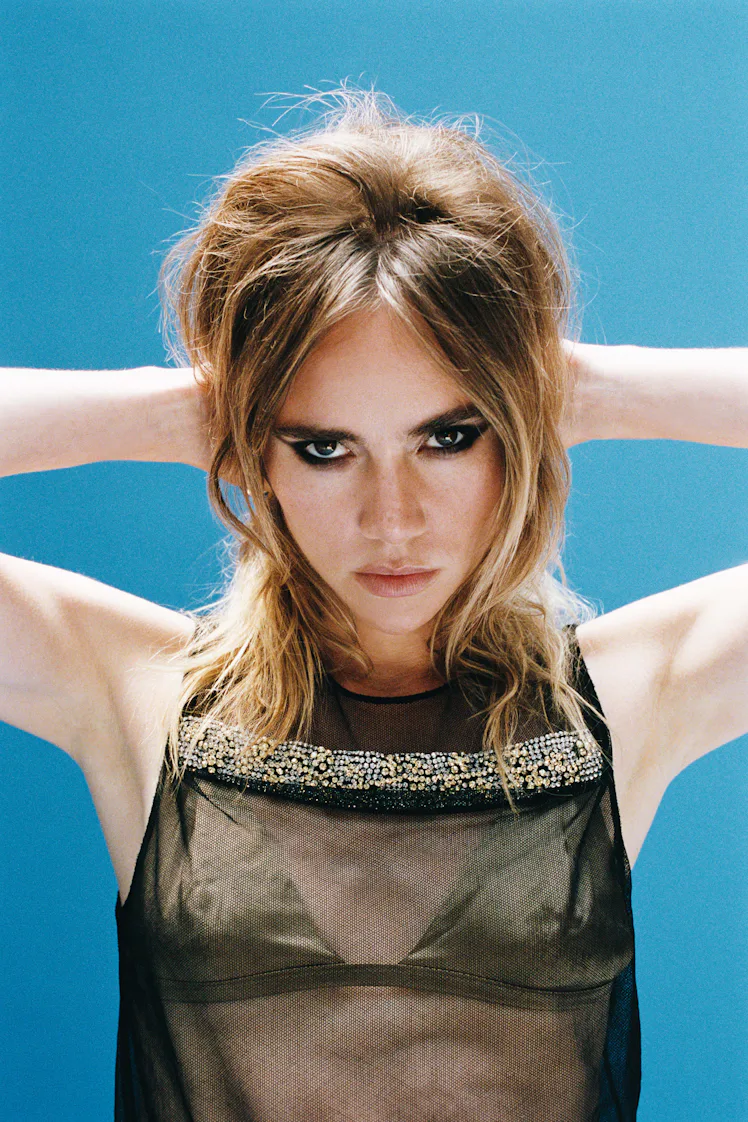
Whether she’s floating across festival stages or lighting up our screens with her rock-star charisma, Suki Waterhouse can’t help but be herself.
“It’s insane what happened to me,” says Suki Waterhouse, two fingers methodically tapping on her phone for evidence. “I’ve got to find it.”
Our waitress — a heavily tattooed blond bombshell — interrupts, and Waterhouse orders a lemonade (a remedy for near 100-degree LA weather). She resumes swiping intently. We’ve been talking motherhood in the public eye, and I mention I’m not sure I want to have children — but Waterhouse wants me to know what might be in store anyway. “Anyone that’s thinking of having a child, I show them [this photo]. I had something called ‘pregnancy nose,’” the 34-year-old divulges. “It’s actually so funny. And it does go away, but it was crazy.”
At last, she locates the artifact. The selfie is not dissimilar to many we’ve all seen of her over the nearly two decades Waterhouse has been in the public eye — she’s makeup-free, her hair a signature mussed lob. The singer instructs me to inspect her swollen “unrecognizable” nose — a perinatal symptom of increased blood flow — but I’m struck by how vulnerable she looks in her hospital gown in the hours before motherhood. Today, she’s back in full Waterhouse regalia (a champagne silk dress with sequins cascading over her chest) in another unexpected context: a casual rotisserie chicken restaurant on the edge of Hollywood.
Waterhouse used to live not far from here with her partner, Robert Pattinson, and their 2-year-old daughter, whose name the pair have yet to share publicly. “I think if I spend too long here, I get quite down,” Waterhouse says of LA. “I feel like I almost left this area because the pap thing was really bad.” Still, she liked the spot’s walkability and sense of community. Around these parts, Jennifer Coolidge is rumored to wander barefoot to the local magazine stand. During our lunch, both Dylan Sprouse and the Kills’ Jamie Hince separately swing by our table to say hi.
At one point, a slick thirtysomething couple also pause at our table to greet Waterhouse, quickly pivoting to pitch her on their historic apartment building down the block. Waterhouse enthusiastically says she’ll consider a short-term lease, even though Pattinson recently told the press that he and Waterhouse are renting in Beverly Hills. As they leave, the singer leans in close. “I have no idea [who they were],” Waterhouse says. “But I’m quite good at pretending.”
Her life has been a whirlwind of late: In 2023, she concluded her Coolest Place in the World tour, starred in the acclaimed limited series Daisy Jones & the Six, and made her Lollapalooza debut. In 2024, she gave birth to her daughter two days after completing her sophomore album, Memoir of a Sparklemuffin. By 10 weeks postpartum, she had shot a British Vogue cover and headlined the Gobi stage at Coachella (“Quite intense,” she says of the pace). Then she opened Taylor Swift’s Eras Tour at Wembley Stadium. “What an unbelievable thing to get asked to,” she reflects, twirling her straw. “I couldn’t actually believe it. Seeing 90,000 red seats all empty right during soundcheck, that was scarier than actually doing the show. I just can’t believe that this is what [she does] every night for a year. It’s so crazy, being around Taylor.”
“I’ve always kind of weirdly been happy wherever I am.”
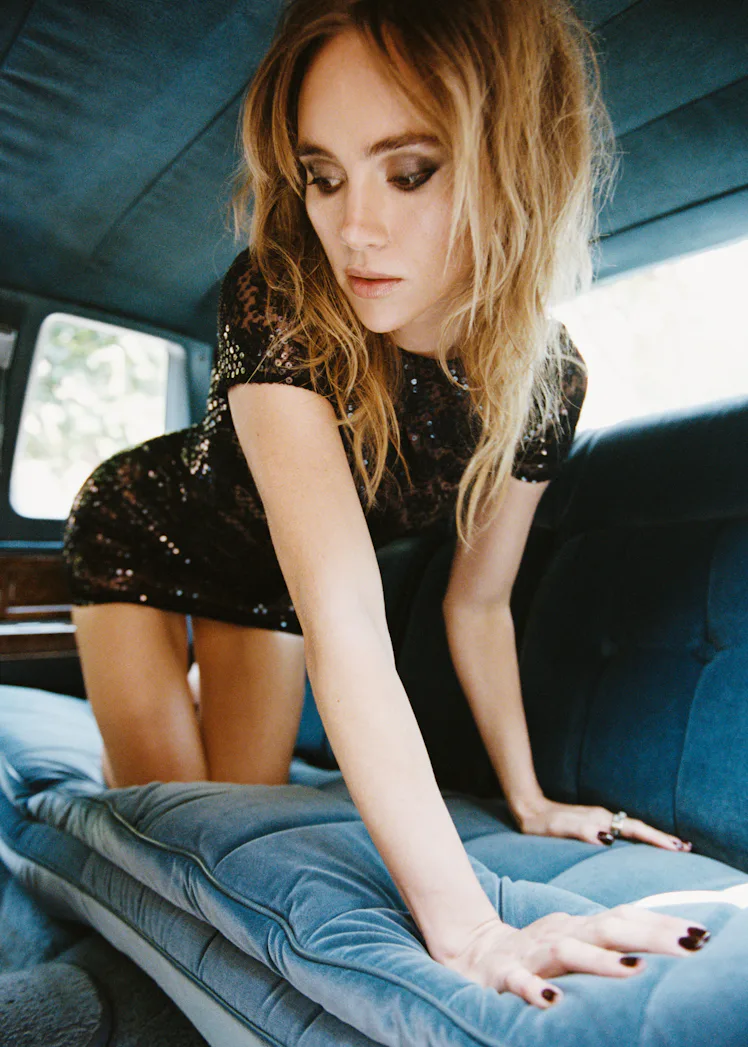
Last year, Waterhouse joined Laufey’s A Matter of Time arena tour and performed solo shows and major festivals across the globe, all while bopping between upstate New York, and Los Angeles to record Loveland, her third album (and her first since signing to Island Records). Thankfully, she was raised by a mother who opposed idleness.
“My mum is from the countryside, and she was like, ‘I’m not going to have these London spoiled kids that don’t do anything,’” she says. “And I was like, ‘Well, that’s actually quite smart.’ Because it wasn’t enjoyable — I couldn’t rest there. She said to me years later, ‘That was my way of making sure that all of you got up and got jobs and did something, because I basically made your life a nightmare to be at home.’”
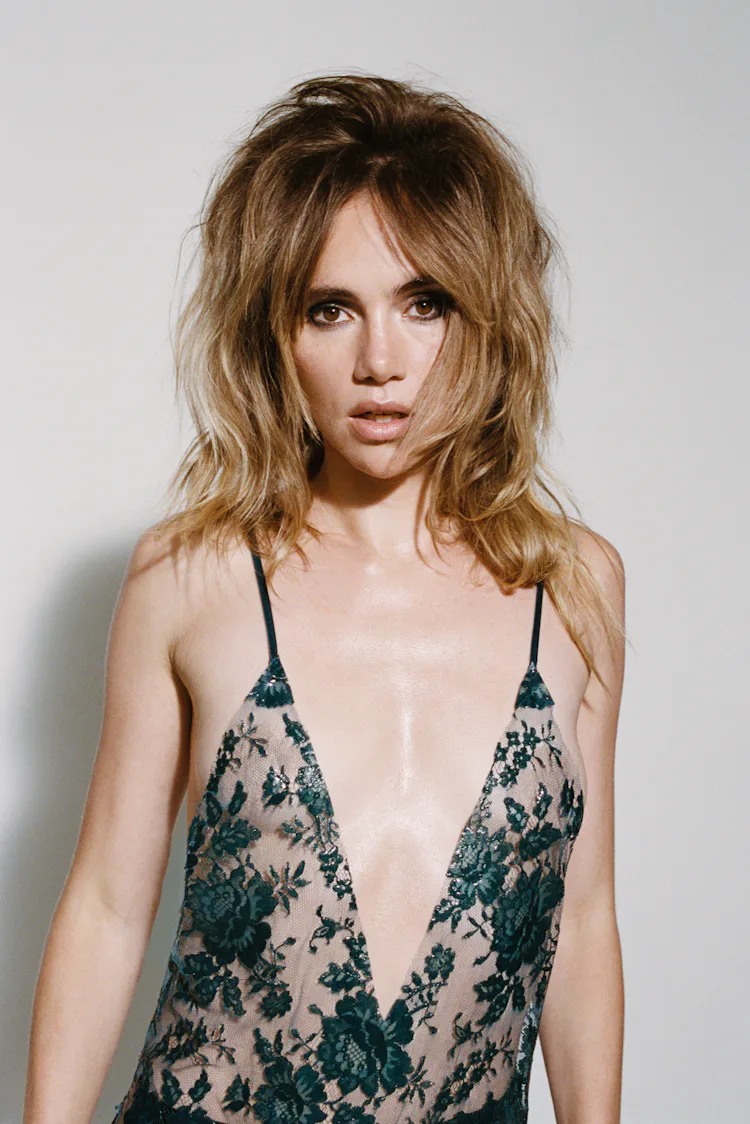
Born Alice Waterhouse, Suki chose to go by her middle name, which loosely translates to “beloved” in Japanese and won out over her parents’ other option, Kooky. (Yes, really.) Raised just outside of London proper in Chiswick by medical professionals — her father a prominent plastic surgeon, her mother a cancer nurse — Waterhouse acknowledges her upbringing was “privileged.” But while she counted a Jagger among her private-school classmates, the keys to the city were hardly guaranteed by aristocratic proximity alone. And so at 16, Waterhouse, after being scouted by a modeling agent, left school to work in the heart of London — armed with her portfolio, high heels, and an A-Z map of the city. (“Before Google Maps,” she quips.) In a good month she’d make £400.
In those early days, Waterhouse’s modeling career caused some tension on the home front, and understandably so: What parents wouldn’t blanch at the thought of their teenage daughter wandering London on her own, turning up at the doors of middle-aged male photographers for test shoots? And their concerns were perfectly justified, Waterhouse says, since “there was loads of bullsh*t going on.”
“I knew of a lot of bad things happening to girls that I was around at the time and friends of mine,” she says. “It’s really scary. I’ve done shoots with people that have later been convicted.” She remembers meeting up with one particular photographer who told her he didn’t have any clothes to put her in — and suggested she do the shoot nude. “You wouldn’t ever even complain to your agency,” she says. “No one gave a f*ck if you had something to say.”
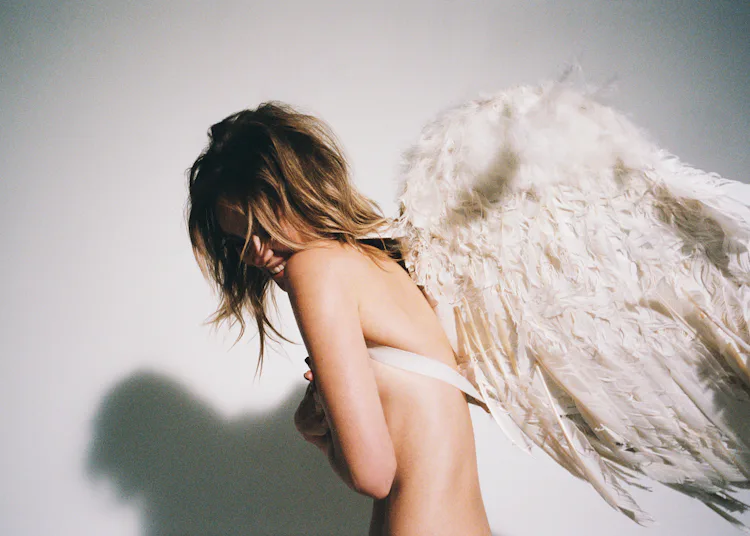
Even as she checked off the markers of success on many models’ vision boards — like booking campaigns for Adidas and Burberry — the industry could still be brutal. Waterhouse recently revealed that her then agent didn’t think she was built for modeling and routinely redirected her toward other lines of work.
“What are you going to say back to them if they all sit you down and say, ‘Your measurements aren’t good,’ or, ‘You need to lose weight’?” Waterhouse tells me. “If you seem to be difficult in any way, they really do not care to keep you around.”
Still, fashion gets the credit for bolstering her against critics and, ultimately, launching her acting career. It turns out that the same dubious modeling agent had an eye for film casting, and Waterhouse landed the role of the foil blocking the path to true love for Lily Collins and Sam Claflin in the rom-dram Love, Rosie. During filming, a 20-year-old Waterhouse found her first on-set experience empowering. “I felt really free,” she says with a smile. “I don’t really remember being nervous. [I was] not that fazed, in a weird way.”
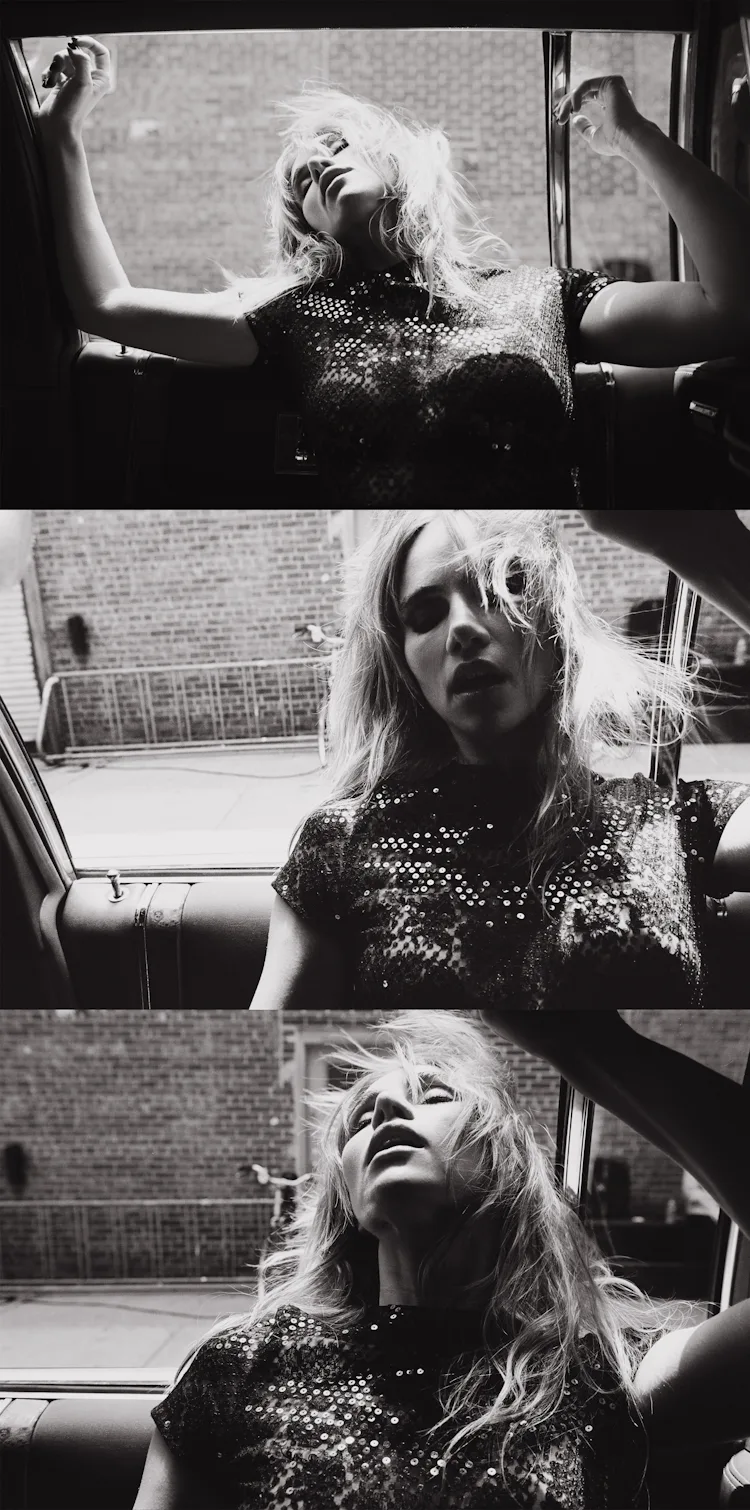
That born-to-do-this charisma is palpable to her collaborators, too. “Suki is impossible to take your eyes off of,” says Nzingha Stewart, who directed her in Daisy Jones & the Six. “And it’s more than how gorgeous she is — it’s an effortless sense of cool.”
Inspired by the messy internal politics of Fleetwood Mac, Daisy Jones & the Six follows a fictional 1970s band riding the highs and lows of the era’s rock scene. “All of the actors felt lived-in in their roles as musicians,” Stewart adds, “but there was one moment watching Suki on the monitor where I thought, ‘That girl is a rock star.’”
“I knew that I was not going to be a happy person for the rest of my life if I didn’t fall on my arse and just at least try.”
Any girl can capitalize on ephemeral cool, but it takes a special kind of entrepreneurial spirit to make it last. There was her accessories brand, Pop & Suki, which she cofounded with her friend Poppy Jamie and whose customizable bags — think monogramming, personalized straps, playful proto-Labubu charms — were worn by the likes of Lady Gaga and Beyoncé.
But for Waterhouse, dressing musical icons was never going to beat becoming one. At 24, she released her debut single, “Brutally,” an acoustic breakup ballad on which her rich yet unrefined voice settles somewhere between Lesley Gore and Hope Sandoval. It was a decidedly indie operation — “I learned how to do DistroKid and upload it, and it was all very just by myself,” she says of her early releases — but industry acclaim was elusive. “I remember putting out ‘Brutally’ for the first time, and there was a Daily Mail article saying that it failed to chart in the top 200,” she recalls. Another slight that springs to mind: “[I did] a little acoustic show in London with a friend — it was a tiny little show — and there was an article about it being a disaster.”
The disconnect between her vision and the press’ preconceived notions “shut me down for a long time. I just thought: There’s no way it’s going to be accepted,” she says. “That kind of thing would feel like a real knife.”
Yet she never stopped writing. “I knew that I was not going to be a happy person for the rest of my life if I didn’t at least try and fall on my arse and just at least try,” she says. And in a way, she got the last laugh: Her anthemic 2017 song “Good Looking,” which her team once advised her to scrub from the internet for a clean slate, ended up finding a viral new life on TikTok in 2022.
Three albums later, Waterhouse’s work speaks for itself. For Loveland, the singer assembled an indie-pop Avengers of producers and cowriters, among them Aaron Dessner (a founding member of The National, better known to Gen Z for his collaborations with Taylor Swift and Gracie Abrams), Joel Little (who’s worked with Lorde, Noah Kahan, and Niall Horan), and Natalie Findlay and Jules Apollinaire (of U.K. psych-rock band Ttrruuces). “I just felt like she’s so open to ideas,” Little tells me. “There was no banging our heads against the wall, really. [She’s] trying to be herself and pull from influence rather than chasing some kind of trend.”
Meticulously imperfect and rooted in Woodstock-era nostalgia, Loveland feels like epic folk-pop for purists, a put-your-phone-down guide to navigating the blues (“Seasons”), rediscovering your spark (“Back in Love”), and occasionally owning your crazy (“Tiny Raisin”). It’s her finest offering to date — and it made new friends out of collaborators like King Princess, aka Mikaela Straus, who worked on the bonus track “18” and met Waterhouse through Pattinson. “We hit it off at a dinner, she mentioned she had an album written, and she sent it to me. I fell in love with it,” Straus recalls. “Through working together we became buds. Love that diva.”
Now at the height of the afternoon, we’ve entered Southern California’s seventh circle. Remarkably, the singer seems unperturbed, ignoring even her lemonade (which is now sweating as much as I am). In person, Waterhouse is both exceedingly affable and a little frenetic. When she lights a fresh cigarette, our waitress intervenes: No smoking here.
“Oops, I’m getting in trouble,” Waterhouse says with a whisper.
It feels unnatural to hear anyone say no to Suki Waterhouse, a woman who has spent well over a decade moving within, and adjacent to, concentric orbits of shifting fame on account of both her career and the kind of A-list relationships tabloids can’t get enough of.
This kind of long-term exposure has taught her to set firm — and frequently deployed — boundaries. Asked about Taylor Swift’s wedding, Waterhouse mentions it was “so nice,” before gently closing the door on the topic. Recently Pattinson’s own occasional forays into music had a moment on TikTok — would the actor-musician couple ever duet? “What makes you think we haven’t already at home?” she responds with a wry smile.
Much of Loveland reflects her life with Pattinson, but she offers the most intimate look on the album’s swoony closer, “Weirdo,” where Waterhouse grapples with the friction between ambition, obligation, and partnership: “You’re on a set, is that ancient Rome?/Now I’m in a drive-through, out on the road/I’m callin’ you up, just lettin’ you know/I’m missing my favorite weirdo.”
“Obviously my life’s changed a lot, and it’s been really great because it makes me say no just a couple of times more than I ever would have,” she says of prioritizing family life. “It’s nice to be like, ‘I want to be home with her.’”
“Before, if someone asked, ‘Hey, there’s this thing in Paris and you have to leave tomorrow,’ I’d go,” she continues. “When you’re in the studio, you’re away and doing late nights. So when you’re done, you have to be like: This time is protected, these days are protected.”
“What’s hard is having a vision, executing it, and dealing with the business side telling you, ‘You should change this, not that.’ How do you be fierce and stay soft?”
Little agrees that “Weirdo” is Loveland’s standout track — his favorite, he says, for all its little quirks. Waterhouse’s throwback sensibilities mean she’s allergic to anything too “polished.” “I feel like those songs are timeless because they have human character to them. She’d be like, ‘No, that’s not right. We need to back that off,’” he says. “She’s great because I feel like she knows what she wants, but she knows how to get it without being a dick about it.”
Assertiveness, as so many women know, isn’t as easy as it looks. “What’s hard is having a vision, executing it, and dealing with the business side telling you, ‘You should change this, not that,’” she says. “You love something, and other people don’t.” She pauses. “It’s like, how do you be fierce and stay soft?”
Our time is winding down, signaled — like any great rock star — by the silent arrival of her entourage: a glam team clad in uniform black, an idling SUV. She’s got more album promotion, then a tour, including gigs at LA’s Hollywood Forever Cemetery and Lollapalooza. For both shows, Waterhouse will wear a baby pink chiffon peignoir, strikingly similar to a gown shared to Pop & Suki’s Instagram account five years ago — a sign, perhaps, that she’s living the very life she manifested. (Fierce and soft indeed.) “I’m so happy to be wherever I’m at,” she says genuinely. But also: “I’ve always kind of weirdly been happy wherever I am.”
She makes it look easy, even when it isn’t. Watching her navigate the industry and internet’s insatiability — the press cycles, the paparazzi, the fights for credibility — I ask if she would ever invite her own daughter to pursue a life in this world.
“Why would I advise against it? I’d be nepo-babying the hell out of her.” She laughs, sounding surprised at her own candor — then catches herself with another silent, wide-eyed oops look. “Oh no. Why didn’t I just keep that inside?”
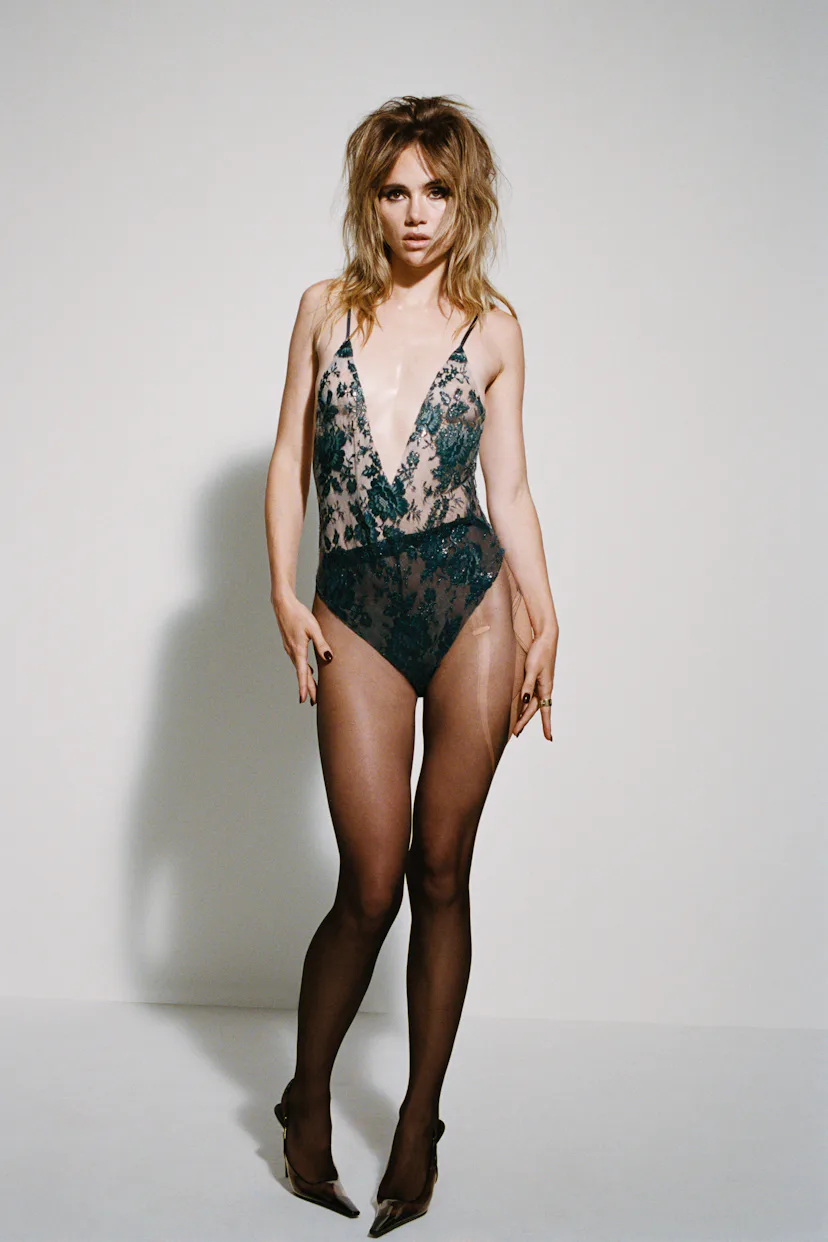
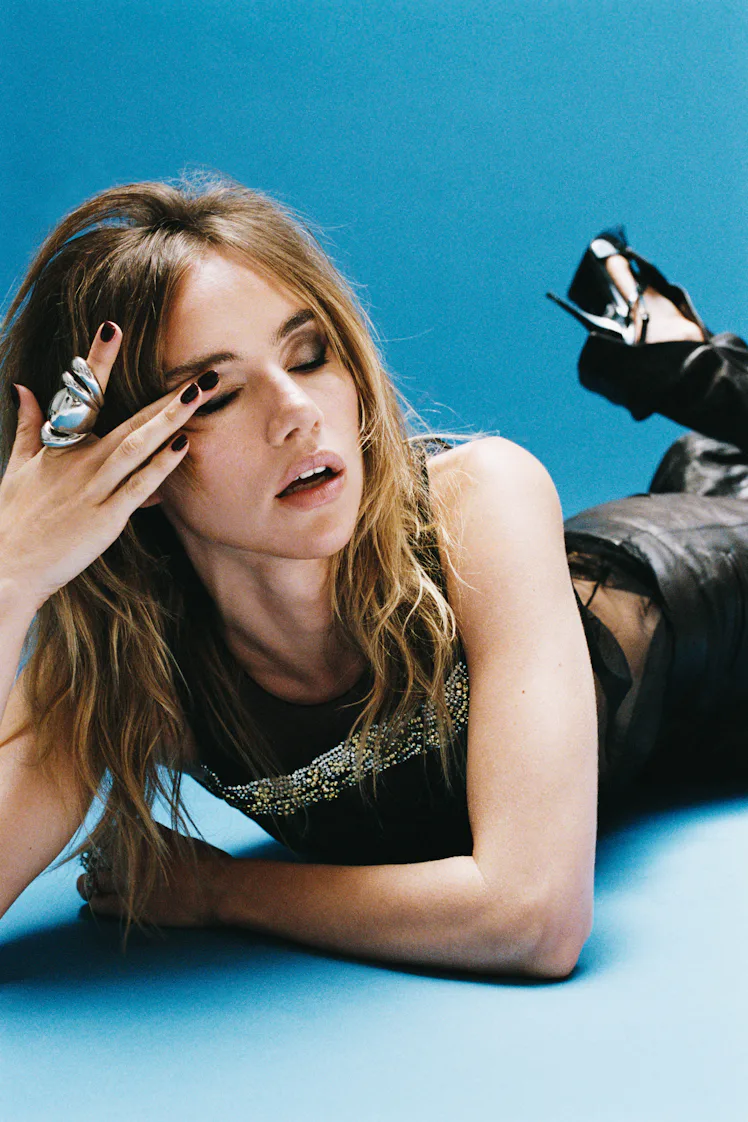
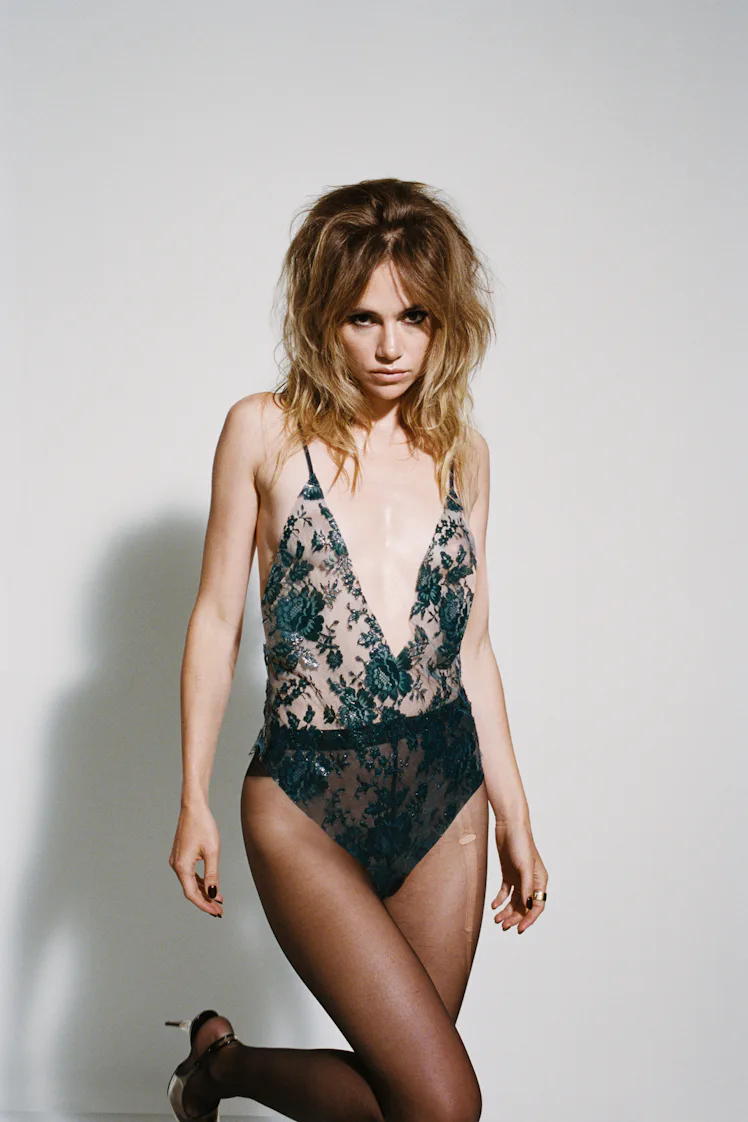
Saint Laurent by Anthony Vaccarello bodysuit and shoes; Falke tights; Talent’s own rings.
Photographer: Chloe Horseman
Stylist: Max Weinstein
Writer: Beatrice Hazlehurst
Editor-in-Chief: Lauren McCarthy
Creative Director: Karen Hibbert
Hair: Jacob Rozenberg
Makeup: Benjamin Puckey
Manicurist: Mamie Onishi
Video: Marshall Stief, Aubree Lennon
Photo Director: Jackie Ladner
Production: Kiara Brown, Danielle Smit, Nayelie Diaz-Paz
Fashion Market Director: Jennifer Yee
Fashion: Stephanie Sanchez, Ashirah Curry, Noelia Rojas-West
Features Director: Nolan Feeney
Social Director: Charlie Mock
Talent Bookings: Special Projects
