Fashion
Falconiere Is Crafting The Chainmail Renaissance
From Hunter Schafer in Mother Mary to Chappell Roan at the VMAs, the New York label is armoring up fashion’s next gen.
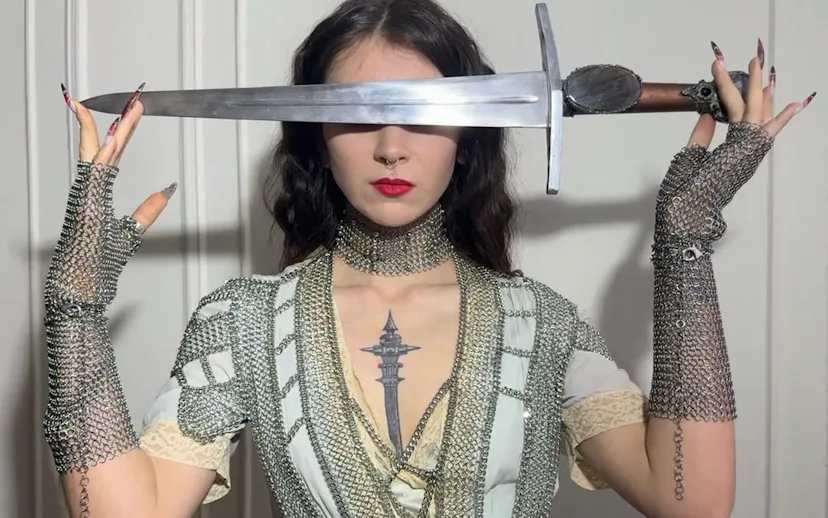
The year was 2024. A lime-green Brat era dominated timelines and club floors alike, “old money” enthusiasts battled “Mob wife” devotees for the reigning style aesthetic, and a certain flame-haired pop star was loudly bursting onto the scene. Clad in head-to-toe chainmail, Chappell Roan took the VMAs stage in a modern-day Joan of Arc ensemble before later accepting her win in the same medieval regalia. While her speech championing queer visibility and creative freedom made headlines, it was the look — specifically, the custom chainmail gloves catching every flashbulb — that sent the internet into overdrive. Suddenly, a niche corner of fashion’s obsession with the mesh fabric became a global trend.
At the helm of the now-viral designs is Juniper Rose, the one-woman force behind Falconiere, a cult label turned industry fixation, beloved by everyone from red carpet regulars to Renaissance fair devotees, downtown creatives, and a growing legion of online fashion obsessives. Since then, A-list mainstays including Madonna, Rihanna, and FKA Twigs have become clients. Most recently, Hunter Schafer was spotted in a Falconiere sculptural harness in the new A24 drama Mother Mary, further cementing chainmail’s place as fashion’s most unlikely “it” material.
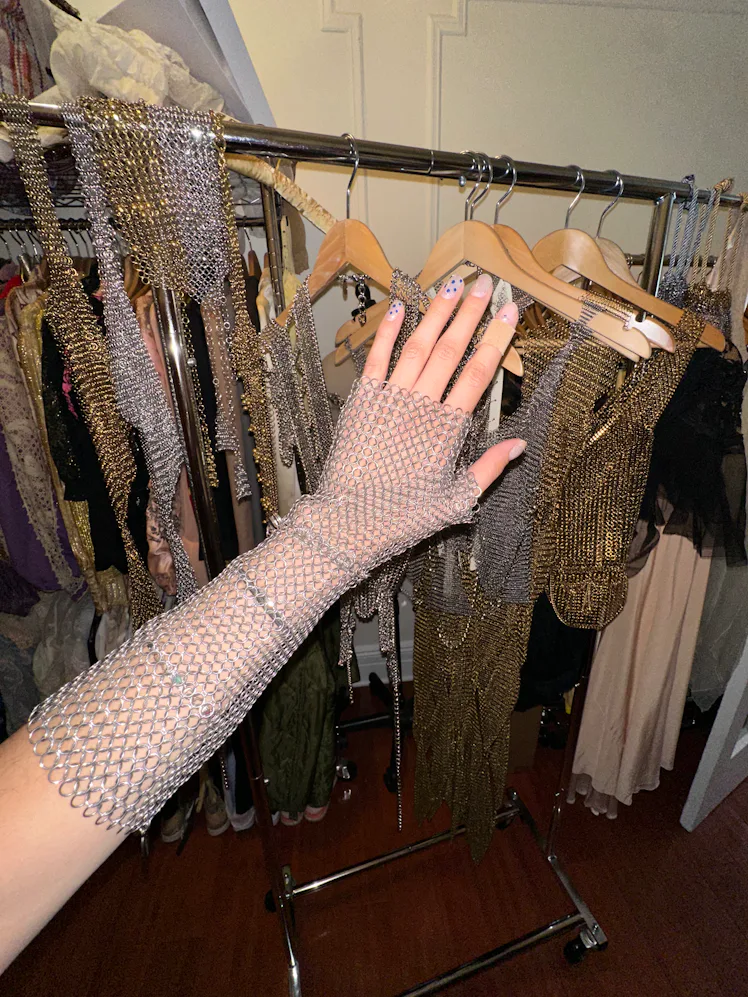
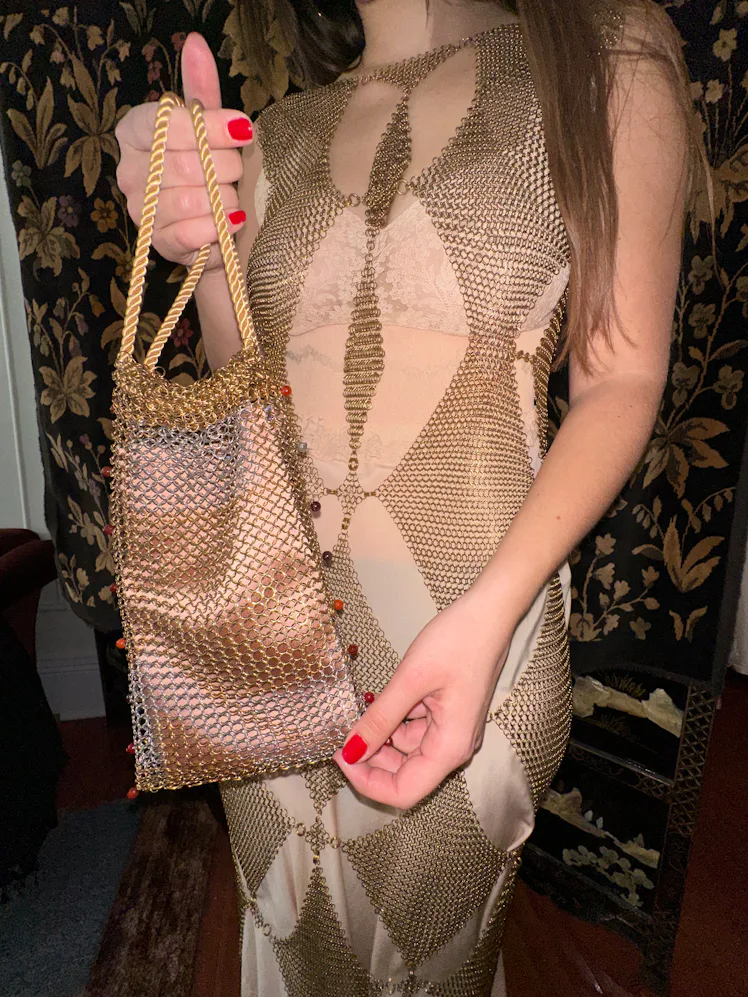
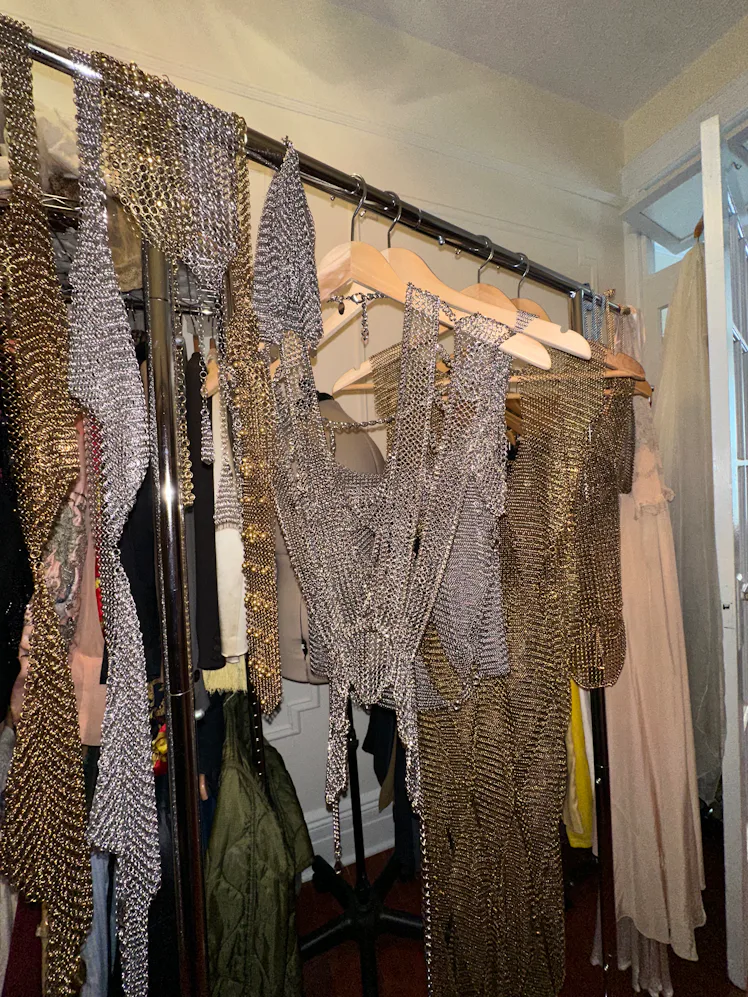
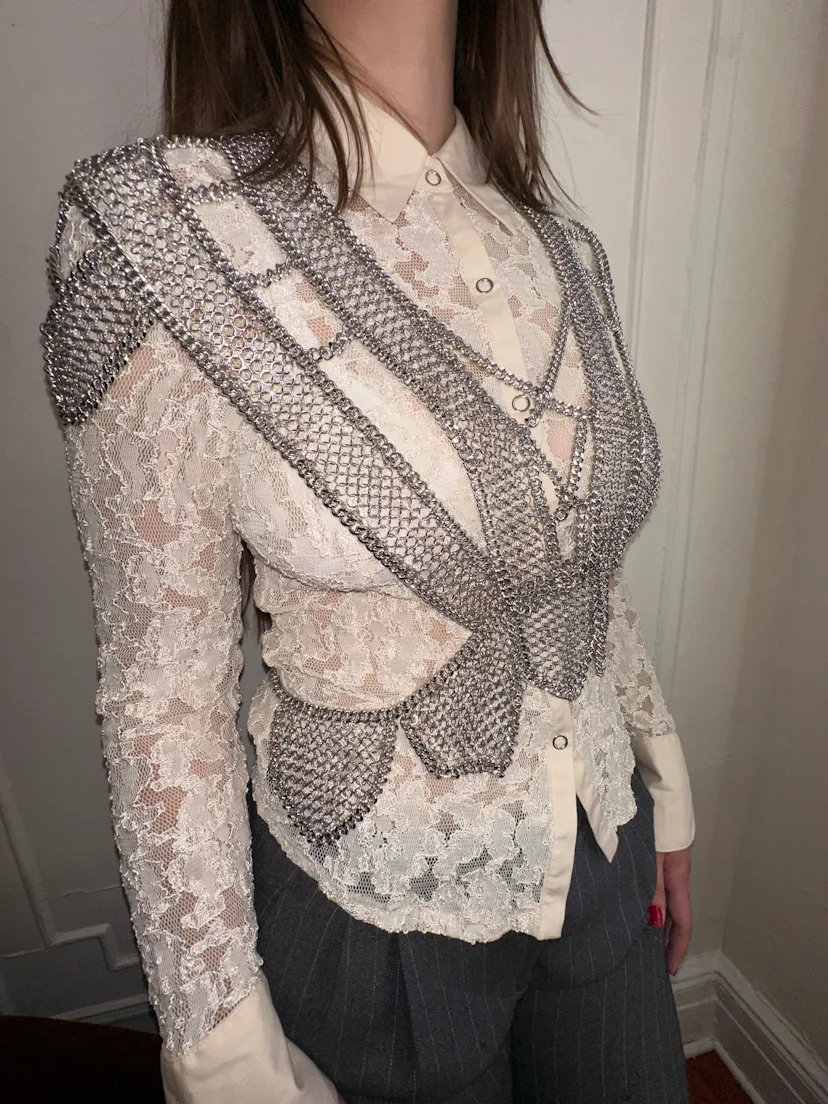
While the internet made it viral, the craftsmanship keeps it eternal. Rose constructs works that straddle the sartorial lines between jewelry, costume, and art that she says never go out of style. Unlike typical costume jewelry or statement bling, these embellishments are not adorned to accessorize a look but rather transform it entirely. “I started hanging things from chainmail because I loved armor,” she says, reflecting on a childhood obsession with the Cloisters and the era’s Unicorn Tapestries. “It always felt more like a museum thing to me than fashion.” And the fashion world is clearly returning the affection. From Ralph Lauren’s recent knightly nods on the runway to Max Mara’s Milan collections layering draped silhouettes with armor-like structure, the codes of the past are being reforged for fashion seasons ahead.
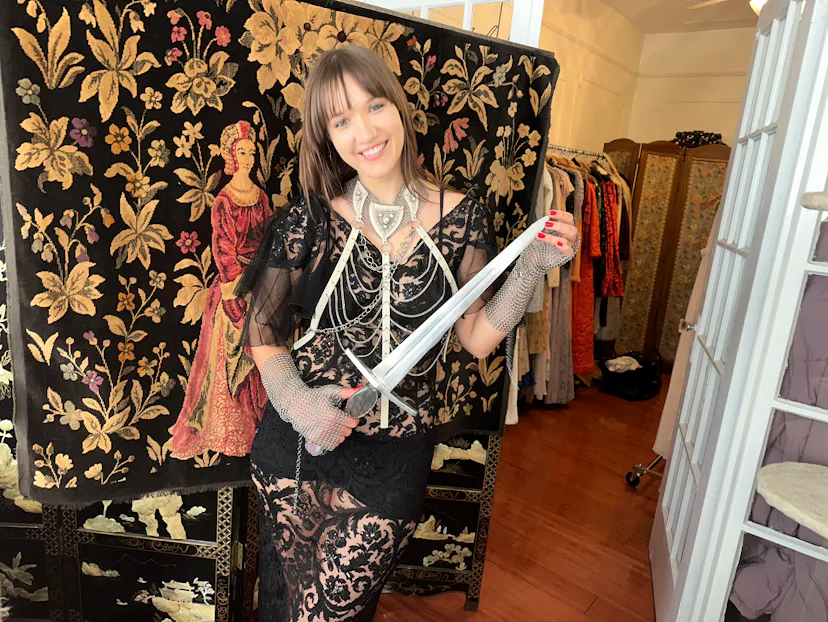
From her bohemian Ridgewood studio, Juniper Rose catches up with NYLON’s Sam Tracy to discuss her unconventional path into design, the rise, fall, and resurrection of Falconiere, and why chainmail might just be forever.
How did you get started in fashion design?
When I was in middle school, I couldn’t afford the clothing that I wanted so I would go to thrift stores because that I could afford. I would buy stuff there and I would alter it. I would look at magazine editorials, then try to re-create the outfits with what I had. My parents were artists and had lived in India and all over the world, so the house was always full of crazy, big jewelry and different pieces.
I grew up dressing up. Since I was about 7 years old, I knew what I wanted, and I would save up, babysit, and buy it for myself. Then I started making stuff. By the time I was in high school, I knew I wanted to live in New York and be a clothing designer. I moved there and got into Parsons.
How did you transform your passion for design into your own brand?
I always had this idea that I should be doing my own thing. I got fired a lot — I always got fired! [Laughs] I was working as a junior designer; we’d travel to Europe every month on inspirational shopping trips, buy a bunch of stuff, and bring it back to build a collection that copies the designs. Eventually I was like, “I have to try this on my own.” I had all these contacts from working in the industry, and I think I stole a Rolodex. I literally called up Barneys and said, “Hi, my name is Juniper. I used to work at Earl Jean and I’m going to be in New York with my new line. Can I show it to you?” They said okay, and they placed an order. And that’s how I had my clothing line.
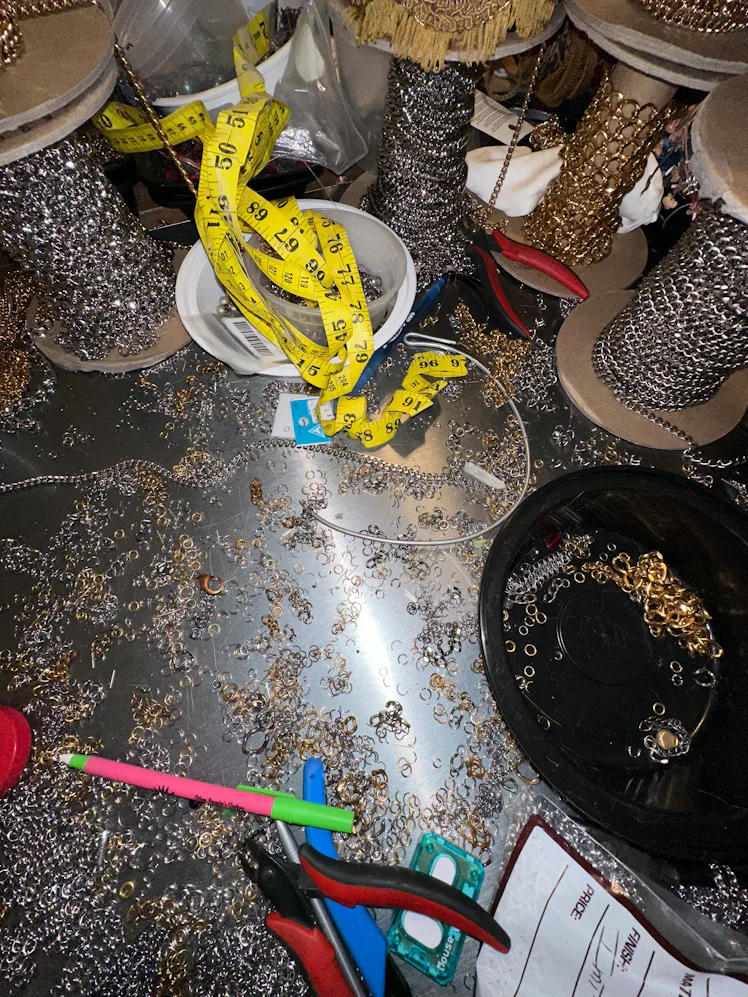
And then Falconiere came a bit later. I started working with Donna Karan on jewelry, and through that I was put in touch with Net-a-Porter, and that’s who I launched Falconiere with immediately. It started very intuitively — I was taking things apart and hanging things from them. I started with a statement chainmail necklace. It came from a very hands-on place.
Where did the name Falconiere come from?
I just thought it sounded cool. Because it sounds like a “falconer,” which is cool. There was also a 1970s book called The Falconer, and I really loved the cover. It had this very thin, art-world kind of lettering. I liked how it felt. I used a similar font on my tags. I had to order so many [tags] way back in 2009. I still have tens of thousands of them.
Falconiere had a strong early run in the aughts — what happened to the brand?
It ran out of gas, sort of sadly, in 2013. And I had it under my bed. It was dusty and I couldn’t really talk about it. It was the only thing I ever loved, and it was just done.
But then you came back with a roar during the pandemic.
During the pandemic I had to make money, so I started selling vintage online. I ran out of it and I didn’t know how to get more, so I pulled out my old pieces and posted one styled look, and it kind of took off. The next morning I woke up to an order from somebody in France. I was like, “Oh my God, I’m back!”
Why do you think it resonated again?
It was social media. A new generation started styling it, sharing it, showing each other what they were wearing. Before that, fashion was very closed. Magazines didn’t really reflect reality.
Now it’s real people. Someone in France is styling it, someone in New York is styling it, and it just keeps going.
It’s been worn by a lot of different cultural figures, too — artists, performers. Why do you think that is?
It works with fashion, but it’s not costume jewelry. It’s its own weird thing. It fits into different subcultures — Renaissance fairs, tattoo communities, sex workers, cosplayers. It just kind of got knocked wide open. It’s wearable art.
You’ve styled big-name artists for career breakout moments, like Chappell Roan in head-to-toe body armor and Hunter Schafer in Mother Mary. What was that collaboration process like?
With Chappell, it was very specific. Her stylist [Genesis Webb] had initially just pulled four styles off my line from Instagram and requested pieces, including the feather gloves I had made custom for W magazine, but asked to remove the feathers. Then it became very clear what the look was. And she just knows what she wants — very hyper-focused, which is cool.
With Hunter, I haven’t really “styled” her in that same way, but seeing the work on her in Mother Mary was surreal. The costume designer bought a [chainmail and leather] harness I designed years ago when I was doing some leatherwork. I saw it in the trailer and was like, “Oh wow!”
Since Hollywood stars have taken notice, your orders have blown up! What’s next for Falconiere — any plans to go brick-and-mortar?
For the record, I do think about that… my goal is to have somebody help me. Because what happens if something happens to me and it’s all over? I can’t be the only one. A store would be a cool thing to have. A destination would be a cool thing to have. I think there’s a resurgence with small stores, so that’s always been in my head again.
We’re seeing chainmail and armor-like dressing show up everywhere again. Why do you think that is?
I think it always will. Every time it trends I think, “Oh my God, what happens on the other side of it? My business is done!” But I’ve thought that so many times, now I realize it’s just a forever fabric. It’s a staple. People are always going to love armor. They’re always going to love that imagery.
