Entertainment
100 Nights Of Hero Stars Emma Corrin & Maika Monroe On Corsets, Scrapbooking, & Queer Love
The story-within-a-story movie is rich in detail, female empowerment, and excellent hats.
It wasn’t so long ago that parents were printing out pictures of life events and pasting them into scrapbooks for families and their children to go through for generations — as Emma Corrin, star of 100 Nights of Hero, puts it to NYLON: “Now it’s all on our phones, which is so brilliant, but it doesn’t give you the same tactile thing.” Going back a little further, the tradition of storytelling, in both verbal and written form, was the main way to keep histories alive. The decision to keep stories going through centuries is not only a personal choice, but one rooted in community. Julia Jackman’s new film, 100 Nights of Hero, tackles the way stories are told, and how love, both filial and romantic, shows up on our screens. The film exists in the history of Greek mythology but takes on a timeless feel due to its various influences. “The story does have that period feel and that gothic feel, but it is in a parallel universe with three moons in the sky and a crazy God,” Jackman tells NYLON. “It gave us the freedom to let it feel outside of time in some ways.”
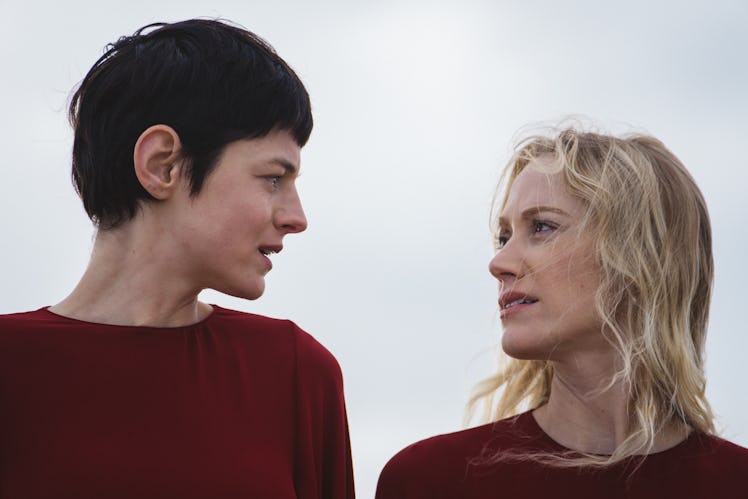
Telling stories is, in itself, a powerful thing, and enlisting a star-studded cast and mixing influences was Jackman’s first move. The movie is a variously influenced text based on the graphic novel of the same name by Isabel Greenberg, which itself is inspired by The Arabian Nights. Protagonist Cherry, played by Maika Monroe, is wed to Jerome (Amir El-Masry), who makes a wager with his friend Manfred (Nicholas Galitzine) that if he can seduce Cherry in 100 nights, he can have the castle and Cherry. Cherry doesn’t love Jerome, or Manfred for that matter — her one true love is her lifelong maid, Hero (Emma Corrin), who distracts Manfred with 100 nights of stories to deter the plan set by both men.
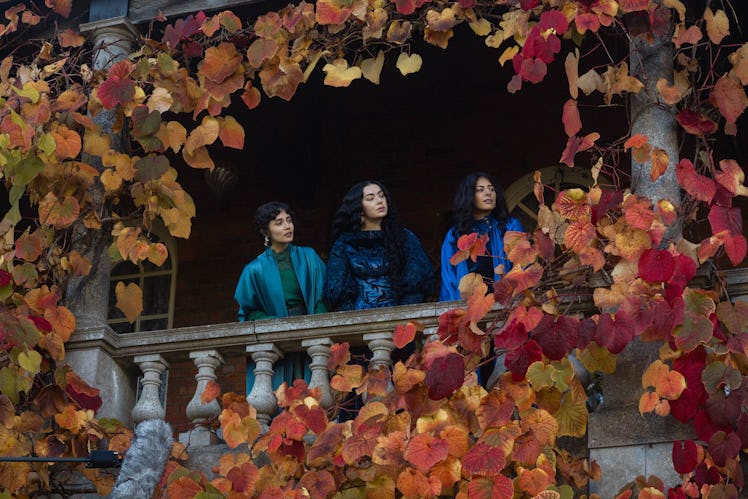
So, in a bit of meta moviemaking, the story progresses as Hero tells the story of Rosa (Charli xcx) and her sisters, who face persecution for committing “witchcraft” by reading and writing as women, which is forbidden in their story. The two storylines interlap and progress, and Rosa’s fearlessness gives wings to Cherry’s personal growth as she realizes her one true love is Hero. Jackman and Corrin both agreed when I spoke to them that the story, while itself inherently queer and featuring female love, “the particular queer story here is that first queer experience where you’ve never been taught what you want,” Jackman says. “It’s the realization that this friendship actually has always been love, but you don’t have the language to describe that yet.”

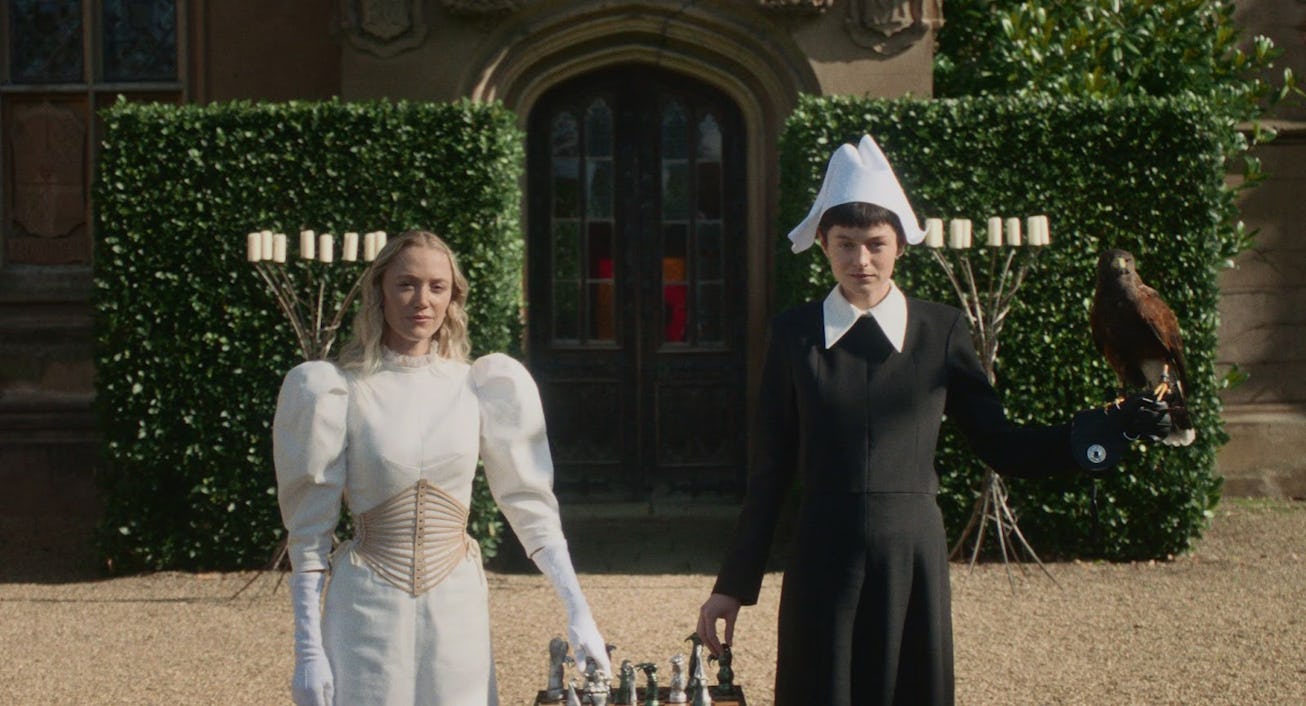
Jackman is a fiend for telling stories through the visual language of film, and if the story-within-story plotline doesn’t satisfy, her richly realized visuals surely will. Her love for camp comes through in the fairy-tale-style cinematography and costumes, including ridiculously ornate hats and corsets worn by Cherry and Hero throughout the film. Monroe says the corsets were the best thing to help her get into character: “That’s what Cherry feels every day of her life, is a restriction. Feeling your rib cage restricted really helps with how you carry yourself.” As the film progresses, and Cherry and Hero succeed in distracting Manfred, “the hats, corsets, and all of this were parts of her armor and performance,” Jackman says. “Then she gets more and more flowing dresses and lets her hair down.”

The final act of the movie sees Hero reunite with the league of female storytellers, of which she is a part, and embrace the necessity of keeping the story of Rosa alive — and the story of Cherry. We won’t spoil the ending for you, but poetic justice is duly served, and serves as a reminder of those traditional forms of media or mementos holding value that we mustn’t let go of. For Monroe, it’s a box of jewelry passed down by her mother, and for Jackman, it’s a few quilts that her Ukrainian family of women would stitch together to “talk, gossip, and spend some time together.” Corrin mentioned scrapbooks and letter-writing, both of which have fallen out of vogue, but as they stress when we talk, “we mustn’t forget oral storytelling, putting experiences onto the page, onto film, or in any medium you can. It’s a powerful form of resistance, especially in today’s society where voices and stories are being silenced in some places in the world.” The unfortunate truth of the matter makes Jackman’s story ever-more poignant at this time in history, and allows viewers to take what they need from the story — whether the hats, the queer love, or the desire to keep stories alive.
