Entertainment
Marc Jacobs & Sofia Coppola On Björk, Anna Weyant & The ‘90s
Marc by Sofia shows that curiosity always wins.
Collaborations are a dime a dozen in the fashion world nowadays, with the hope of raising one another’s profile — or as Gen Z says, “maximizing their joint slay.” Marc Jacobs and Sofia Coppola know a thing or two about joining forces with other artists. During Jacobs’ time at Louis Vuitton, he brought the likes of Stephen Sprouse and Takashi Murakami into the fold when these sorts of meetings of the minds were the exception rather than the rule, and beyond being one of the finest directors of our time, Coppola is also deeply entrenched in the worlds of fashion and music. Now, for the first time, she’s turned her lens to a single subject for the documentary Marc by Sofia.
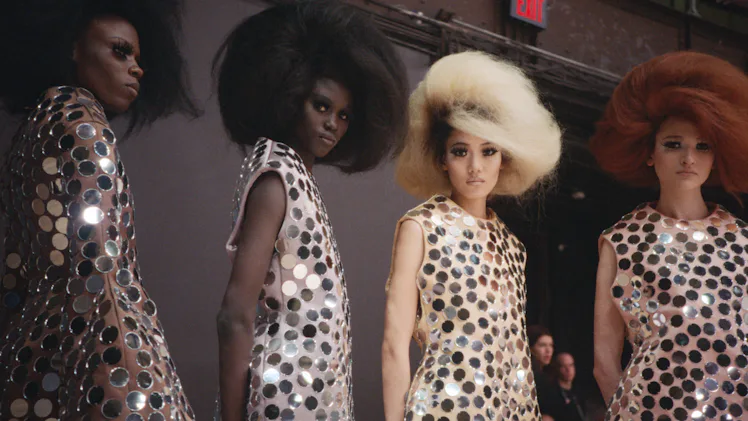
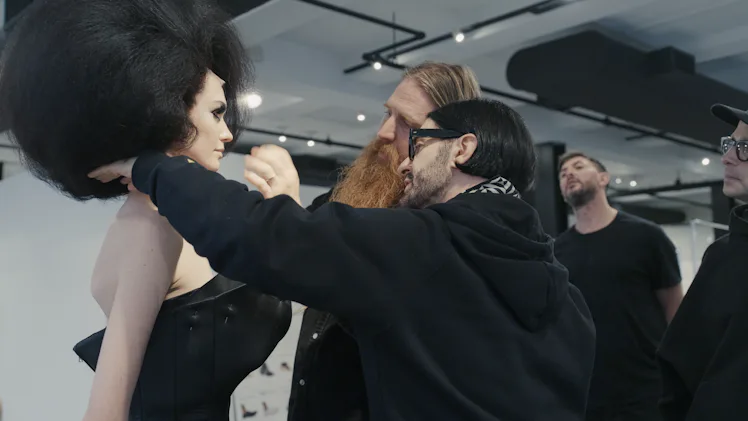
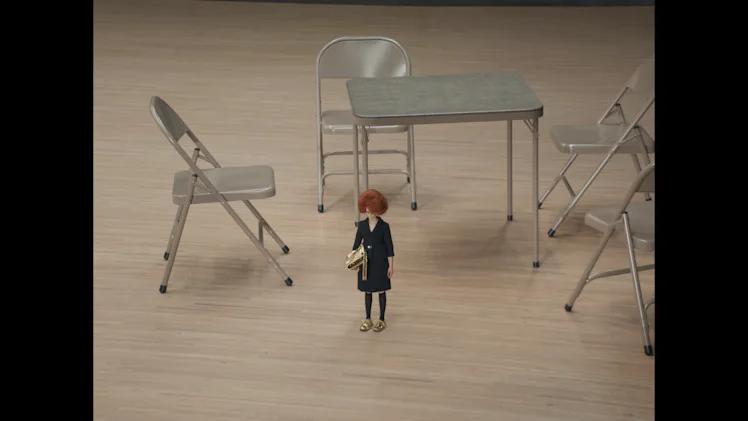
If you’re expecting a linear, biographical account of Jacobs’ life in fashion from Charivari to Louis Vuitton and beyond, you should look elsewhere. Instead, Coppola takes a microscope to Jacobs as he prepares for his now-infamous Spring 2024 collection, where models wore freaky Polly Pocket-esque clothing paired with blown-up bags, shoes, and hair. It went viral in the fashion world for its takes on proportions, womanhood, and the set, which included Robert Therrien-designed table and chairs. Rather than focusing on the successes of Jacobs’ singular career, Coppola tracks the somewhat inscrutable mind of a creative who is actively building a world through references, artistic collaborations, and happenstance moments — as he tells NYLON about a soundtrack for his most recent Spring 2026 show, he heard someone playing “Joga” by Björk, and “it brought back this emotional response that I had the first time I heard her perform it. I was like, ‘That feels like the right thing to see this show with.’”
Coppola and Jacobs’ curiosity about the world around them — and the artists responding to the same moments as them — make them fixtures in culture who are still able to make thought-provoking work. They are both deeply instinctual creatives, which comes through in the documentary and in my conversation with them about the process of making a collection and a film at the same time, their inspirations, and how Jacobs got Anna Weyant to make a painting for him in record time.
Sofia, what part of Marc’s creative process was most fascinating to you?
For me, to see how the collection all comes together and all the details that go into it… like the intensity of which color beige of the stocking. I'm always interested in how anybody makes stuff. I was excited to get there right when there was nothing and watch how it came together. Every time I came in, something would evolve.
What about you, Marc? What was the most interesting part of her process?
I was really in my process, but I'd say the most surprising thing was to see — without knowing or asking too many questions — the final movie. To hear the music choices, to see the editing and all the different materials that came together. The process of going through it didn't let me know where it was going, so it was really a surprise, and a good surprise.
Sofia, music in your films is a supporting character. Talk to me about the music you chose for the film.
It’s so fun when you put the music in. It helped give the energy of trying to go back to New York at that time and all the different eras. It helped weave it all together, and it brings life to it. It's something I love, and Marc does too. I'm just relieved when we get all those tracks.
Marc, music is integral to your shows. When does it come into play?
Marc Jacobs: Typically at the end.
Sofia Coppola: I loved hearing the Björk song [“Joga”] in the last show. It's so incredible in that sound system.
MJ: Somebody had their Spotify playlist and that song came up, and I remembered seeing Björk when I was living in Paris. She performed this tiny concert that was, like, four people, and she was in a church. When I heard it in the studio, it brought back this emotional response that I had the first time I heard her perform it. I was like, “That feels like the right thing to see this show with.” I thought hearing that in the Armory would be a different version of how I felt hearing it in the church.
SC: Oh, I didn't know that. That's fun to hear. It's always a surprise.
Sometimes the music is fun on the runway and sometimes it's deeply serious. That song added gravitas.
MJ: I think mostly in the past few years, that's what I want... Music has to make me want to cry or feel elated.
Sofia, I liked the way you talked about Marc's collaborations through the years with different artists. Marc, what are you looking for in a collaborator? Sofia, same question for you.
MJ: It's really instinctive. I often have instincts about something and I don't trust them, but with people and what they do, if I genuinely love them, the idea of doing something with them is really exciting. And I think, “Well, this might have its ups and downs, but I know if I feel this enthusiastic and excited about this collaboration, it's got to be good.” And I've never been wrong about that.
SC: It adds to it. I love having a dialogue with someone.
MJ: I think back to some of the early things I did with Sofia, like those pictures with Juergen [Teller]. I was so excited about collaborating with Juergen on pictures because I loved his work, and I was so excited about Sofia, so I just knew that whatever the three of us did together, it would be good. There was no way it couldn't be.
SC: I loved Juergen's photos and it was just cool to be a part of that. I loved talking to Rachel Feinstein about Marc asking her to do the sets, and trying to incorporate all those elements into such a big part of his work, and how to share all that inspiration with him.
That's the fun of it: not knowing what the end result's going to look like, and almost not caring what it is. Just wanting to work with those people…
SC: And seeing how it comes together. And that's how we made this, too.

Marc, you talked about a lot of your references. After I watched the film, I went home and I watched The Bitter Tears of Petra von Kant.
MJ: Which visually is still wow… every still is a photograph.
SC: I need to see that on a big screen.
Is there anything recently that has inspired you?
MJ: This kind of question is impossible to answer in the moment, and then it's all floating around as soon as I go. It's like asking someone their favorite song or color. There are always things that are catalysts and inspirations, but being asked to focus on one is impossible. We went through this recently with the movies with Criterion. I just felt like *screams*.
I get excited about contemporary art and people, maybe in music or in art, that reference something that has always been a reference to me. I find relief and excitement in knowing that something I've loved is also moving somebody to make new work. That's the place I'm in, is that affirmation that, “Yes, this was really a great piece of art and it's gone on to inspire different people of different generations.”
Totally. I think of Anna Weyant, who made that daisy painting for your show.
SC: Did she make that for you?
MJ: Yeah, she made it. It was a super last-minute thing.
SC: That’s so crazy, I didn't know if it was a painting you saw and asked her to borrow, but I didn’t know she made it for you. That's really pretty. I love that painting. Did you ask her to make that image?
MJ: What happened was, I thought about that show I did. What I didn't realize was how much seeing Sofia’s movie inspired me. It wasn't my intention to do a collection inspired by this documentary, but having seen it during the process, I realized how much... looking at all the things that were shown in the movie played a big part. We miniaturized this whole collection, which had so many of the thoughts of that doll collection with the huge hair and the huge Robert Therrien table and chairs. We wanted to miniaturize it and make it more real, so we got the card table and folding chairs that inspired that sculpture.
Both Anna and I talked about how difficult it was to make work right now in this political climate, and what the world feels like right now. I felt a little guilty about making something right now. I asked her, "Could you do something with a daisy losing its petals in a vase?" And she came back to me and she said, “I'd rather do it in a shadow box with the pins.” And I thought, “That's even better.”
She was in a place where there was no art supply store. She found art supplies, she did it, she Federally Expressed it. It was so last-minute. Then we placed it all the way in the corner because I didn't want it to be a big deal. I wanted it to be incidental, and people who were interested would see it. And some people did.
SC: I had no idea. I loved it. That's so cool to hear the story behind it. I thought you just liked that picture and asked to borrow it or something.
MJ: Like you said, there are great creative people making work. I think you connect to them and you just think, “Right, this is the timelessness of when there's something you have such a primitive connection to that you see it in everything you love.”
She's also dealing with that conflict of what it is to be creative right now.
SC: I hope this [movie] is a break from what's happening right now, or to be reminded of creativity and making things together.
That was something else I took from the movie, that it still feels important to have people who are making something, even right now. What are you hoping people take away from it, especially young creatives?
SC: I hope it's inspiring and makes you want to look at stuff, and incorporate things. That's why I love talking to Marc, and looking at art he tells me about or watching movies. I think seeing creativity is always inspiring, and I hope it inspires some positivity.
MJ: When I was a lot younger, I was so interested — and still am — in fashion that I wanted to learn about the people that came before me that I idolized. I couldn't learn enough about Yves Saint Laurent, and I couldn't see enough fashion magazines. Sometimes when I think about today, I wonder if young people are burdened in a way by the past, and so they don't take any interest in it or they refuse to take interest in it. What I really love is when you feel like, no, that still exists. People do want to know what came before. People are interested in those same things. They want to express it their own way, but they're not refusing it.
SC: And you're always curious.
MJ: I think that keeps you young, that curiosity. But that's how I think. I would hope that in showing this to other people, they'd be like, “Yeah, I'm curious, and I learned something. I'm interested in what that is.”
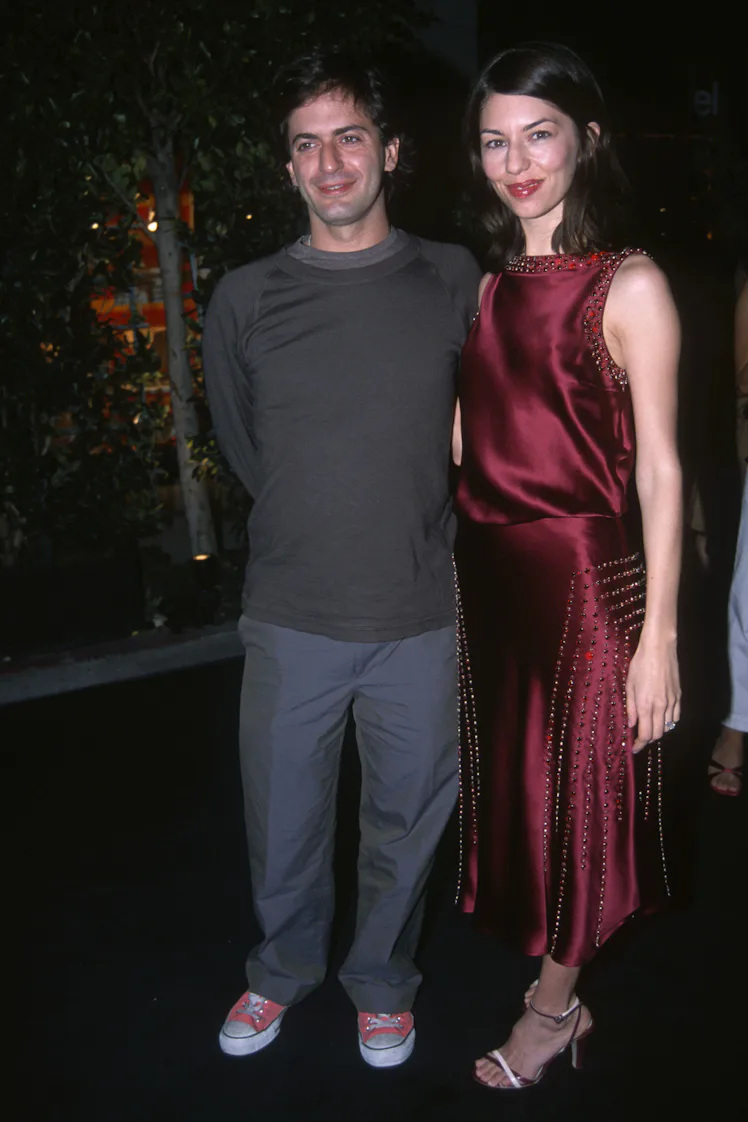
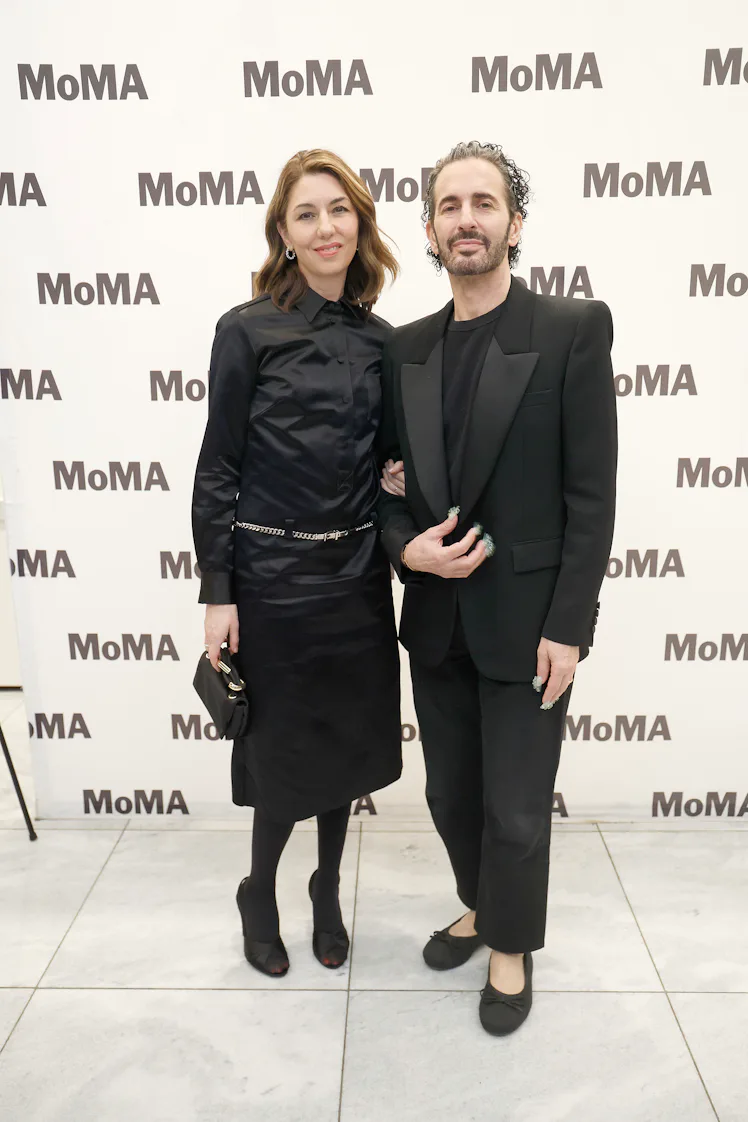
You both talked about being so obsessed with the ‘70s, and kids now are obsessed with your era of the ‘90s.
SC: My 15-year-old was always like, “How come you got to live that and I didn't get to live in the ‘90s?”
MJ: It's funny, that '90s fascination. I guess it's to be expected, but it is still wild to hear it.
If you woke up in each other's bodies, what would you do for the day?
SC: What a fun Freaky Friday. I would put on clothes in Marc’s closet all day and try on outfits.
MJ: What would I do? I'd just get dressed up and be Sofia, and hang out with Romy [Mars], Cosi [Mars], Gnocchi [Coppola’s dog], and Thomas [Mars]. I'd be happy to be in their family.
Marc by Sofia is in theaters Mar. 20, with nationwide release on Mar. 27.
This article was originally published on
